
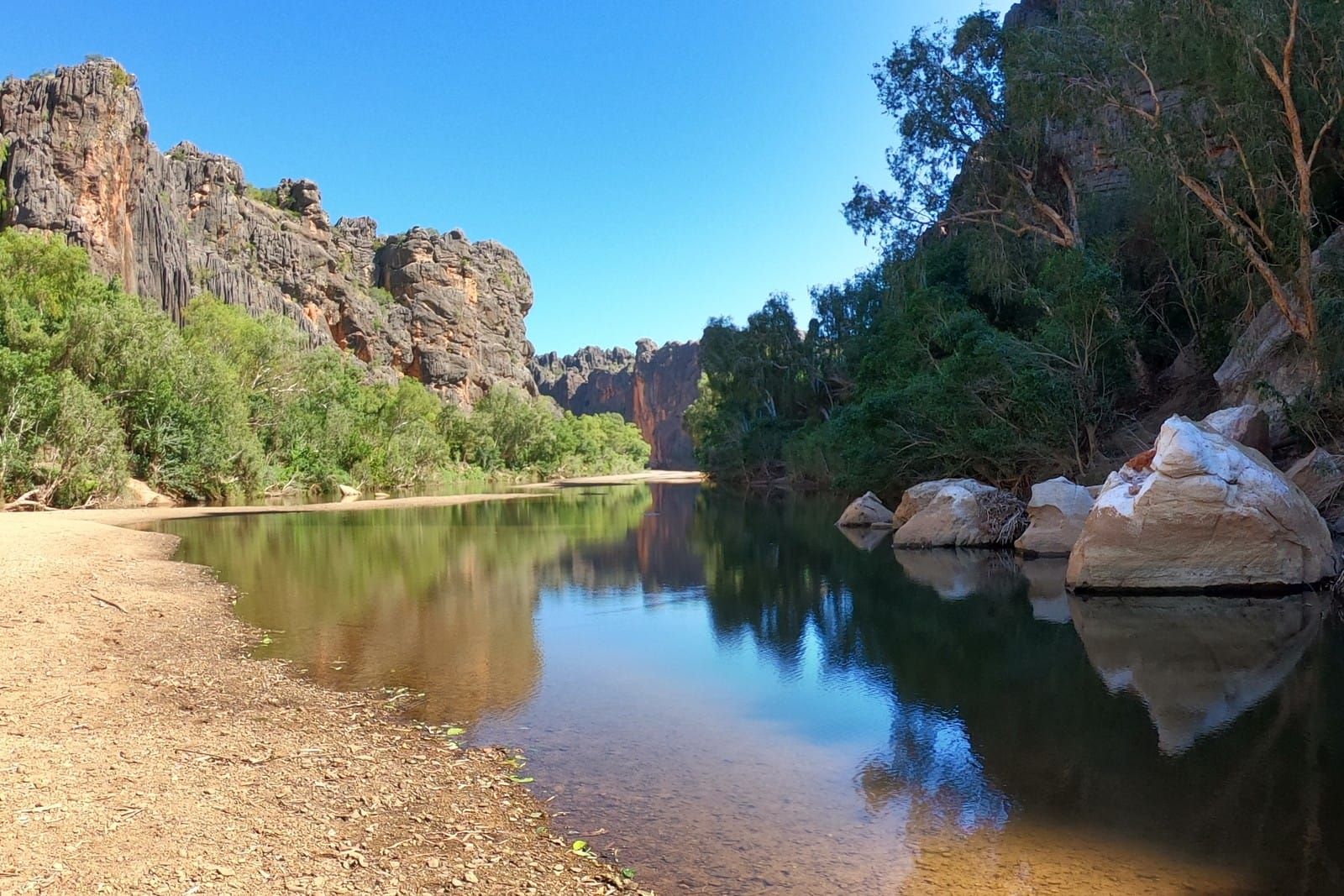
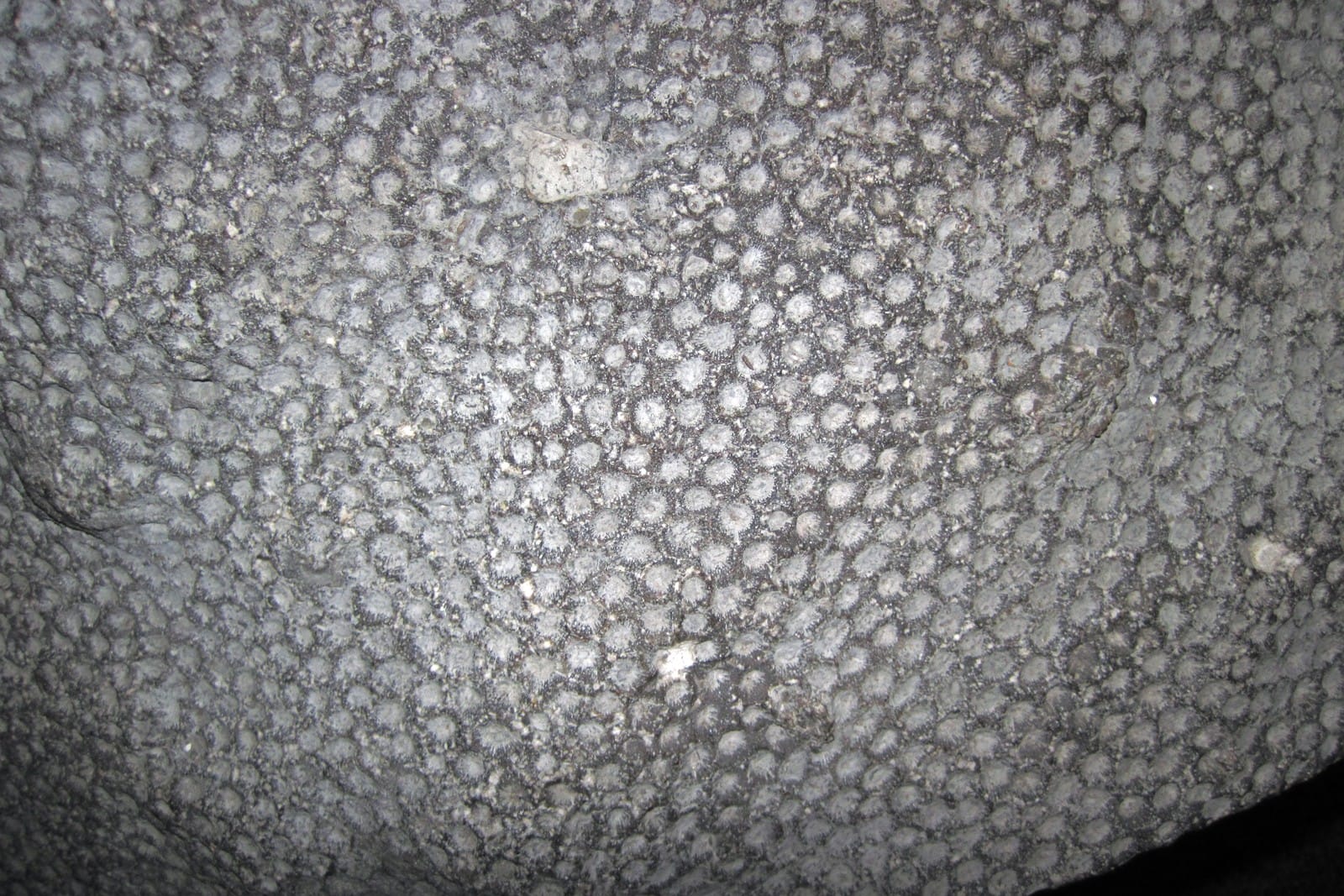
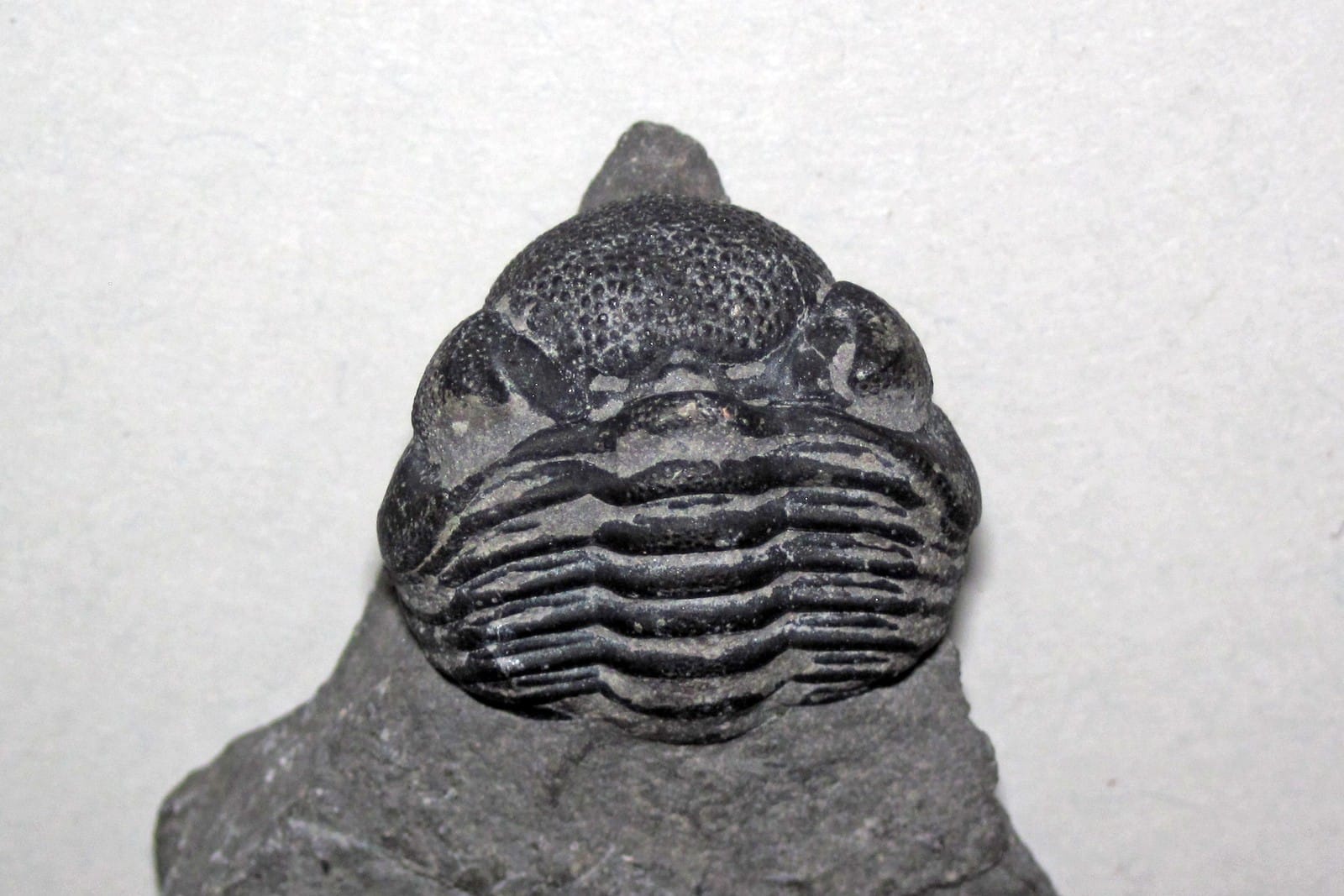
Blackall sits in sheep and cattle country in central western Queensland, and far beneath it lies the Adavale Basin, a stretch of ancient sea floor laid down between about 419 and 358 million years ago and hidden under younger basins. In October and November last year Geoscience Australia, working with the Geological Survey of Queensland, set up a rig about 63 kilometres south east of town and drilled the deepest hole in the agency's modern history. Borehole GA Enniskillen 1 reached 3,023 metres, roughly three times the height of the world's tallest building, and brought up 976 metres of solid rock core. One aim of the $30.9 million Data Driven Discoveries Program was to learn more about the Boree Salt, the only known thick layer of rock salt in eastern Australia, which could one day hold hydrogen in underground caverns. "We did not find any salt, but we did intercept other types of evaporative rocks," said Mitchell Bouma, head of the agency's Advice, Investment, Attraction and Analysis Branch. Those rocks form when a salty lake or a cut off arm of the sea dries out, and in his reading the halite "was dissolved from this location somewhere around 325 to 370 million years ago". What the core did hold was a reef: fossil corals, sea sponges, trilobites and ammonites, with ferns among them, fresh evidence of what the agency called a "relatively rich reef ecosystem" under the outback. Crispian Yeomans told the story for ABC Western Queensland.
Read the full story: Scientists to use Adavale Basin fossils to unlock secrets of giant fish, by Crispian Yeomans, ABC News.
Espen Knutsen, senior curator of palaeontology at the Queensland Museum, says little is known about the ancient reefs buried under Australia. A Geological Survey of Queensland report in 2007 described the fossil record of corals, molluscs and algae in the Bury Limestone as "rich, varied and largely undescribed", and most of what has been seen came up through mining or deep exploration. "Often we hear about things that are found at the surface," Dr Knutsen said. "Who knows what we might be able to find if we could really, really just sort of dig through and see what kind of fossils it preserved?" Geoffrey Gilleaudeau, a geologist at George Mason University in Virginia, flew to Australia in July to inspect the limestone. His question is about size. Devonian seas were home to some of the biggest fish of their age, and bigger animals need more oxygen, so he wants to know whether these rocks record a major rise in ocean oxygen like one already detected in North America. "We're trying to see if that's a global signal, and that's why we're looking at another place which is very, very far away in the Adavale Basin in Queensland," he said. Back near Blackall the borehole has been plugged and the site rehabilitated, and the data will be released once checked. Nearly a kilometre of sea floor from long before the dinosaurs now sits in core trays, waiting to be read. "We're excited to see what we can discover through improving our geological models," Mr Bouma said.
Sources and links
Our short take: the full story is by Crispian Yeomans for ABC News, ABC Western Queensland (30 September 2026), with the drilling facts from Geoscience Australia's own news page (10 December 2025) and program page.
- Scientists to use Adavale Basin fossils to unlock secrets of giant fish, by Crispian Yeomans, ABC News The find, the three quotes, the 2007 report line, the 63 kilometres, the skyscraper comparison.
- Geoscience Australia's deepest stratigraphic drilling campaign unlocking the secrets of the Adavale Basin, Geoscience Australia 3,023 metres, 976 metres of core, basin age 419 to 358 million years, the partnership, Bouma's title and the "excited" quote, plugged and rehabilitated.
- Data Driven Discoveries Program, Adavale Basin, Geoscience Australia $30.9 million, borehole name GA Enniskillen 1, November 2025 completion, the Boree Salt as eastern Australia's only known thick salt.
- Geoscience Australia explores storing hydrogen gas in Adavale Basin salt caverns, by Crispian Yeomans, ABC Rural (22 February 2026) Background only, the earlier drilling piece; not linked in copy.
- Geological Survey of Queensland The partner agency and author of the 2007 report (the report itself is quoted via the ABC; no open copy found on 12 Oct).
- Queensland Museum, Dr Espen Knutsen His profile: Senior Scientist and Curator Palaeontology, Queensland Museum Tropics, Townsville, co appointed with James Cook University.
- George Mason University, Geoffrey Gilleaudeau Associate Professor, Atmospheric, Oceanic and Earth Sciences.
- Flinders University, Dr Brian Choo The illustrator, adjunct in the College of Science and Engineering.