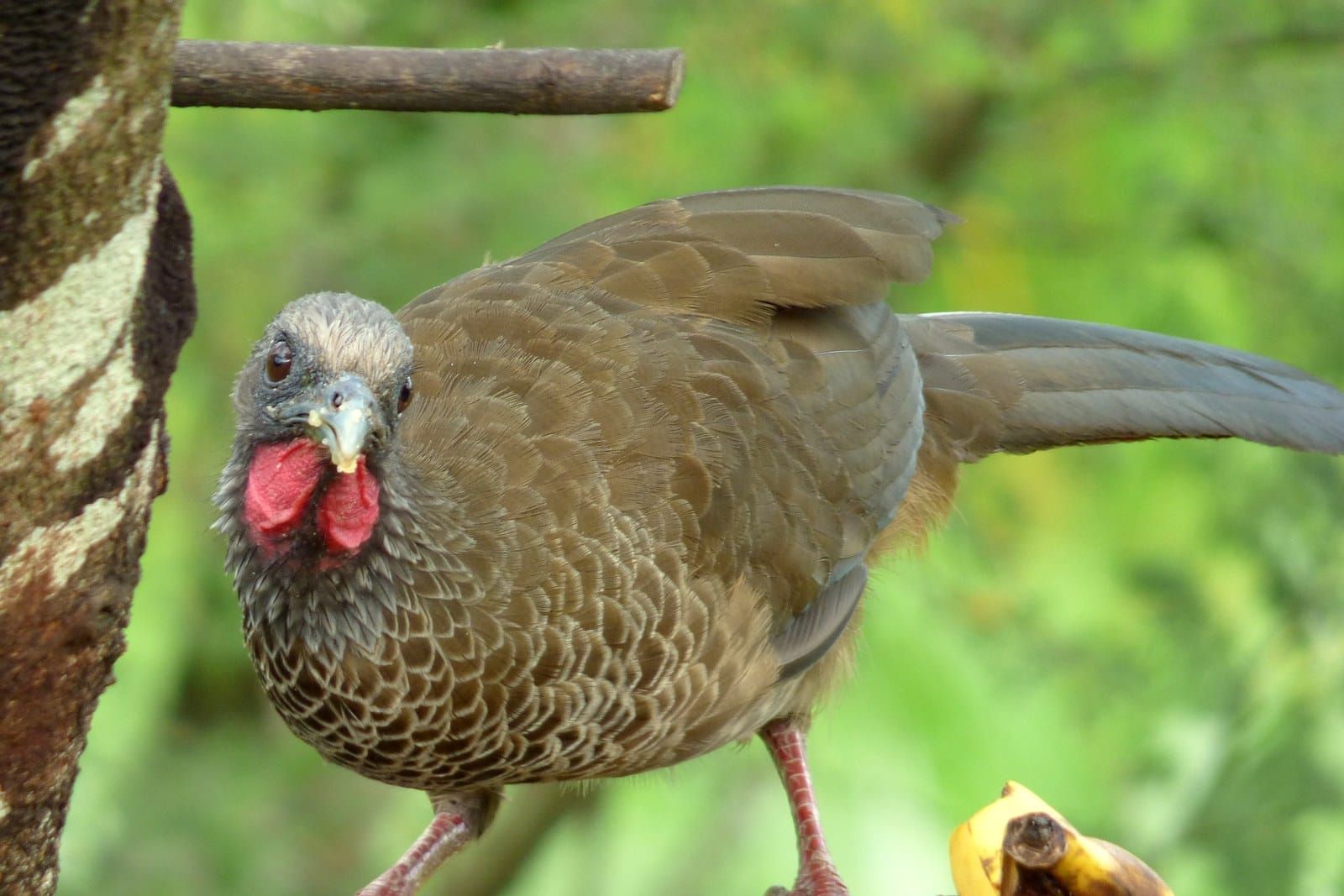
Ambalema sits in the northeastern corner of Tolima, on the banks of the Magdalena, the river that runs more than sixteen hundred kilometres through the middle of Colombia. Two properties nearby, Hacienda Pajonales and El Triunfo, have between them recorded one hundred and sixty three bird species in tropical dry forest, and some of those birds exist nowhere else on Earth. The Colombian Chachalaca, the Apical Flycatcher and the Velvet fronted Euphonia are all endemic, and the Crimson backed Tanager is very nearly so. Around them are the wetlands of the Magdalena and the corridors that migratory birds follow all the way down from the United States and Canada. It is not yet a name birders trade with one another, and that is exactly what this sets out to change.
The National Audubon Society and Fundacion Corfi, whose executive director is Lina Maria Mondragon Artunduaga, have written a hundred and thirty two page guide for Ambalema alone, to train local people as birdwatching guides. It is a proper manual rather than a pamphlet. One module covers the birds, their biology and taxonomy and how to tell one from another; the second covers the craft of guiding, which turns out to be group management, ethics, safety, running it as a business and citizen science; and a third teaches the English a guide needs, down to the pronunciation and the phrases you use to look after a visitor. It belongs to a project called Sembrando Esperanza, Cosechando Biodiversidad, which means sowing hope and harvesting biodiversity. Colombia has around nineteen hundred bird species, close to a fifth of all the birds on Earth, and Tolima alone has more than eight hundred. What a guide book like this adds is the part that has been missing: a way for the people who live alongside the forest to make a living from it standing up.
Our short take: from the National Audubon Society, 7 July 2026, with Fundacion Corfi. Photograph: a Colombian Chachalaca by Alejandro Bayer Tamayo via Wikimedia Commons under CC BY-SA 2.0.