
For eleven years, satellites have been looking down on 150 Chinese cities and recording what floats in the air above each one. A team led by Qianqian Yang of the Department of Geography at Hong Kong Baptist University took those readings, from 2013 to 2023, and set them beside the spread of electric and plug in hybrid cars, which China calls new energy vehicles and which sell there in greater numbers than anywhere else on Earth. Using a form of machine learning built so that its reasoning can be read rather than hidden, they asked one question: how much of the change in each city's air can be traced to the new cars, separate from everything else that shapes it? Their answer appeared in Nature Health on 13 May 2026, and it reads as a measurement rather than a verdict.
By 2023, the fine particles that travel deepest into the lungs were 23.8 per cent lower than they would otherwise have been, a difference of 8.97 micrograms in every cubic metre of city air, and carbon monoxide was 30.67 per cent lower. Set against population and health data for those cities, the fine particle drop works out at roughly 262,000 deaths from illness that did not happen, and the carbon monoxide drop at around 75,000 more. Those are estimates, modelled the way public health researchers model such things, and the authors say so plainly. Nor did every pollutant move together. Nitrogen dioxide fell by only 1.81 micrograms per cubic metre, because the heavy trucks that are a major source of it still run on diesel, and the gains landed first in the wealthier cities, where the new cars arrived earliest. Both findings point to the next job: electric trucks, and charging in the smaller inland cities that have not yet caught up.
What makes this study worth a Sunday morning is its scale and its method. Nobody had to guess. Maps of Shanghai and Wuhan at sixty metre resolution show the air changing street by street across a decade, and the same satellites can be pointed at any city on Earth making the same switch. Qiangqiang Yuan and Liangpei Zhang of Wuhan University, and Meng Gao, who holds posts at Hong Kong Baptist University and Harvard University, oversaw the work with colleagues at Tongji University in Shanghai and Nanjing University of Information Science and Technology. Together they have given every city a way to watch its own air clear, one quiet car at a time.
Sources and links
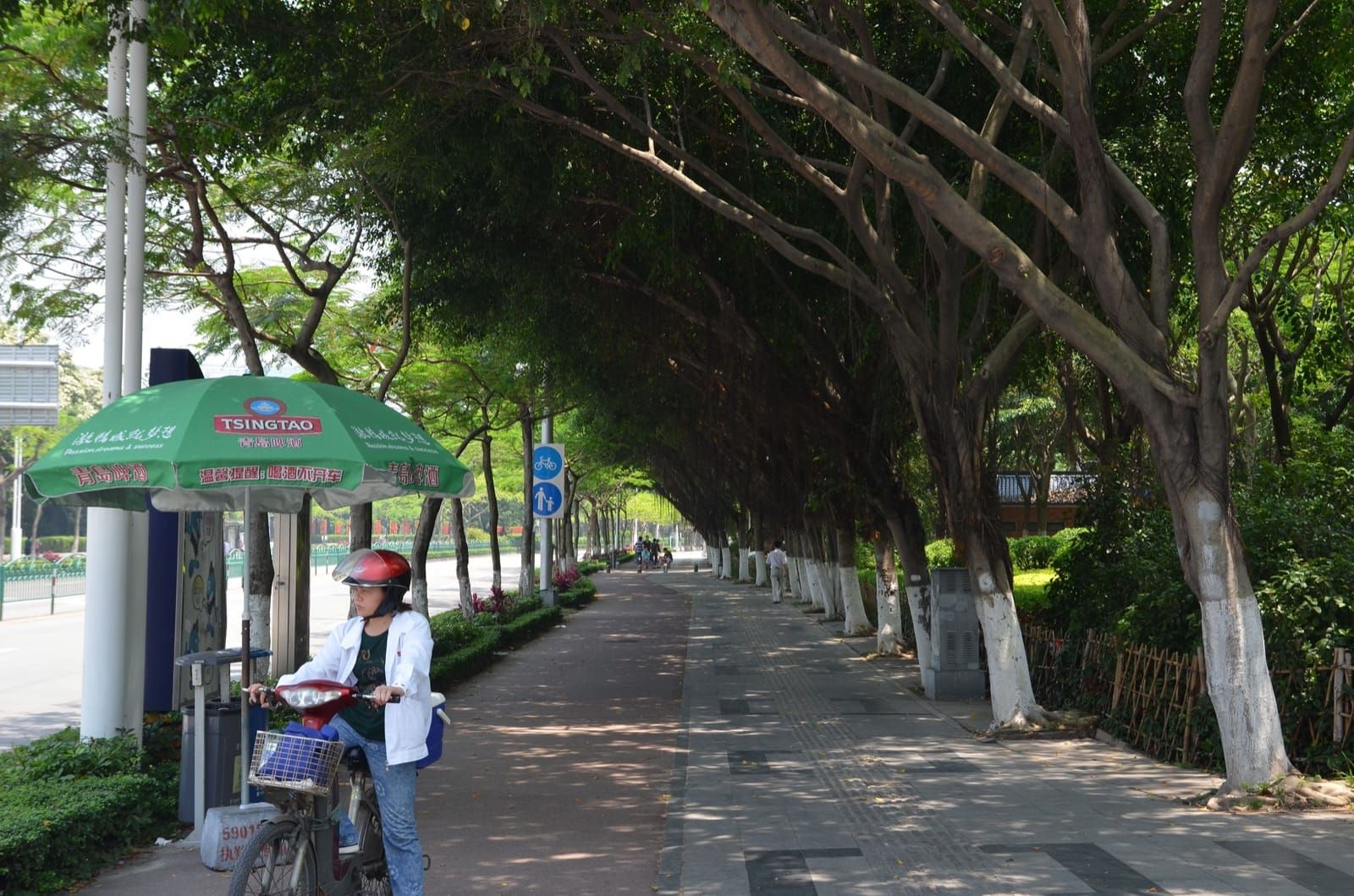
Our short take: the research is the open access paper in Nature Health linked below (13 May 2026), reported for Nature by Claudia Steiner (5 June 2026) and for Electrek by Fred Lambert (8 June 2026). Photograph: Popolon, CC BY-SA 3.0.
- Reduced urban air pollution and mortality from the transition to new energy vehicles in China The paper in Nature Health, 13 May 2026, open access.
- Electric vehicles cut pollution in China and prevent 260,000 premature deaths, by Claudia Steiner, Nature Nature news report, 5 June 2026, subscription needed.
- China's EV shift cut pollution enough to prevent 262,000 deaths, by Fred Lambert, Electrek Electrek report, 8 June 2026.