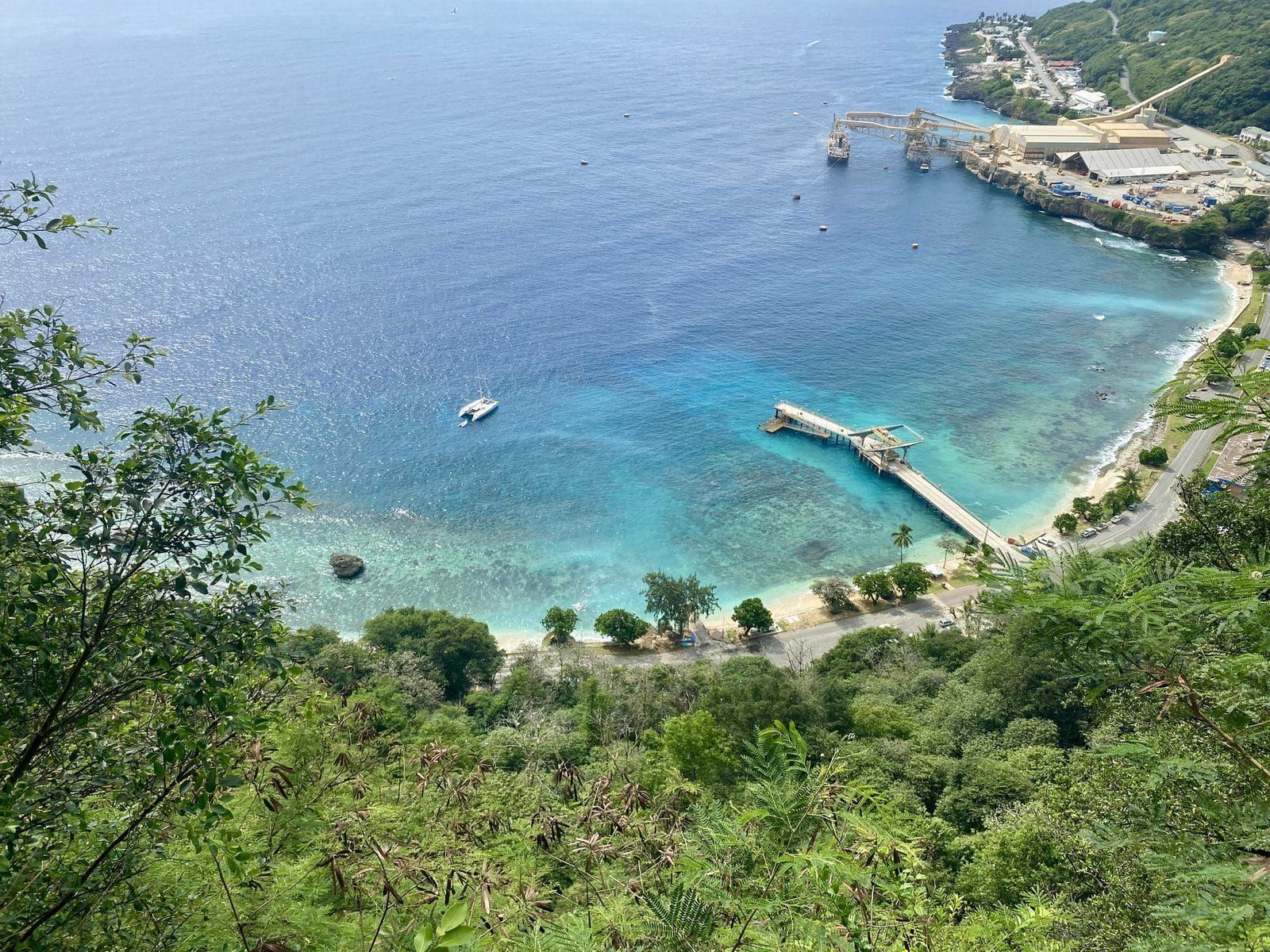
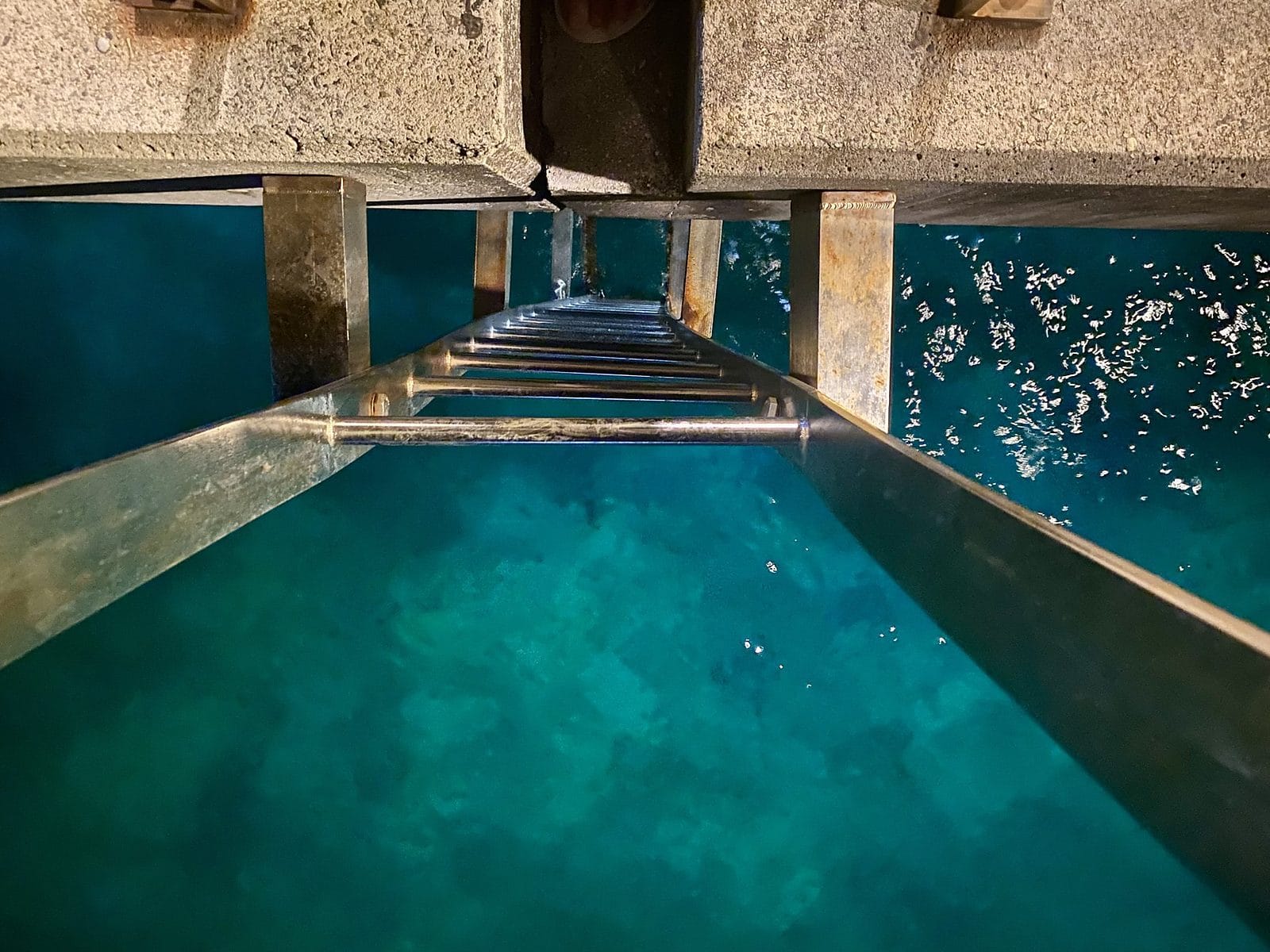
There is a way to arrive at an island, and this is it. On the second half of the voyage with Tangaroa Blue we came in to Flying Fish Cove, and a few of us jumped straight off the wharf into crystal clear, 28 degree water to say hello to the underwater world of Christmas Island. The island rises out of the Indian Ocean far closer to Java than to the Australian mainland, a green mountain top ringed by cliffs, and about two thirds of it is national park. Nothing about it feels ordinary.
We had a mission: to get as much marine debris as we could off some very special places. Greta Beach, Dolly Beach and Flying Fish Cove were our targets, and we were armed with our safety gear and a whole lot of drive, working to hand these sacred places back to the wildlife and to the locals who love this island so deeply.
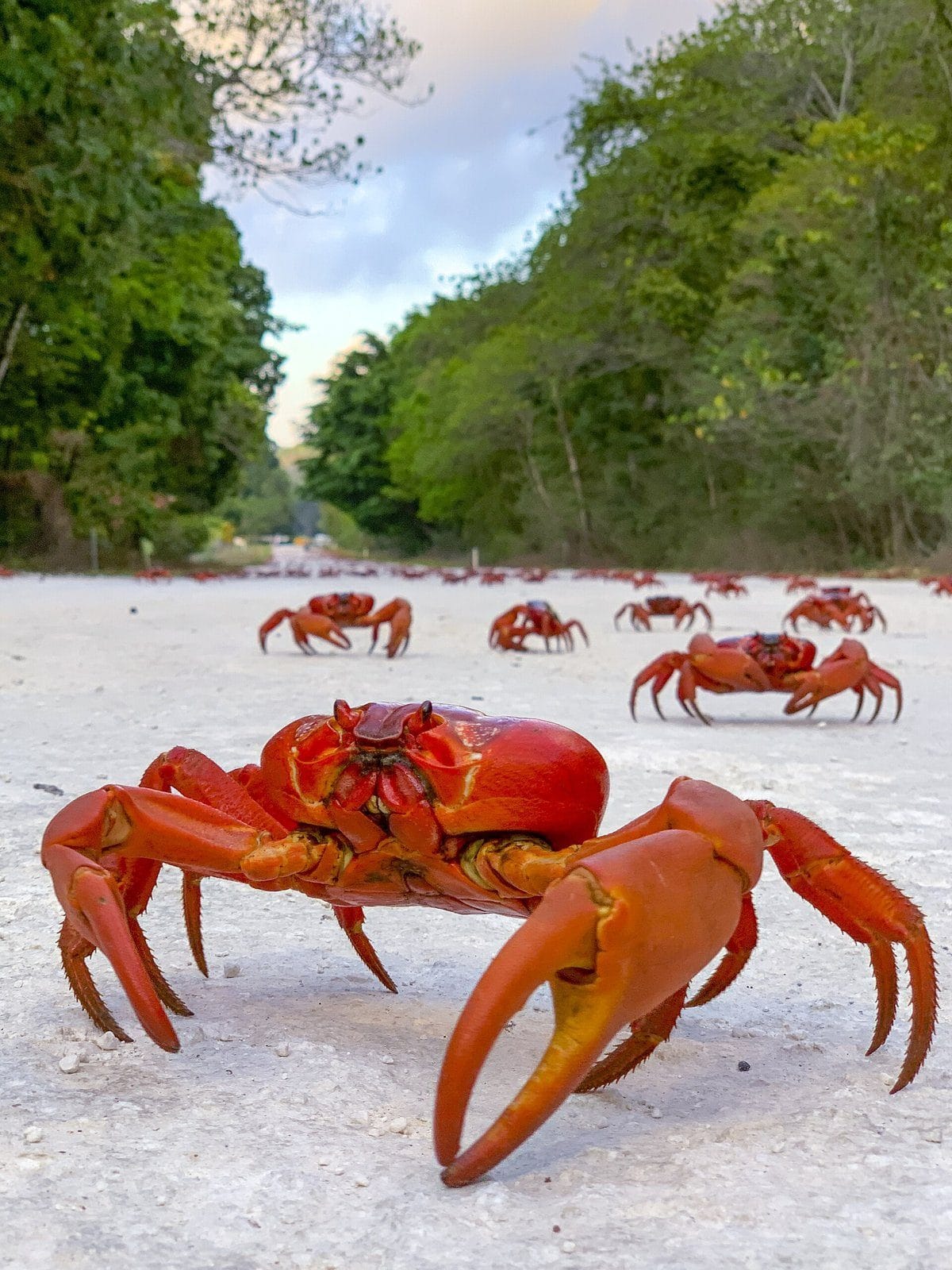
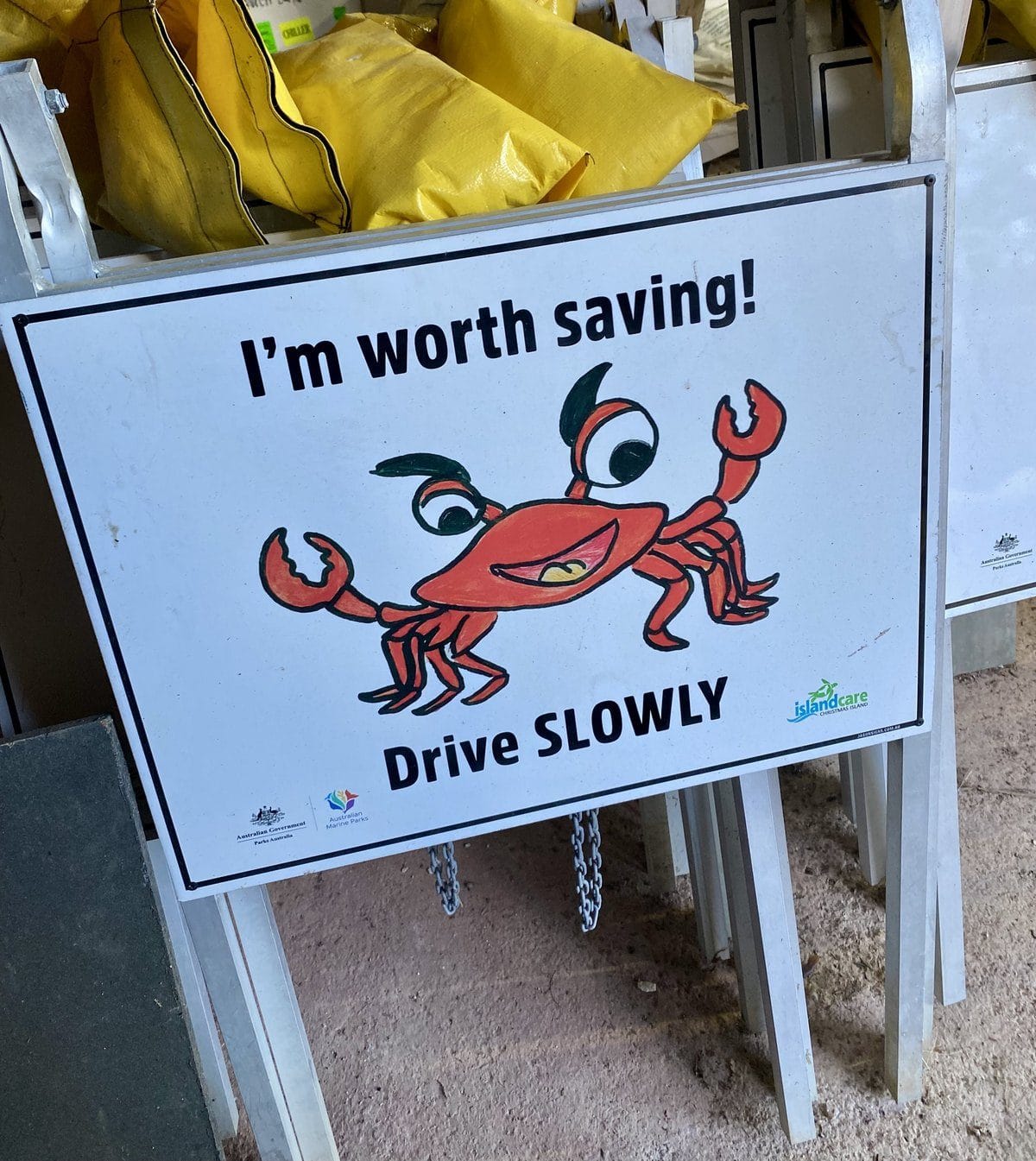
The island set the tone on the very first drive. Thousands of red crabs filled our travels, and our drivers and passengers moved them gently off the back road tracks so the convoy could come through, keeping them living their happy lives. Once a year, when the first rains of the wet season arrive, tens of millions of them walk to the sea together to spawn, a red river over roads and cliffs that is often called one of the greatest natural spectacles on Earth. The islanders build them bridges and close roads for them, and the local schools ran a competition to paint the best signs asking everyone to slow down and take care of the crabs. On Christmas Island the crabs have right of way, and everyone is happy to wait.
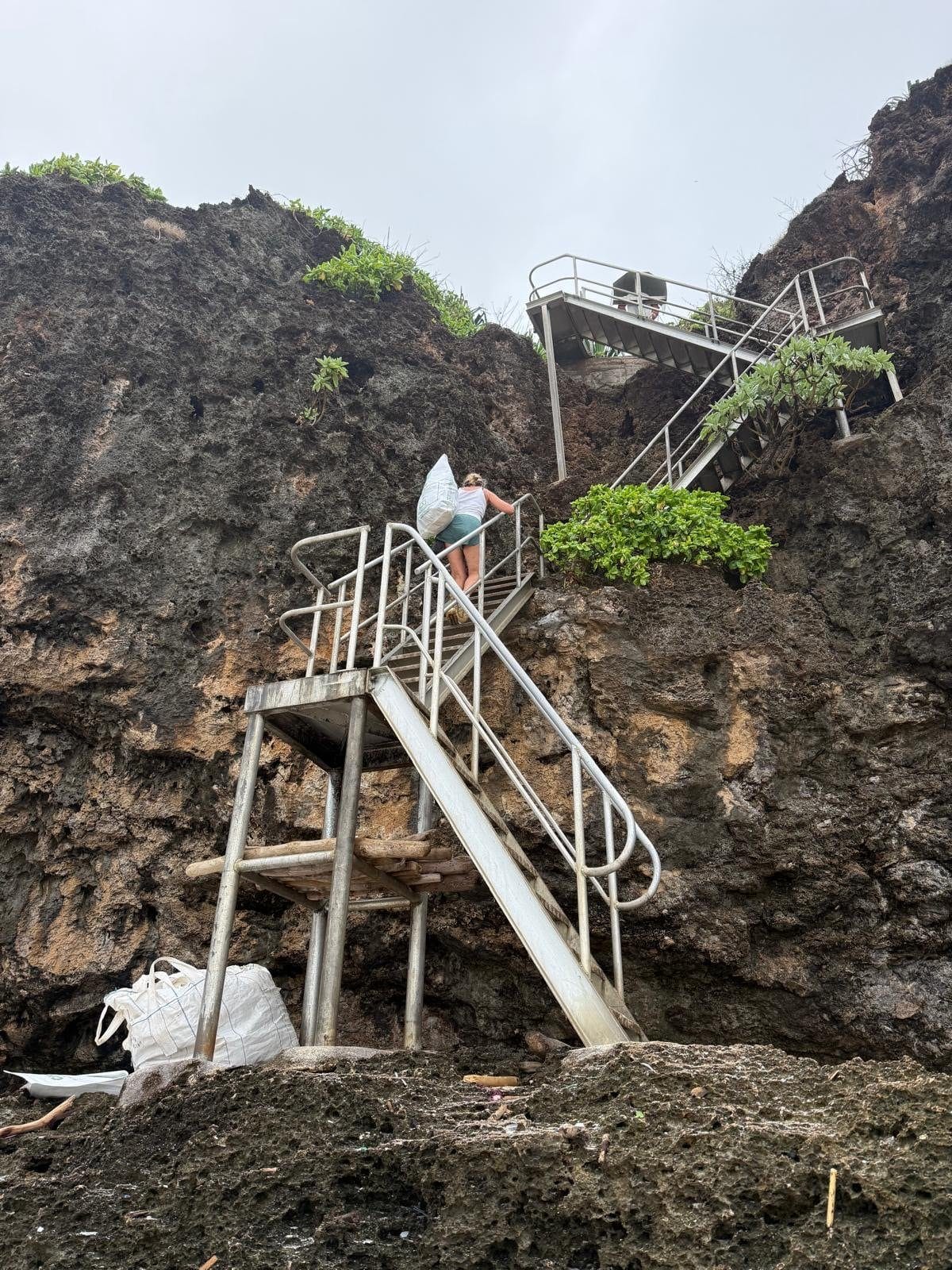
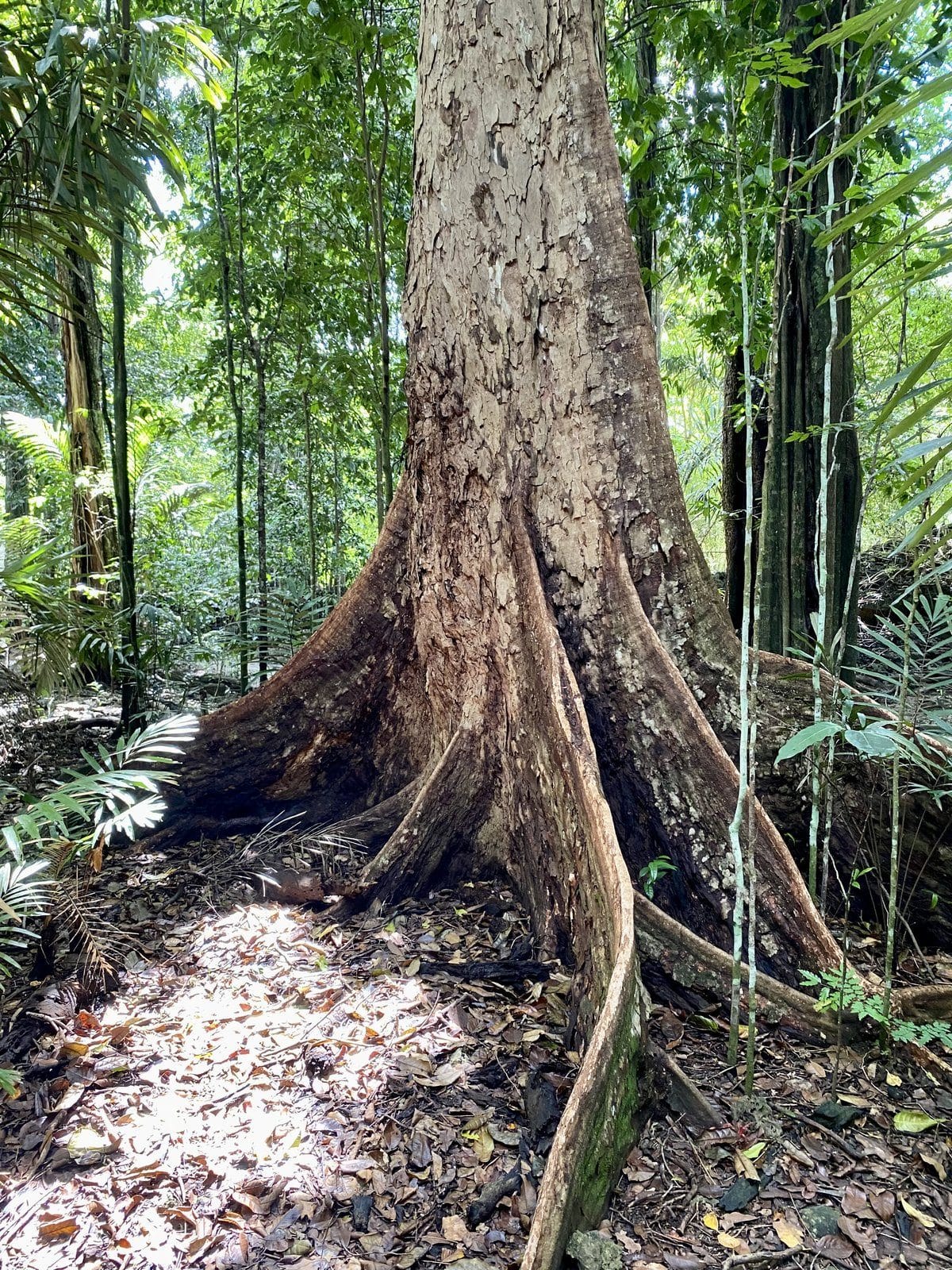
Greta Beach greeted us with a steep staircase falling away through the jungle, and we hauled hundreds of kilograms of debris up it, past blue crabs and robber crabs, under boobies and frigatebirds, the males flashing their bright red throats. The jungle was mesmerising, like something straight out of Jurassic Park. Both Greta and Dolly are real missions just to reach, and the amount the ocean had delivered onto their sand stopped me in my tracks, because it was made of the everyday things I use myself and try so hard to swap for better choices. Standing there, I could hardly imagine how a turtle would find room to rest and nest.
Dolly Beach was a 2.4 kilometre round trip, bag after bag after bag. One day the rangers from Parks Australia, who care for Christmas Island National Park, came and lent their muscle, and by our third visit the beach truly looked like a turtle could make it up the sand to nest. A month later, one did. Such joy. In all, close to two tonnes of debris came off these beaches, carried out by hand from some very challenging places, and just shy of five tonnes across the whole voyage together with Cocos. The haul was sorted into categories, counted and lodged for government review, and there was so much sorting that it honestly felt like every single piece passed through our hands. And here is the honest scale of it: in some spots, even after all of that, you could hardly tell we had been there. It is exactly why every counted piece matters, because the data is how this shifts for good.
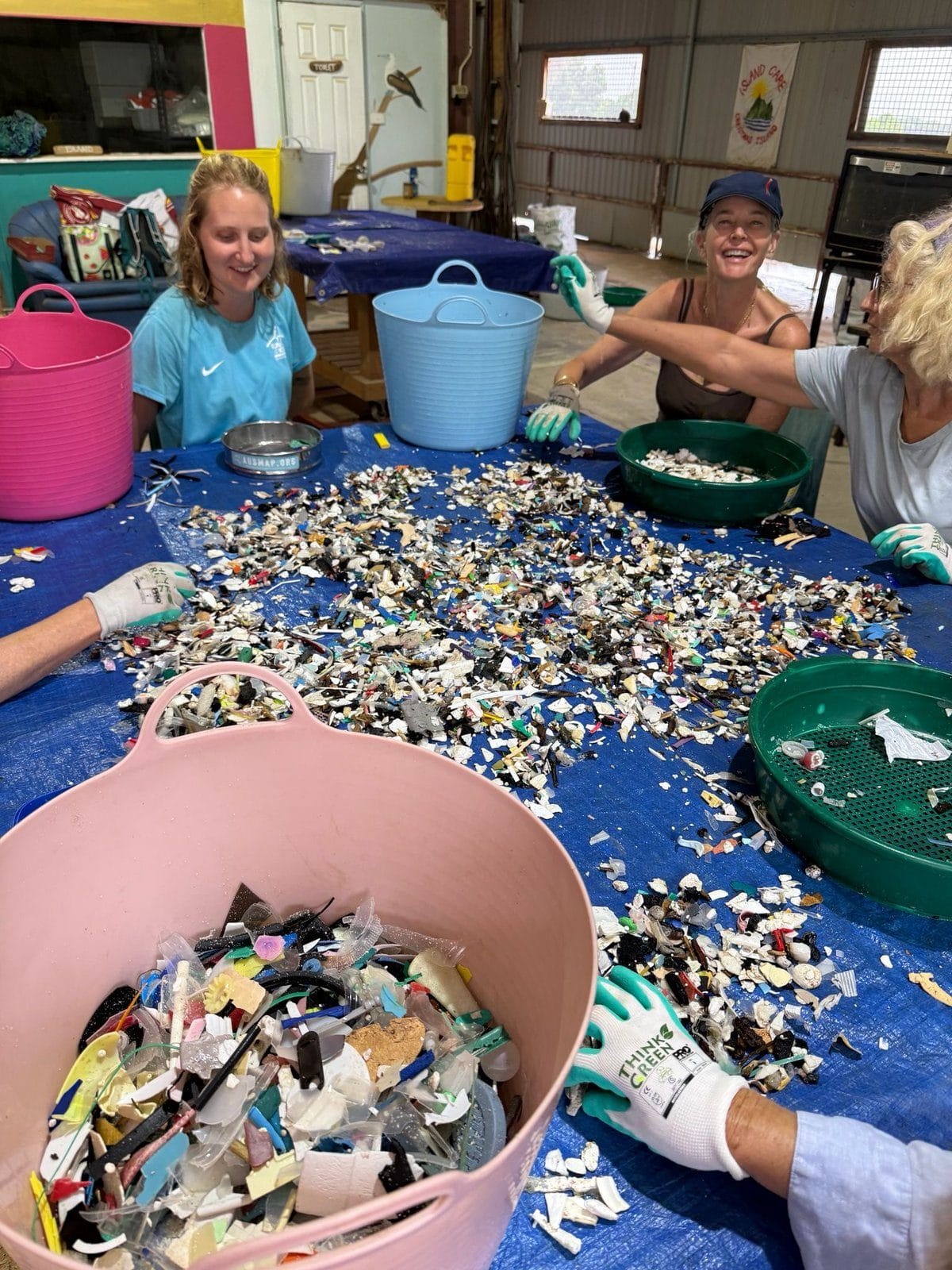
Seeing our consumption laid out on a wild beach was overwhelming, and it also filled me with pride, because so many people are meeting it head on: the innovators, the entrepreneurs, the conservationists, the volunteers, and organisations like Tangaroa Blue, whose Australian Marine Debris Initiative turns every counted piece into the data that stops litter at its source. Thank you.
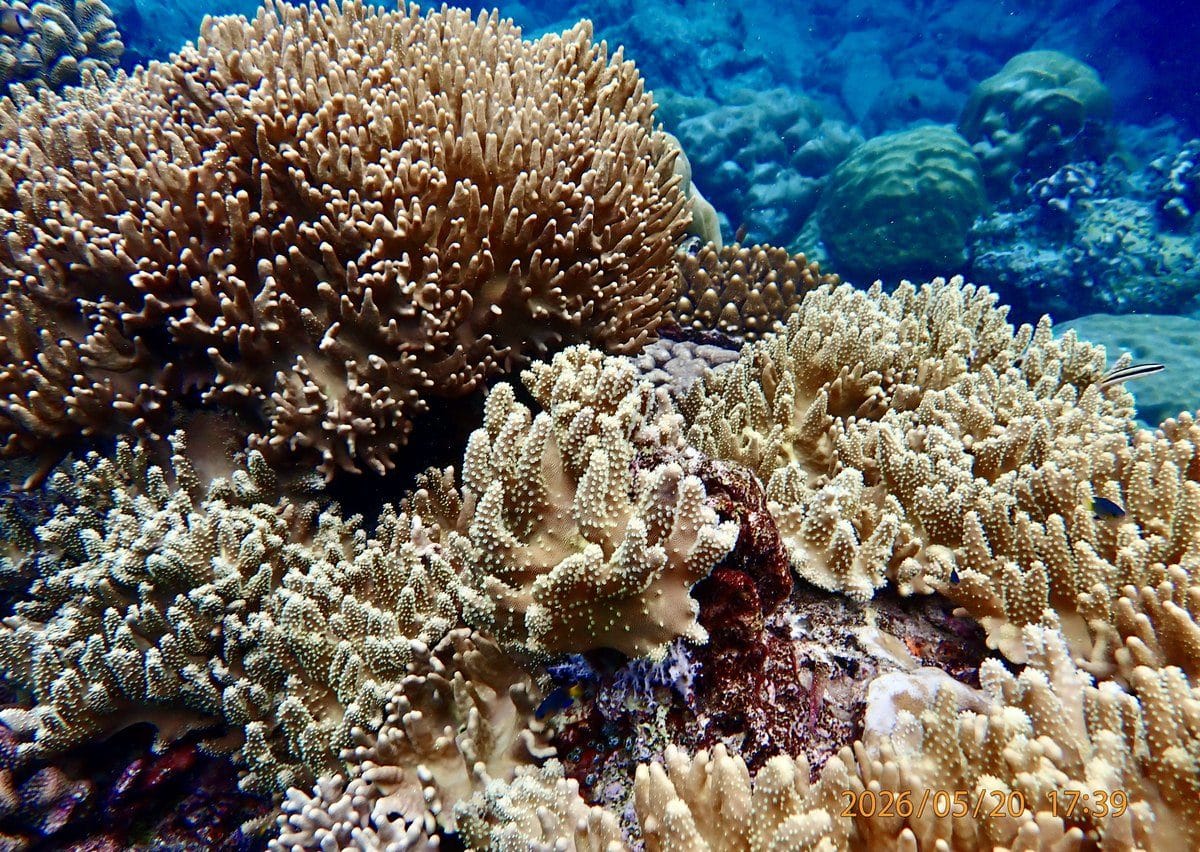
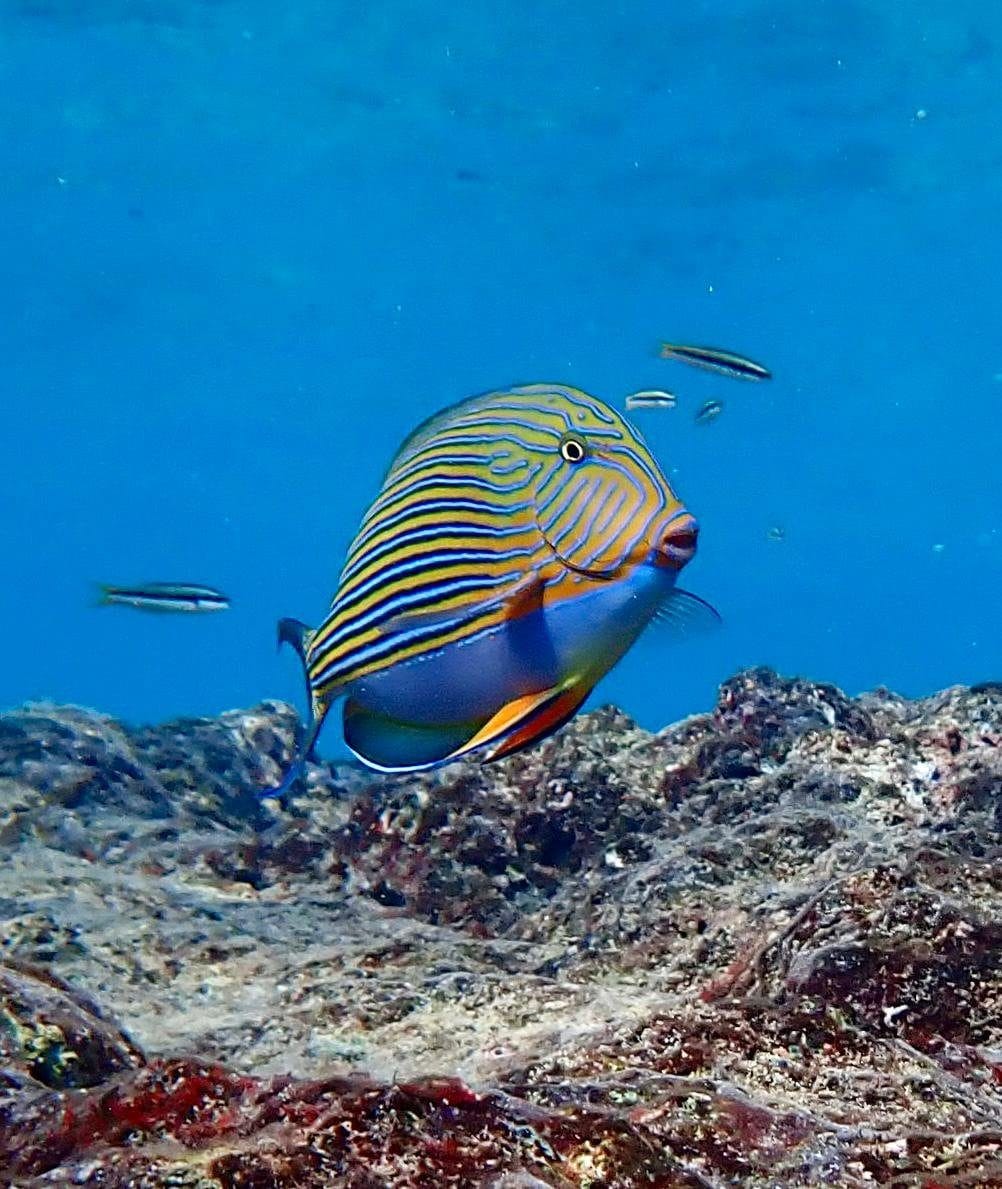
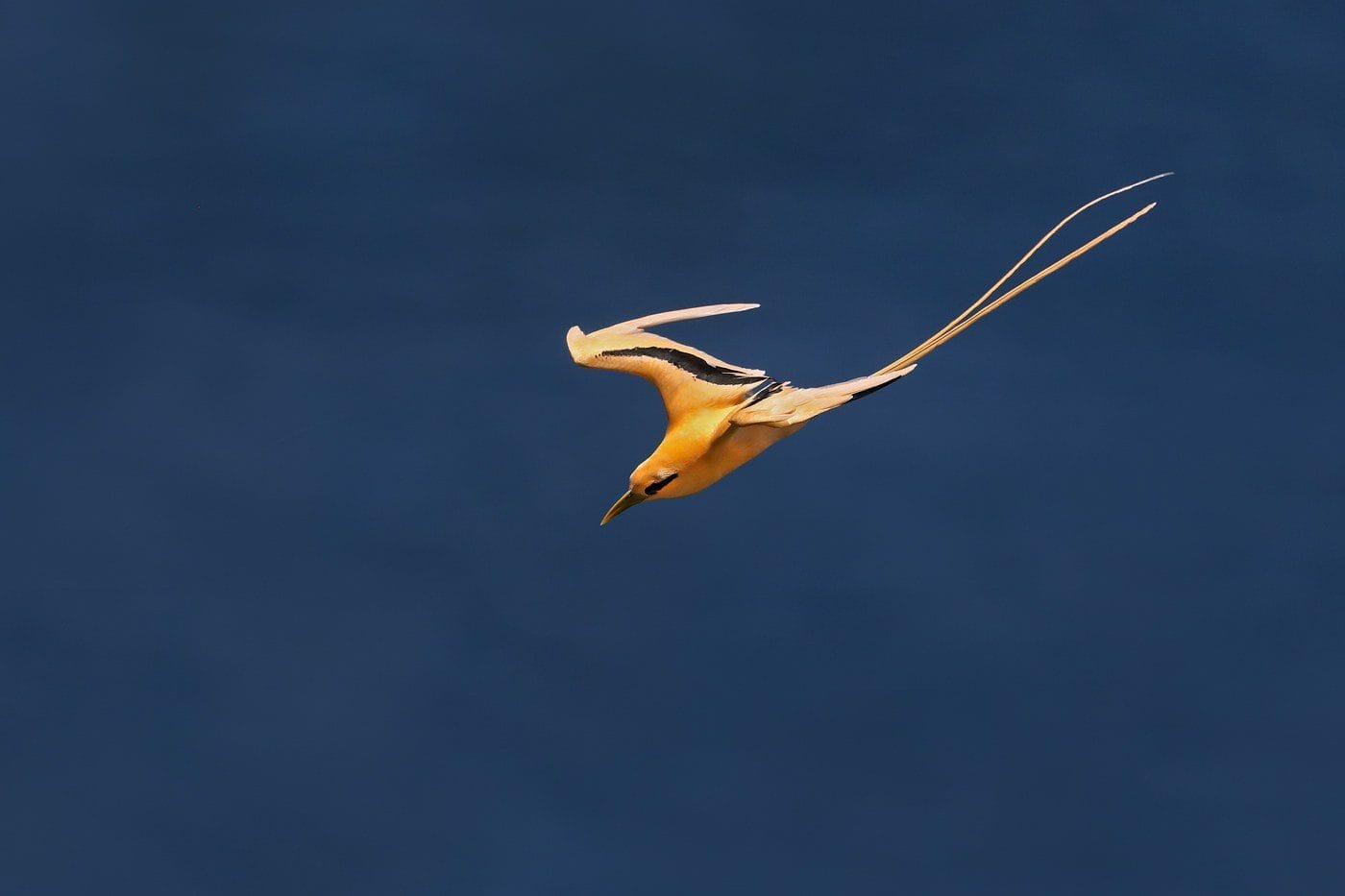
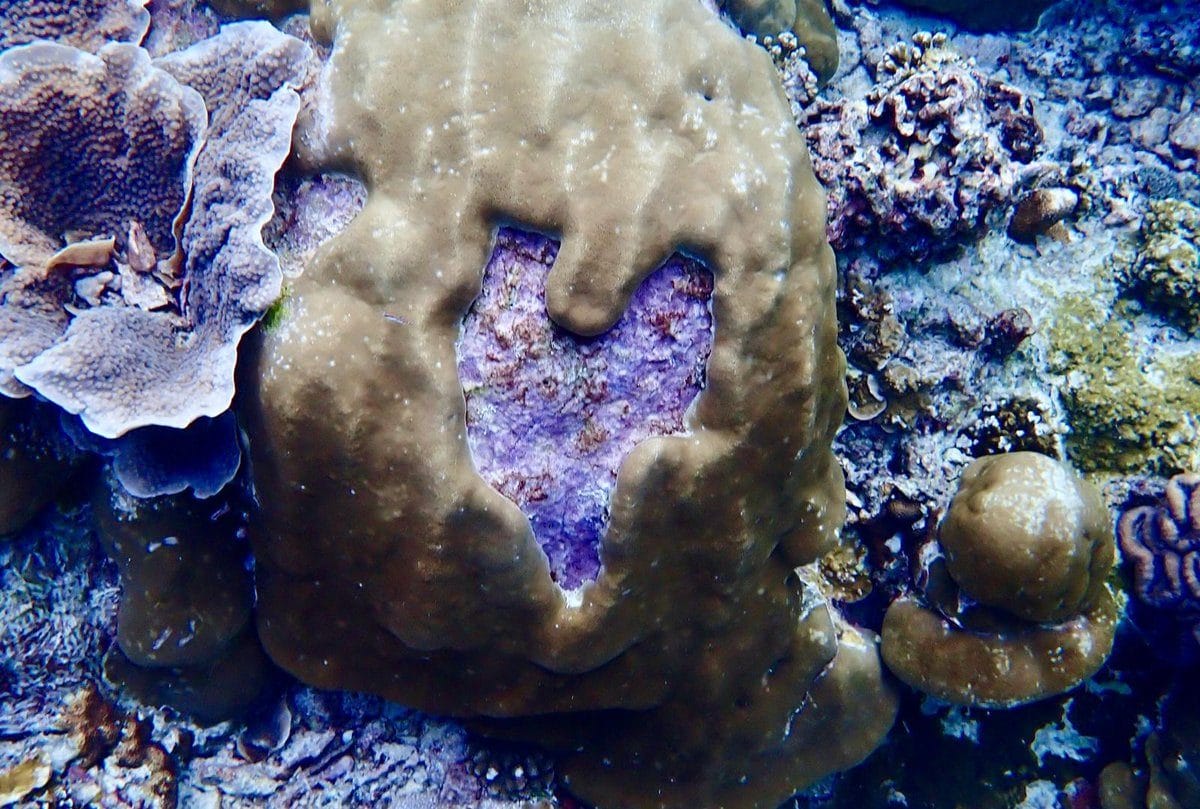
And then there was the water. Exploring Flying Fish Cove, I looked up and a golden bosun sailed over me, the island's own golden form of the white tailed tropicbird, and the moment was so surreal I could have stayed out there for hours and hours. The coral is so beautiful, and the fish flow peacefully by: striped surgeonfish in their electric blue and yellow pyjamas, powder blue surgeonfish, butterflyfish in pairs, a lionfish in full sail, a little yellow boxfish like a tiny submarine, and giant clams with electric blue lips. Somewhere out on that reef, a coral has even grown itself a perfect love heart. A true treasure of a place, and a massive trip.
I am so grateful to have worked alongside people who put their heart and soul into every single day, and for the chance to volunteer in a place like this.
These places are gems, worth enjoying by all: the locals, the visitors and the wildlife who own them. I am excited to keep reading how this shifts, and to watch nature recover and thrive alongside us, together, throughout our lives. And if you visit, go gently. Watch where you walk, take good care of the reef, wear reef safe sunscreen, and if you carry an underwater point and shoot camera, you too can add to the ever growing database on iNaturalist, which even tells you the species name as you load your photos. There is nothing quite like seeing a wild creature for the very first time and learning its name on the spot. The crabs have right of way here, and I think that might be the most hopeful traffic rule in the world.
An Earth to Sea News original. Nicole travelled with Tangaroa Blue, whose Australian Marine Debris Initiative turns beach cleanups into the data that stops litter at its source. Photographs: Earth to Sea News originals, with the Greta Beach staircase and the sorting table by Renee Mouritz. The red crab photograph is by Chris Bray Photography, via Wikimedia Commons under CC BY SA 4.0, and the golden bosun is by Patrick Kavanagh, via Wikimedia Commons under CC BY 2.0. See more frames from this journey in our photo gallery.