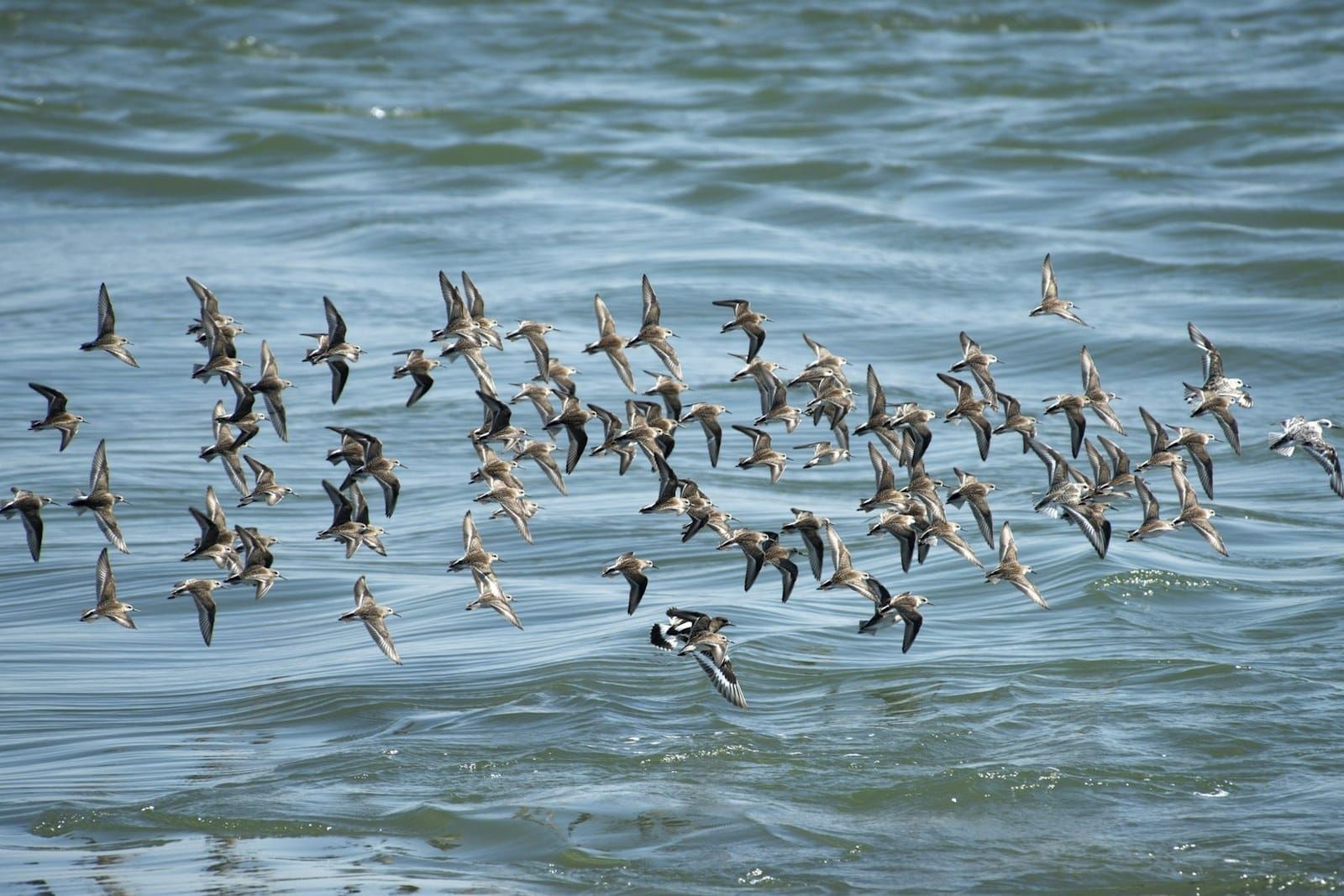
Counting birds has always been done by eye. Someone flies over a flock, brings back photographs, and then sits with them for days, marking one bird at a time until the number comes out. Joshua Wilson, a researcher at the University of Queensland, wondered whether a computer could learn to see them instead. His tool does exactly that, reading drone imagery and picking out the birds in it about eighty five times faster than a person working by hand, from an altitude chosen so that the flock below carries on undisturbed. Building it took more than fifty thousand birds across better than a hundred species, gathered by thirty three researchers in eleven countries, from far eastern curlews that fly between Siberia and Australia to Mediterranean gulls in Italy, penguins and cormorants, and white storks in Poland.
Here is the part worth celebrating. Wilson and his colleagues have released the dataset and the model free, to anyone anywhere who wants to use them. A wader group on a Queensland mudflat and a seabird team on a cliff in the North Atlantic can now pick up the same tool without paying for it or asking permission, and they can spend the time they save doing the work that only people can do. Professor Richard Fuller of the University of Queensland's School of the Environment worked on the research. Hugh Possingham, president of BirdLife Australia, and David Edwards, who chairs the Queensland Wader Study Group, know exactly what a week of counting costs a volunteer. Generosity like this is its own kind of invention.
Sources and links
Our short take: the full story is by Jessica Ross for ABC Sunshine Coast (22 June 2026). Photograph: to be chosen, three options on the photo page. Read the full story: Queensland researchers use drones and AI to capture bird data critical to conservation efforts, by Jessica Ross, ABC News | https://www.abc.net.au/news/2026-06-22/drones-and-ai-help-bring-birds-back-from-brink/106749592
- University of Queensland School of the Environment, Where the work was done.
- BirdLife Australia, Hugh Possingham's organisation.