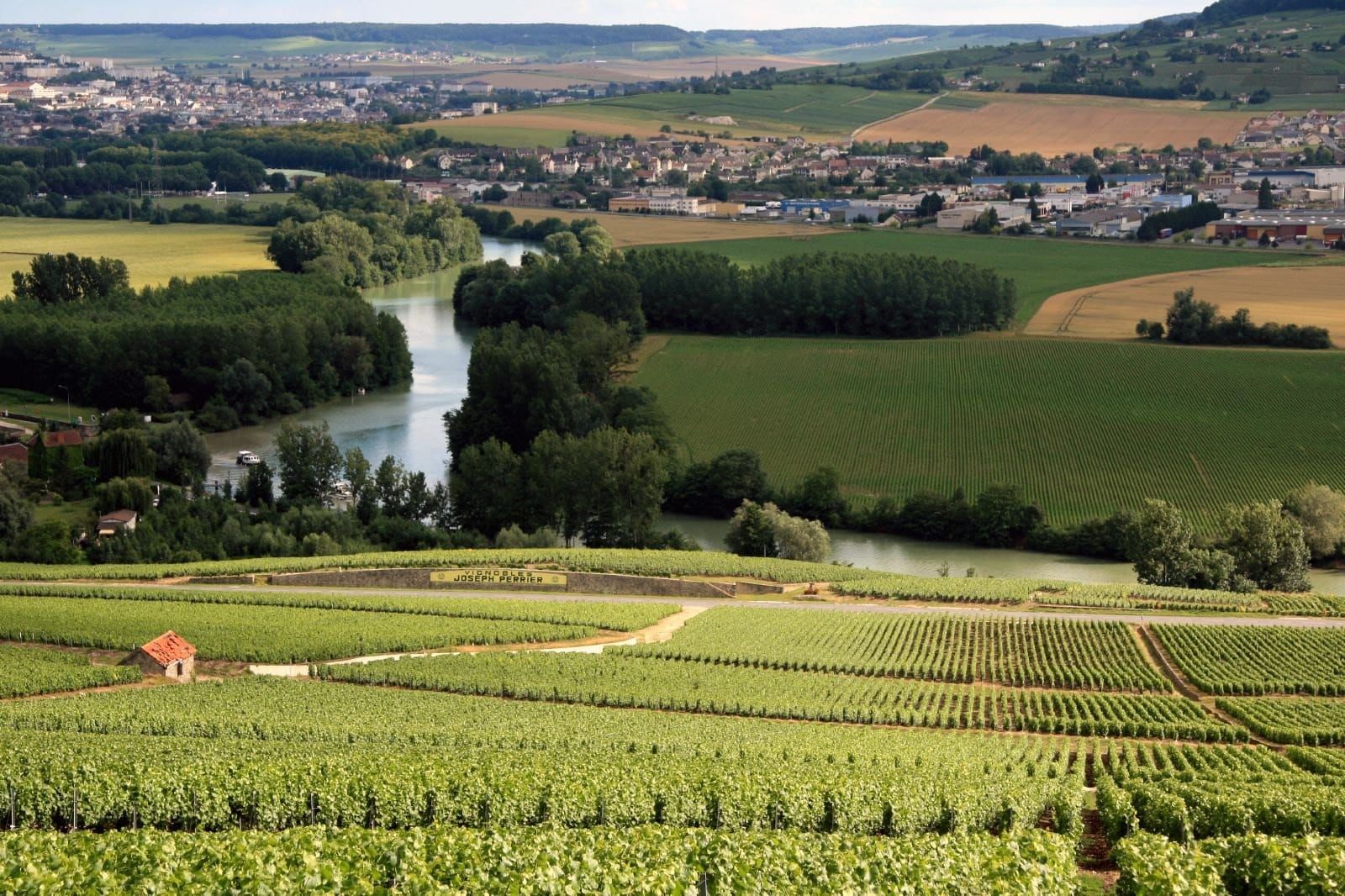
For more than a hundred years, growers who wanted to protect grapes from mildew without synthetic chemicals reached for copper. It works, but it never leaves: copper builds up in the top few inches of vineyard soil and, in quantity, disturbs the worms and microbes that make soil alive. In July 2025 France's safety agency decided not to renew nineteen copper products, sales stopped on 15 January this year, and growers across 780,000 hectares of vines were left with two copper sprays, tight limits on how much they can use, and a question. Three weeks earlier, a small company in Abingdon, Oxfordshire, had the answer approved. Eden Research makes a fungicide called Mevalone, sold in France by Corteva under the name Esseva, from three plant oils: thymol from garden thyme, geraniol from Damask rose and eugenol from clove. Sean Smith, Eden's chief executive, explains that plants make these molecules themselves as part of their immune system, and that Eden uses pure versions of them to target many of the same diseases copper treated. First registered against grey mould, the spray is now approved in France against downy and powdery mildew too, and it is approved for use in organic vineyards.
Its trick is in the packaging. Plant oils evaporate fast, so Eden holds them inside the empty cell walls of yeast, a plastic free capsule that keeps the oils in place while the weather is dry and releases them when the leaves are wet, which is exactly when mildew strikes. Smith says the products have been shown to break down quickly in the environment, and Corteva's grape specialist Aline Zaborowski recommends it after flowering, on its own in rotation or alongside a reduced dose of copper and sulphur. This year Slovakia approved it for grapes and apples, California had already cleared it for powdery mildew, and Eden's sales for the fifteen months to March grew to £4.9 million, still a small company by any measure and yet to make a profit, which it says plainly. No grower has been quoted trying it through a full French season yet; the first harvest under the new rules is this autumn. But the idea is a lovely one, and old: the thyme, rose and clove that have sat in kitchens and gardens for centuries, going back out into the vineyard to do the work of a metal.
Sources and links
Our short take: the full story is by Liam Gilliver for Euronews Green (26 January 2026), with the copper decision from Paige Donner's report for Wine Spectator (12 January 2026), the French label details from Xavier Delbecque for Réussir Vigne (16 March 2026) and Vitisphere (2 February 2026), and the company's own results of 26 August 2026.