Groote Eylandt lies fifty kilometres off the Arnhem Land coast, home to about 2,100 people across the archipelago and, for the past sixty years, to one of the world's biggest manganese mines. Mining will end, and the Anindilyakwa people have been building what comes next. One piece of it is Groote Aqua, a sea farm owned through Groote Holdings Aboriginal Corporation on a seven hectare lease, where aquaculture manager Dr Valentin Thépot and his team grow sandfish, the sea cucumber prized across Asia, in tanks that work like a small reef. Goldlined rabbitfish swim above; their droppings feed the sandfish on the bottom; blacklip oysters and edible seaweed filter what is left. Water leaving the farm is cleaner than the water that came in. It is the kind of loop nature runs on every reef, built on land so it can be measured, taught and scaled.
Teaching is the point. Students from the schools at Alyangula, Angurugu and Umbakumba come to the farm to do marine science on their own country, handling the animals and reading the water, and the farm employs two to three people full time and about seven casually, most of them Traditional Owners. On 29 August 2026 the farm opened its gates for a community day, and its story was told during National Science Week as an example of Indigenous led science that pays its own way. Sea cucumbers have been gathered and traded from this coast for centuries, long before the mine; the tanks at Groote Aqua are the newest chapter in a very old trade, and the people running it intend to be here long after the last ore ship leaves.
Sources and links
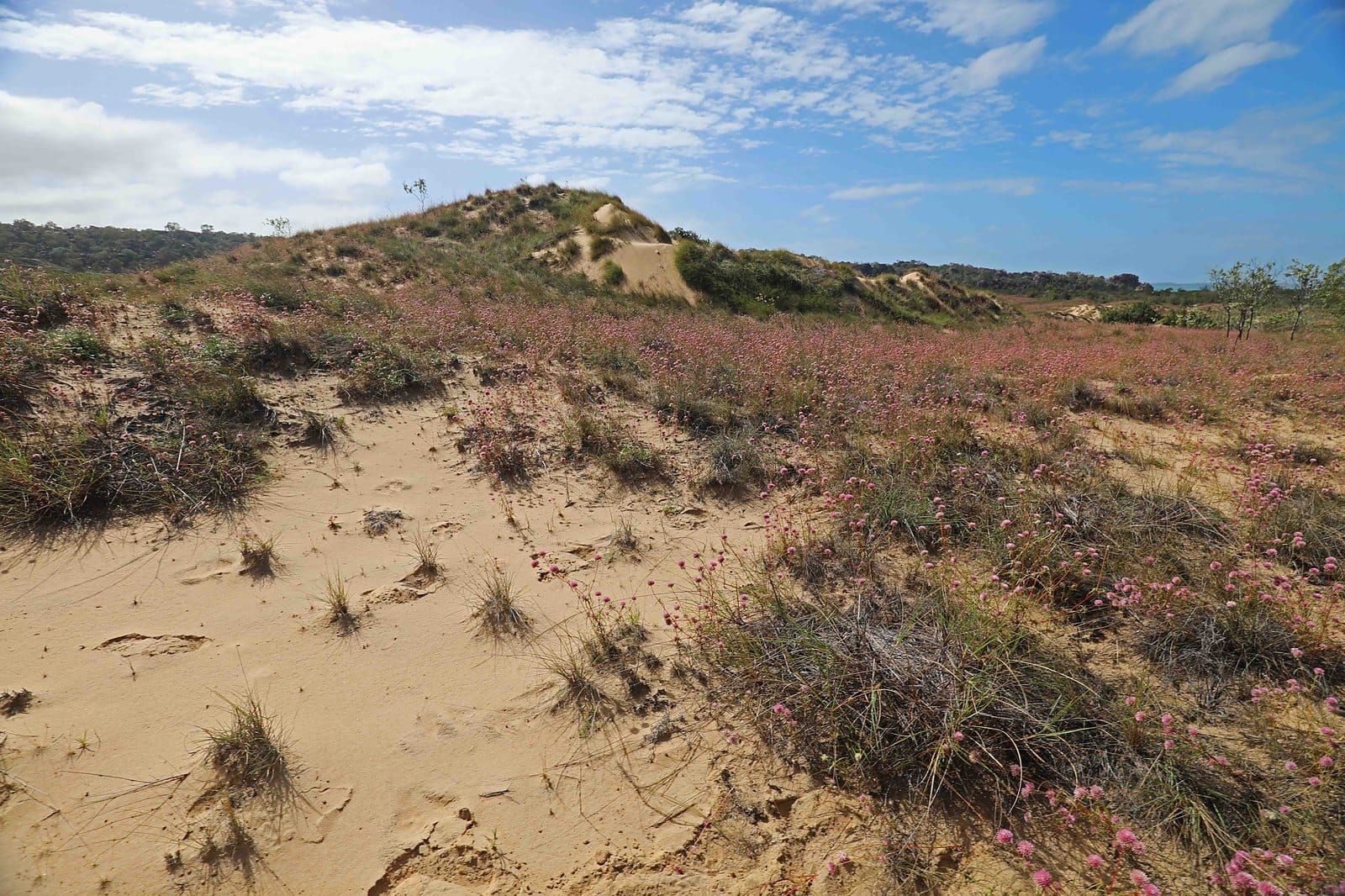
Our short take: the story is drawn from a National Science Week release by Science in Public (22 July 2026) and from Rob Fletcher's report for The Fish Site (7 March 2025). Photograph: vegetated dunes on Groote Eylandt by P Barden, via Wikimedia Commons under CC BY 4.0.
- Indigenous science, National Science Week 2026, Science in Public The release describing Groote Aqua and its closed loop.
- Can aquaculture help Groote Eylandt survive its transition from manganese mining? The Fish Site Rob Fletcher's report on the farm and its people.