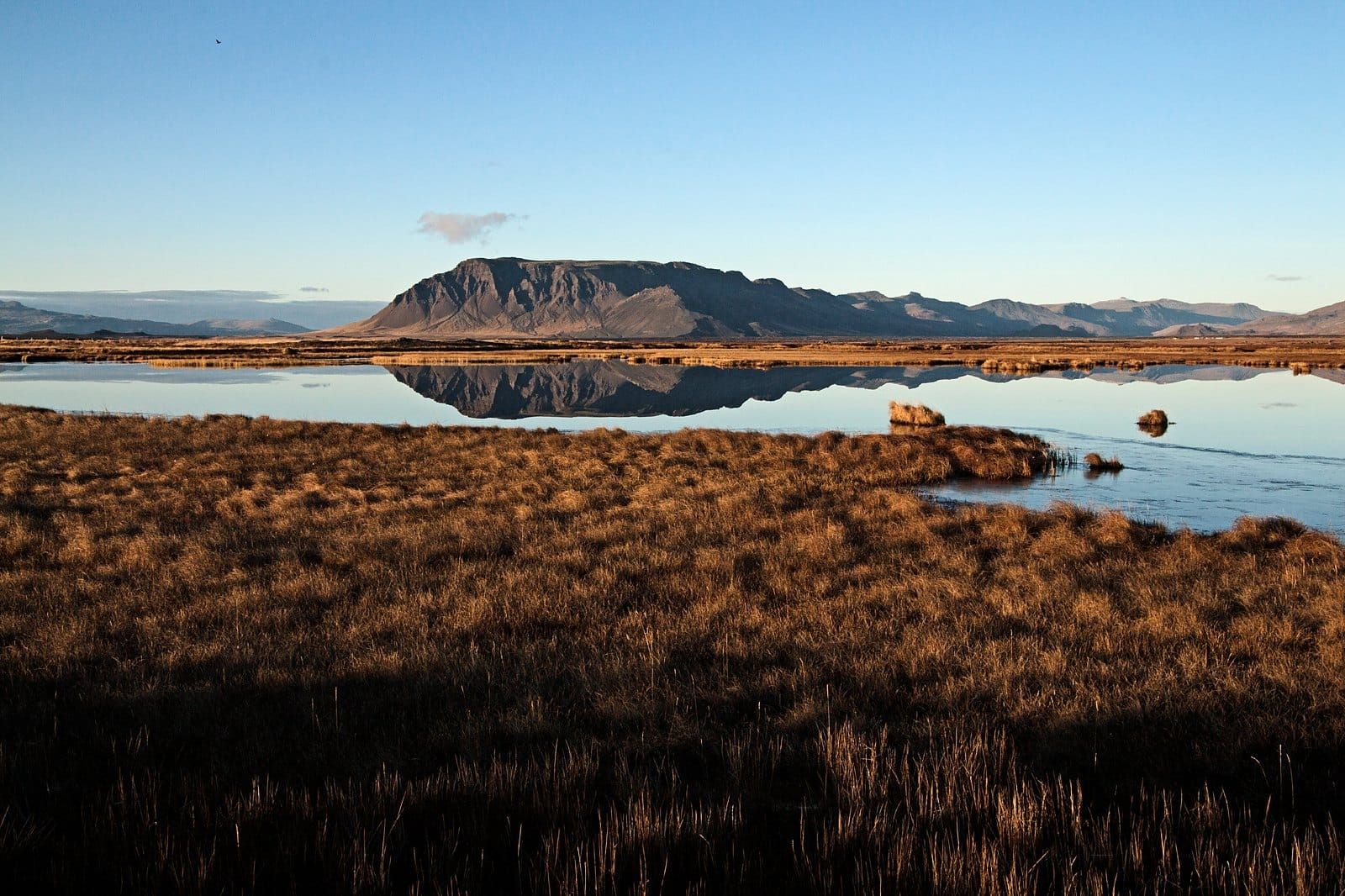
Iceland's lowlands were once one great soft wetland, and last century most of it was drained: about 34,000 kilometres of ditches, enough to cross the island many times over, took the water out of 70 per cent of the bogs. Now the water is going back. Peatland LIFEline, known at home as Mýralíf, began last September and was announced to the world by the RSPB in January: eight million euros from the European Union's LIFE programme, running to 2031, led by the Agricultural University of Iceland with the RSPB, Fuglavernd, Iceland's bird society, and four more partners. Its method is patient: work farm by farm with the people who own the land, fill the ditches, let the bog rise, and measure what returns. Its first pilots cover about 1,400 hectares and 60 kilometres of ditches, with a further 2,000 hectares under stewardship agreements, and a national roadmap, a carbon code for peat and a monitoring scheme come with it, so the whole country can follow.
Why Iceland matters is written in feathers. Six in ten of the world's Eurasian golden plovers nest there, along with a quarter of the whimbrels and one in eight redshanks, and every one of them needs wet ground to raise chicks. Hólmfríður Arnardóttir, who runs Fuglavernd, has spent years making that case, project manager Elisabeth Bernard is now making it field by field, and a rewetted bog also stops leaking carbon and starts holding water through the summer. This August the crew of the Energy Observer, the solar and hydrogen boat circling the world, called in at the restoration site at Miðfossar to see the ditches being filled. Australians who have watched a swamp fill after rain know the feeling: the reeds thicken, the frogs start, the birds come back. Iceland is doing it on purpose, with a spade and a plan.
Sources and links
Our short take: the project was announced by the RSPB (29 January 2026), with the wetland and bird figures from the project partners and the Icelandic government. Photograph: Lukas von Daeniken, CC BY-SA 2.0.
- New project launched to protect Iceland's globally important peatlands RSPB, 29 January 2026.
- Mýralíf, Peatland LIFEline The project's own site, in Icelandic.
- The project formally begins Land and Forest Iceland, September 2025.