
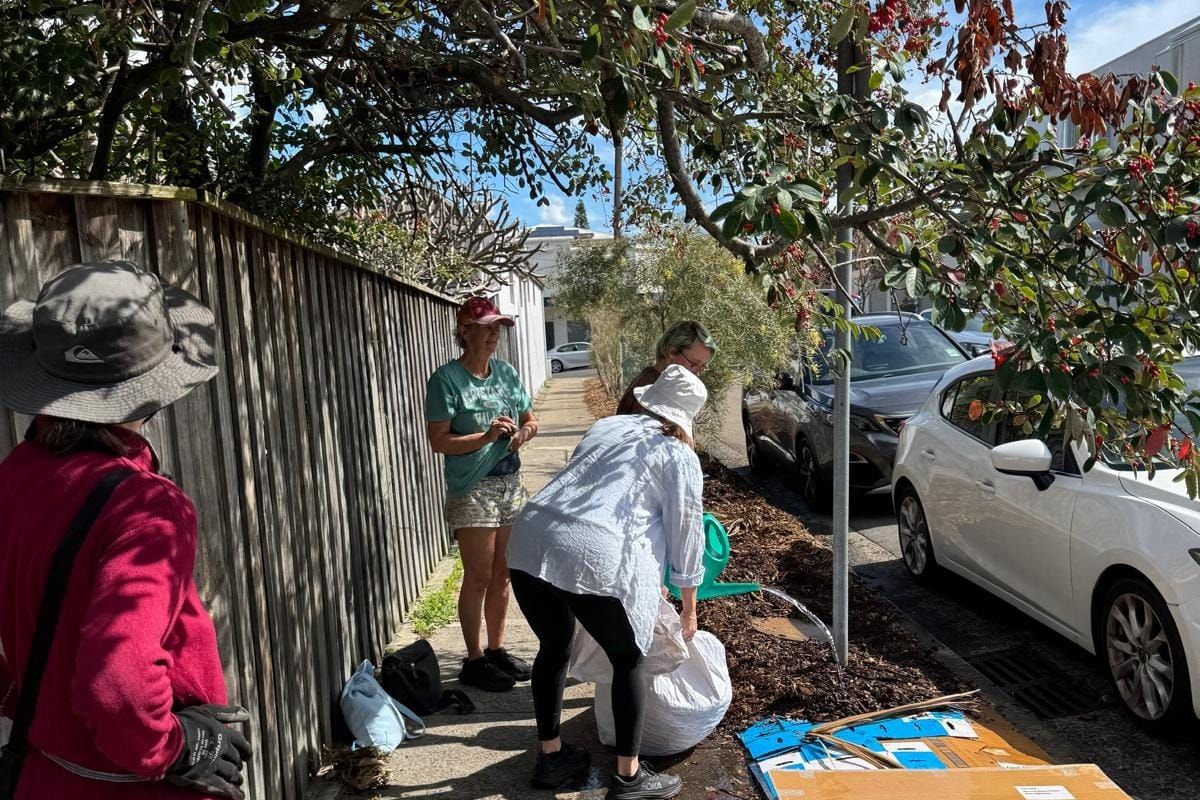
Bondi has had its own branch of the global Transition Network for seventeen years, and Kit Shepherd hopped on board a year after the founding group began. For the past eight years she has steered it, and when she is not on the verge, following the vision of a biodiversity corridor leading to Tamarama gully, you may still find her collecting cafe scraps for the community compost. Now a pollinator corridor is coming to her streets, and there is room for you.
Most weeks in Bondi, Kit Shepherd does her rounds. Cafe by cafe she collects the peelings and offcuts that would otherwise be waste and turns them into soil in a quiet garden behind a block of units on Bondi Road. She loves it for the compost, and just as much for the chats, because every bucket starts a conversation about what food waste could become. Kit is the Convenor of Transition Bondi, a neighbourhood group founded in 2009 by Lance Lieber and five friends as part of the worldwide Transition movement that began in Totnes, England, in 2006. She grew up on a sheep property, studied horticulture, spent forty years teaching adults, and sums up how the group works in three words. Head, heart and hands. Film nights, guest speakers and a blog for the head. A monthly Mend and Remake afternoon, the garden and the compost for the hands. And for the heart, listening circles, a community art class and potluck dinners with parlour games, because a room of strangers who have laughed together becomes a table of friends.
This year the street came to her. Waverley Council introduced Kit to Patrick Franklyn, a landscape architect at UNSW who has spent years creating native verges unpaid, and whose project On the Verge is joining nature strips into a biodiversity corridor through the eastern suburbs, inspired by work done in Melbourne. Verges and nature strips are public land in front of nearly every home, and planted ones are habitat: nectar for bees and butterflies, seed and shelter for small birds and lizards, cool soil where there was hard lawn, and a way for wildlife to travel between the parks and the coast. In the streets between Bondi and Tamarama a small group meets weekly to bring back Eastern Suburbs Banksia Scrub, the plant community that once covered these hills and now survives in fragments. Council rules are simple: keep clear of the kerb, have your neighbours' blessing, and plant the species that belong here.
Kit was already tending a verge near her home and is now part of Patrick's team, while he applies for a grant so the work can grow. Collaboration is the lifeblood of the Transition movement, Kit says, and this project feels like a revival. At this month's annual general meeting three new people joined the committee, and there is still room for more hands, on the verges and in the core group. If you work from home or are looking for community engagement and can spend a lunch break with others and your hands in Bondi soil, do get in touch. Everyone is welcome, whatever your age, background or green thumb, and if you live nearby great, because gardens like these grow best with neighbours in them. Write to info@transitionbondi.org, or look for the people planting the nature strips. Kit will be the one with the buckets.
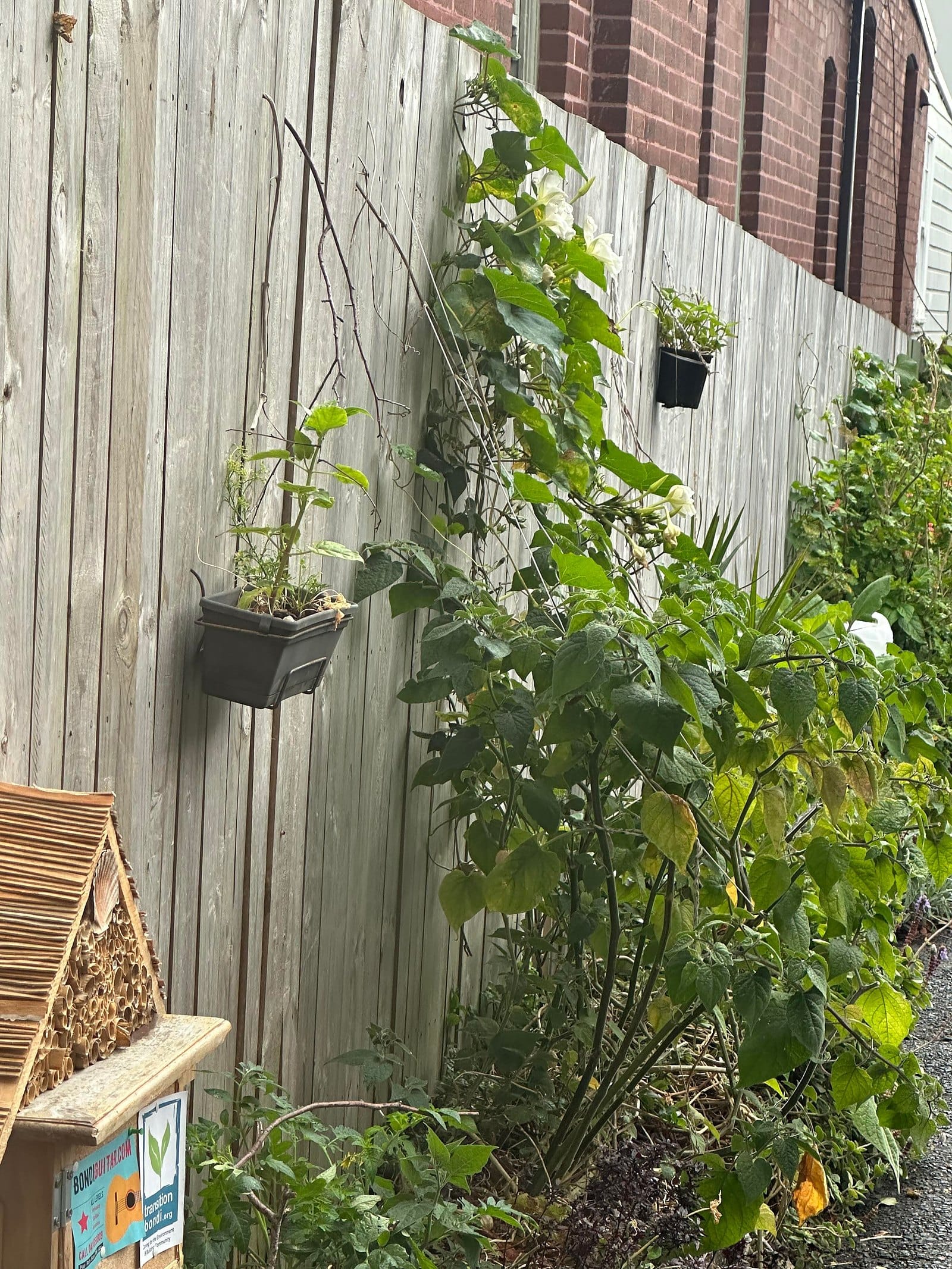
This story is dedicated to Kit Shepherd, and to seventeen years of volunteering for her community across Waverley. Thank you, Kit, for all the community connection, for giving our wildlife a place to land, and for sharing your love of nature with us.
Sources and links
An Earth to Sea News original, from an interview with Kit Shepherd on 26 August 2026 and her own review of the story. Photographs: Kit Shepherd, Transition Bondi.
- Transition Bondi Contact info@transitionbondi.org
- Waverley Council verge gardens The council's simple rules for planting a nature strip.