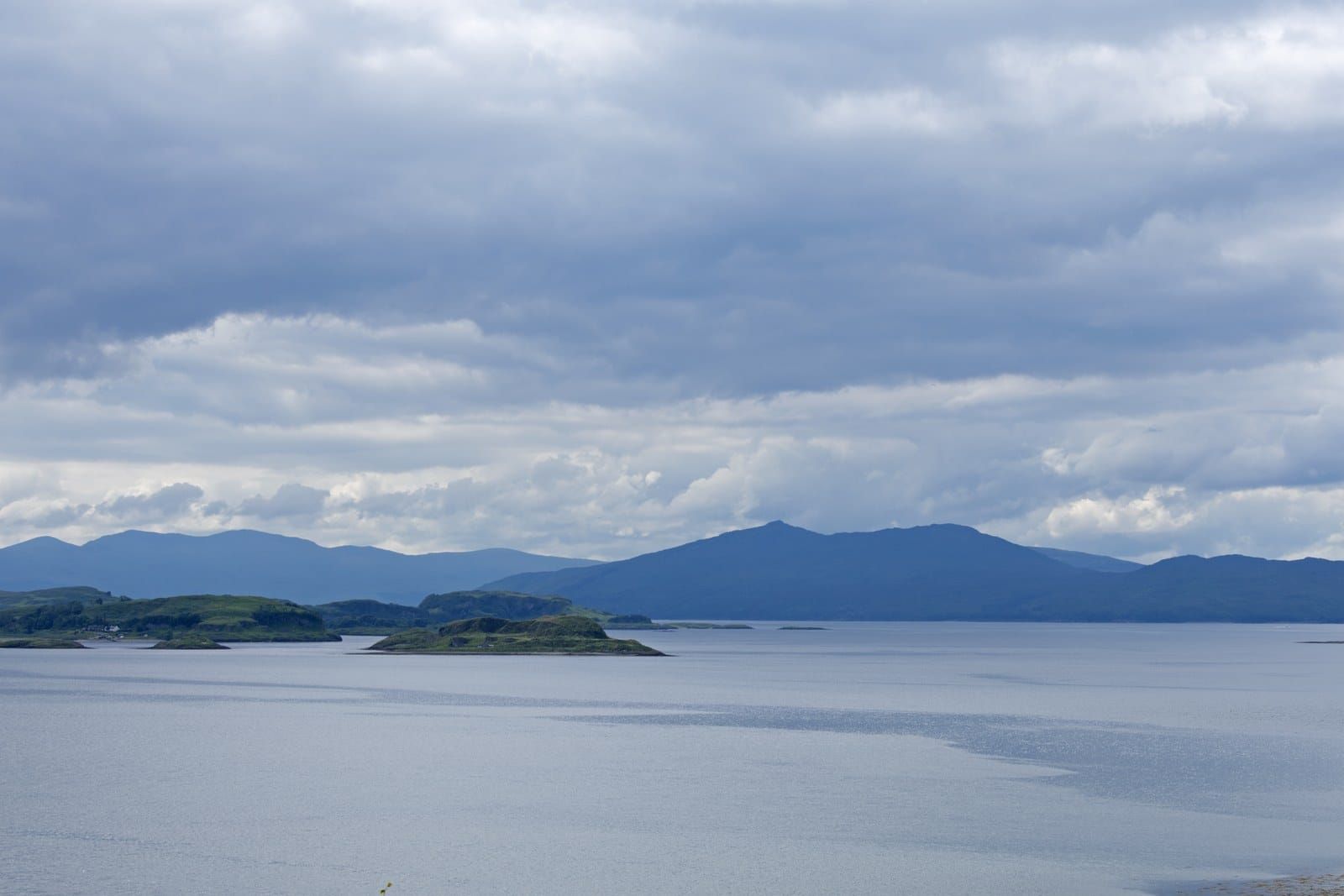
Lios Mor is a long, low, green island at the mouth of Loch Linnhe, north of Oban: limestone under grass, about 170 people and one road. Saint Moluag, a contemporary of Columba, founded a monastery here in the sixth century, and for fourteen hundred years that was most of what anyone could say. Records named it, place names kept it, island tradition held it, but the ground had given almost nothing up. So the island's historical society decided to look. Bob Hay, who grew up on the island, organised the funding and the volunteers, and in 2019 islanders worked alongside Dr Clare Ellis of Argyll Archaeology on an excavation and a geophysical survey around the old cathedral at Clachan. What they found has now been published in the journal Antiquity, with Professor Gordon Noble of the University of Aberdeen among the authors.
Beneath the fields lay an extensive burial ground inside a limestone wall, early buildings including an oval structure with a metalworking area beside it, and many crucibles still carrying traces of gold, silver and copper melted in the seventh century. There was a gold touchstone for testing precious metal, now with National Museums Scotland, mould fragments for the ring brooches of the age, chip carved motif pieces and early cross slab fragments. Finds run from the seventh century to the tenth, and nothing from Moluag's own lifetime has turned up yet, which the team says plainly. "We can now see that it was a thriving centre of worship, craftsmanship and learning, whose importance may have rivalled some of the best known monasteries in early medieval Britain," Noble said, naming Iona and Portmahomack as its peers. Hay put it another way: the discoveries "demonstrate the value of community led archaeology in advancing academic research". A small island decided its past mattered, paid for the digging and did some of it, and early medieval Scotland has a new centre on the map.
Sources and links
Our short take: the finds and quotes are from the Antiquity release of 30 September 2026 as carried by Phys.org and from Dario Radley's report for Archaeology News on 1 October; the paper is by Clare Ellis and colleagues in Antiquity, 2026.
- A major monastic centre? Rethinking Lismore's place in the ecclesiastical landscapes of early medieval Britain, Antiquity, 2026 The paper.
- Community archaeology uncovers a major early medieval monastery, Phys.org, 30 September 2026 The release, with the quotes.
- A major early medieval monastery lost to legend found on a Scottish island, by Dario Radley, Archaeology News, 1 October 2026 The fuller report.
- Lismore Gaelic Heritage Centre The island's own museum.