Since 2019, London has asked the most polluting vehicles to pay a daily charge for driving in its Ultra Low Emission Zone, which grew from the city centre to the whole capital by August 2023. A team led by Queen Mary University of London wanted to know what that meant for children's lungs, so they measured them. Their Children's Health in London and Luton study followed more than 3,400 children aged six to nine from 84 primary schools, measured yearly from 2018 to 2022. Luton, north of the capital and with no clean air zone, was the comparison. Over those five years, London children's exposure to nitrogen dioxide, the main traffic gas, fell about twice as fast and more than twice as far as their Luton classmates'. Their lungs responded: the air a child could breathe out in one second grew by an extra 10 millilitres a year compared with Luton, and the share of London children with clinically impaired lung function fell from 14 per cent to 9 per cent, while Luton moved from 9 to 7. By the end of the study, London's children had caught up.
Dr Helen Wood, Research Fellow at Queen Mary and lead author: "We already knew that the ULEZ reduced air pollution but now we know that children's lung health has improved at the same time, which is a really important finding for children and parents living in London." Dr Wood adds that air in both cities still sits above World Health Organization guideline levels, "so there is still work to be done". Dr Ian Mudway, Associate Professor at Imperial College London's School of Public Health and joint senior author, says the data shows clean air zones can protect developing lungs, and Professor Chris Griffiths, Professor of Primary Care at Queen Mary and the University of Oxford, sees a priority for cities everywhere with traffic on their streets. Professor Gurch Randhawa, Professor of Public Health at the University of Bedfordshire, says Luton and Bedfordshire will read it closely. Separately, Imperial's Environmental Research Group, with Dr David Dajnak and Dr Dimitris Evangelopoulos, found deaths linked to air pollution in London down around 40 per cent between 2019 and 2024, with nitrogen dioxide down 41 per cent and fine particles down 28 per cent.
Councils have played their part too. In July, the network UK100 published Breathing Life: A Decade of Local Air Quality Ambition, the first report to measure council led clean air work in England. As Paul Day reported for Air Quality News, it estimates that local and regional action prevented 13,722 deaths between 2019 and 2025, brought about 15 billion pounds in health and productivity gains, and delivered about 35 per cent of England's progress on cleaner air. Christopher Hammond, UK100's chief executive, credited local leaders "getting on and creating better places to live in". Cleaner streets, faster growing lungs, and a generation of children who will never know how much their city did for them. A lovely kind of quiet.
Sources and links
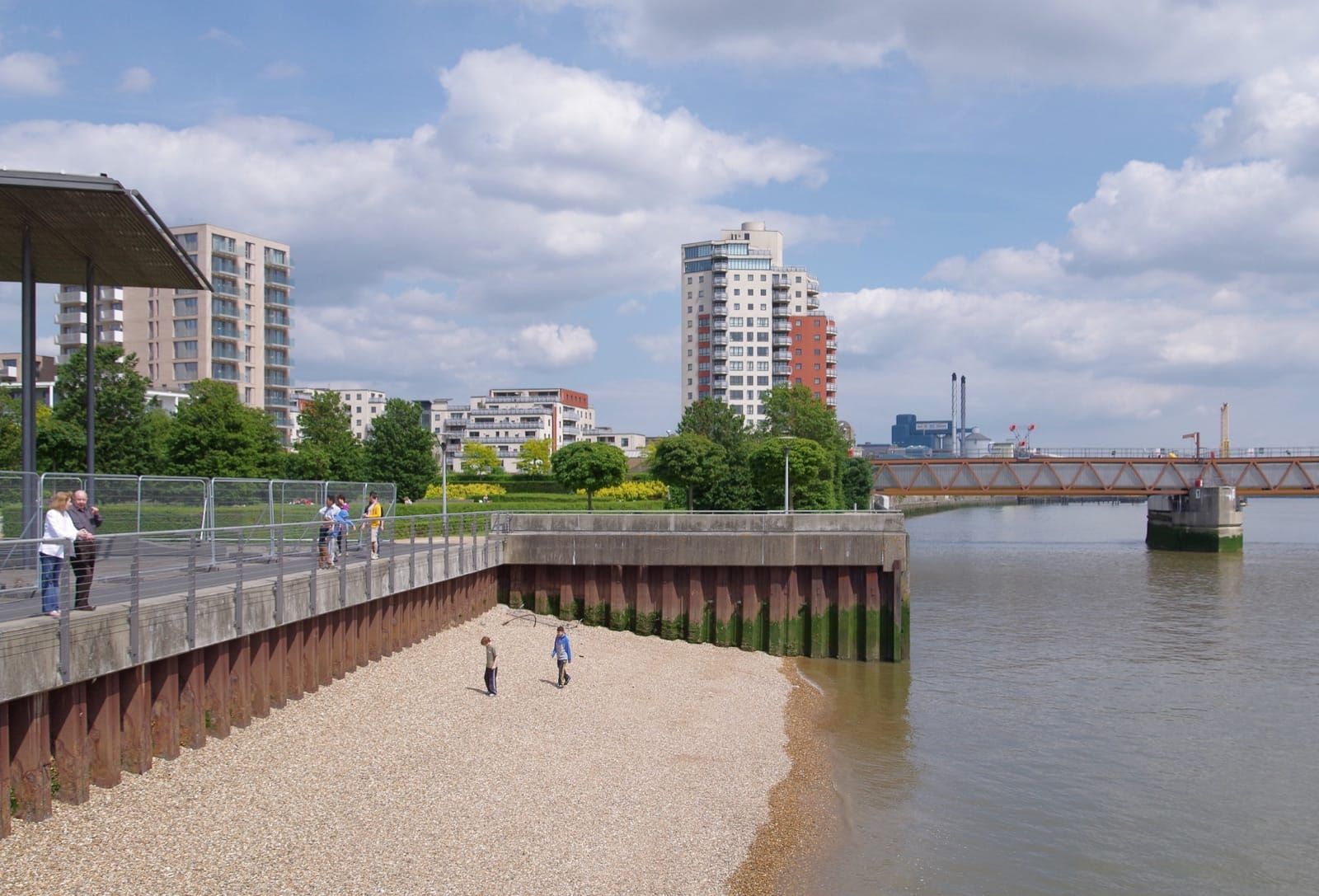
Our short take: the research is described in a Queen Mary University of London release and in Imperial College London's report by Ryan O'Hare (both 19 August 2026), the paper is in The Lancet Public Health, and the council figures come from UK100's Breathing Life report as covered by Paul Day for Air Quality News (13 July 2026). Photograph: Rudolph.A.furtado, public domain, via Wikimedia Commons.
- Introduction of London's Ultra Low Emission Zone linked to improved lung growth in children, Queen Mary University of London The lead university's release, 19 August 2026, with all four researcher quotes.
- Introduction of London's ULEZ linked to improved lung growth in children, by Ryan O'Hare, Imperial College London Imperial's report, 19 August 2026.
- Impact of the Ultra Low Emission Zone on lung function growth in children in London, UK: a prospective parallel cohort study The paper in The Lancet Public Health, August 2026.
- Health burden of air pollution in London in 2024, Imperial College London Environmental Research Group The separate Imperial analysis, published 24 June 2026.
- Breathing Life: A Decade of Local Air Quality Ambition, UK100 The council report, 13 July 2026.
- Local clean air action has saved almost 14,000 lives and 15 billion pounds, by Paul Day, Air Quality News The report as covered, 13 July 2026.