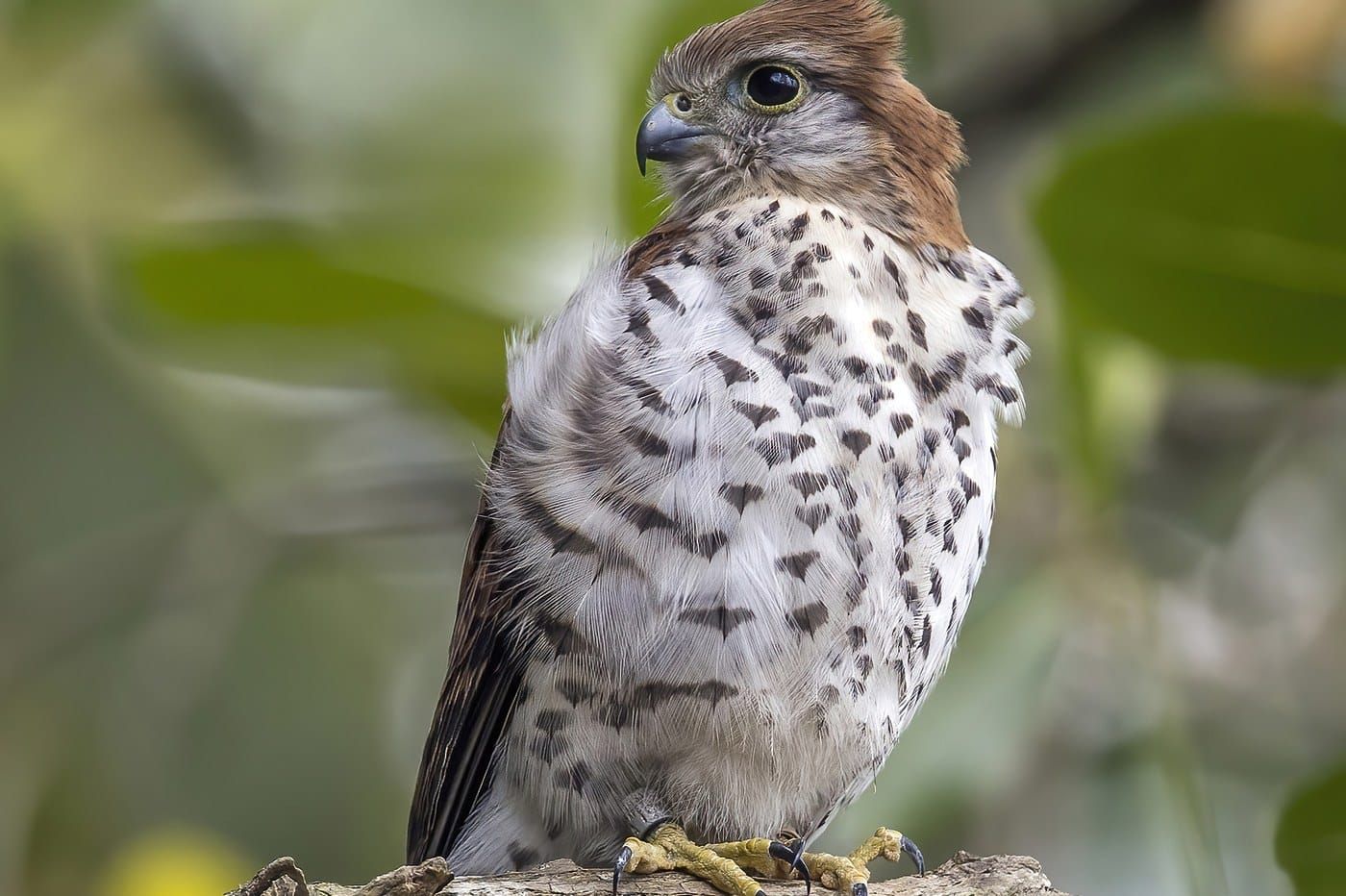
Mauritius is the island that lost the dodo, and for a long time that was the whole of its story. It should not be. In 1974 the Mauritius kestrel was down to four known birds, which made it, at that moment, the rarest bird on the planet. The pink pigeon was under ten. The echo parakeet, the last surviving parrot of the Mascarene islands, was not far behind. Every one of them should have gone the way of the dodo, and none of them did. There are now more than four hundred kestrels across the island, and in 2022 the kestrel was made the national bird. There are several hundred pink pigeons, enough for the species to be moved off the Critically Endangered list to Vulnerable. And there are more than eight hundred echo parakeets, which is not a remnant any more, it is a population.
The other half of the work is a small island in Mahebourg Bay. Ile aux Aigrettes is only twenty six hectares, sitting about eight hundred and fifty metres off the south east coast, and the Mauritian Wildlife Foundation has spent decades rebuilding it into something close to the coastal forest that stood there before people arrived. Pink pigeons, Mauritius fodies, olive white-eyes, Telfair's skinks and Gunther's geckos have all been returned to it. Since 2000 Aldabra giant tortoises from Seychelles have grazed and trampled and spread seed across it, standing in for the giant tortoises Mauritius lost, doing the job the forest still needed doing. You can go and walk through it. That is the part worth sitting with: an island where the lost things are being put back, one species at a time, and you can catch a boat to it.
Our short take: reporting drawn from the Mauritian Wildlife Foundation, BirdLife International and the Critical Ecosystem Partnership Fund. Photograph: Charles J. Sharp, CC BY-SA 4.0.
- Mauritian Wildlife FoundationThe people behind the kestrel, the pink pigeon and Ile aux Aigrettes.
- BirdLife International: Mauritius kestrelThe species record, and where the numbers stand.