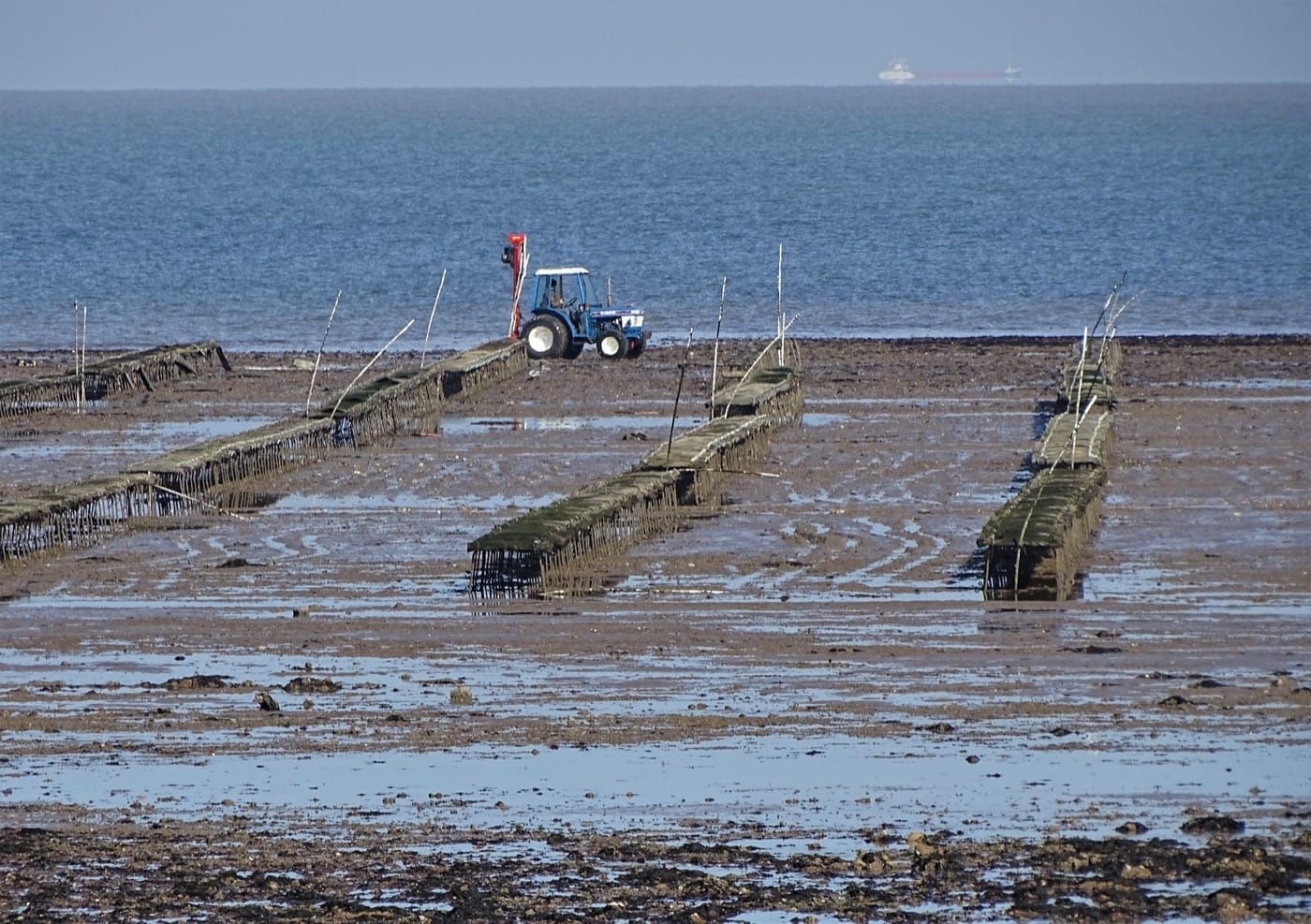
Britain used to be built on oysters. The native oyster reefs that once ran along the coast were food for almost everyone, and then they were dredged away, and with them went the work those reefs quietly did. A single adult oyster filters something like fifty gallons of water a day, and a reef of them cleans an estuary, calms the seabed and gives small fish somewhere to be. Off the Norfolk coast, that reef is now being rebuilt in the most practical way imaginable. The restoration group Oyster Heaven makes what it calls Mother Reefs, specially designed clay bricks, and pre charges each one with more than a hundred baby oysters, or spat, in controlled conditions so they have already taken hold before they ever see the sea. The first batch went down in August. By the end of this year there should be forty thousand bricks on the seabed carrying four million young oysters, which will make it the largest oyster reef in Europe.
The bricks are going in alongside a working farm, which is what makes it more than a restoration project. Norfolk Seaweed is a family run aquaculture business growing sugar kelp in the North Sea just off the coast, and the oyster reef is one strand of a plan that also includes an intertidal oyster bed. So the same patch of water grows a crop and rebuilds a habitat at the same time, and the people who know that stretch of sea best are the ones putting the reef back into it. The funding comes from Purina. The knowledge is local, which is usually the part that decides whether something like this survives its first winter.
Our short take: reporting drawn from The Fish Site's coverage of the Norfolk restoration, the project announcement from its funder, and Norfolk Seaweed's own account of its biodiversity work. Photograph: Neil Theasby, CC BY-SA 2.0.
- Oyster HeavenGeorge Birch's project, and the bricks going down off Norfolk.