Researchers from the National Antarctic Scientific Centre of Ukraine and the Norwegian Polar Institute followed penguins using GPS trackers worn for around three weeks, then added mini cameras for one day to see what the birds were actually doing down there.
What came back is glorious. The footage shows the penguins moving through the water at their true swimming speed, wings beating, companions racing ahead of them. It shows them hunting krill, which gather in such dense aggregations that at moments the swarm rolls itself into bands, and the penguins simply dive straight in.
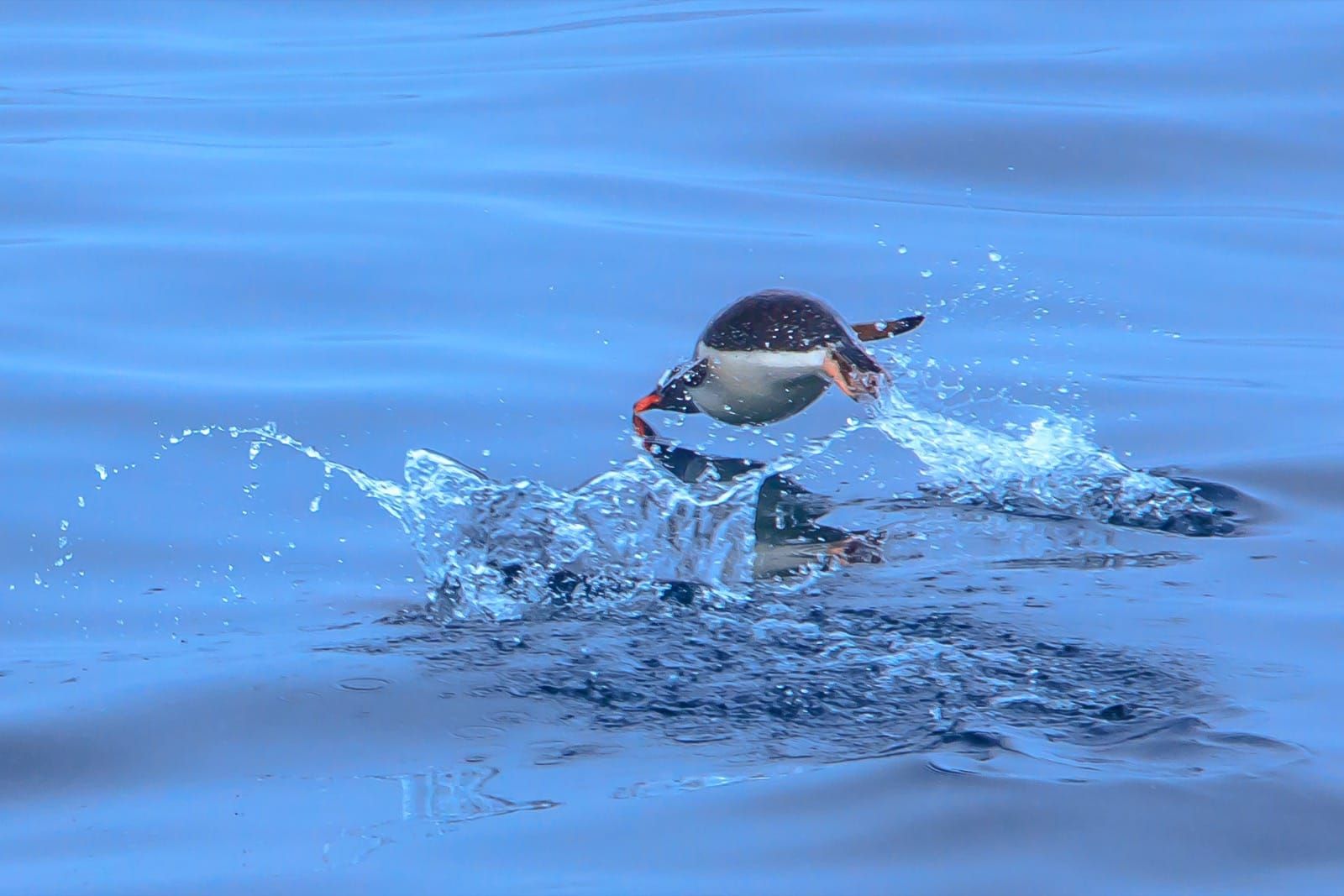
And there is a detail in the film that is pure delight. At certain points, bubbles burst out of the birds' feathers. That is trapped air being released, and it makes them more hydrodynamic. A penguin, it turns out, carries its own slipstream and lets it go at exactly the right moment.
The team say the sensors do not harm the birds and are fitted only during breeding, when the penguins return reliably to their nests and the devices can be taken off safely. The purpose is evidence. Protecting a stretch of the Southern Ocean means showing that it truly matters to the wildlife living there, rather than being somewhere they merely pass through.
Which is the loveliest part of it. To speak for a place, you first have to see it the way its residents do.
Questions you might have
Where does a penguin actually go?
Down, fast, and further than you would think. The trackers stayed on for around three weeks and the camera for a single day, which was enough to fill in the part of the journey no person has ever been able to follow.
Why does it leave a trail of bubbles?
That is air escaping from its feathers. Letting it go makes the bird more hydrodynamic. A penguin travels inside its own bubble and releases it exactly when it needs the speed.
What is it hunting down there?
Krill, the tiny crustacean at the base of the whole Antarctic food chain, which gathers so thickly that the swarm rolls itself into bands. The penguins dive straight into the middle of them.
Our short take: research by the National Antarctic Scientific Centre of Ukraine and the Norwegian Polar Institute, reported by Discover Wildlife (BBC Wildlife), January 2026.