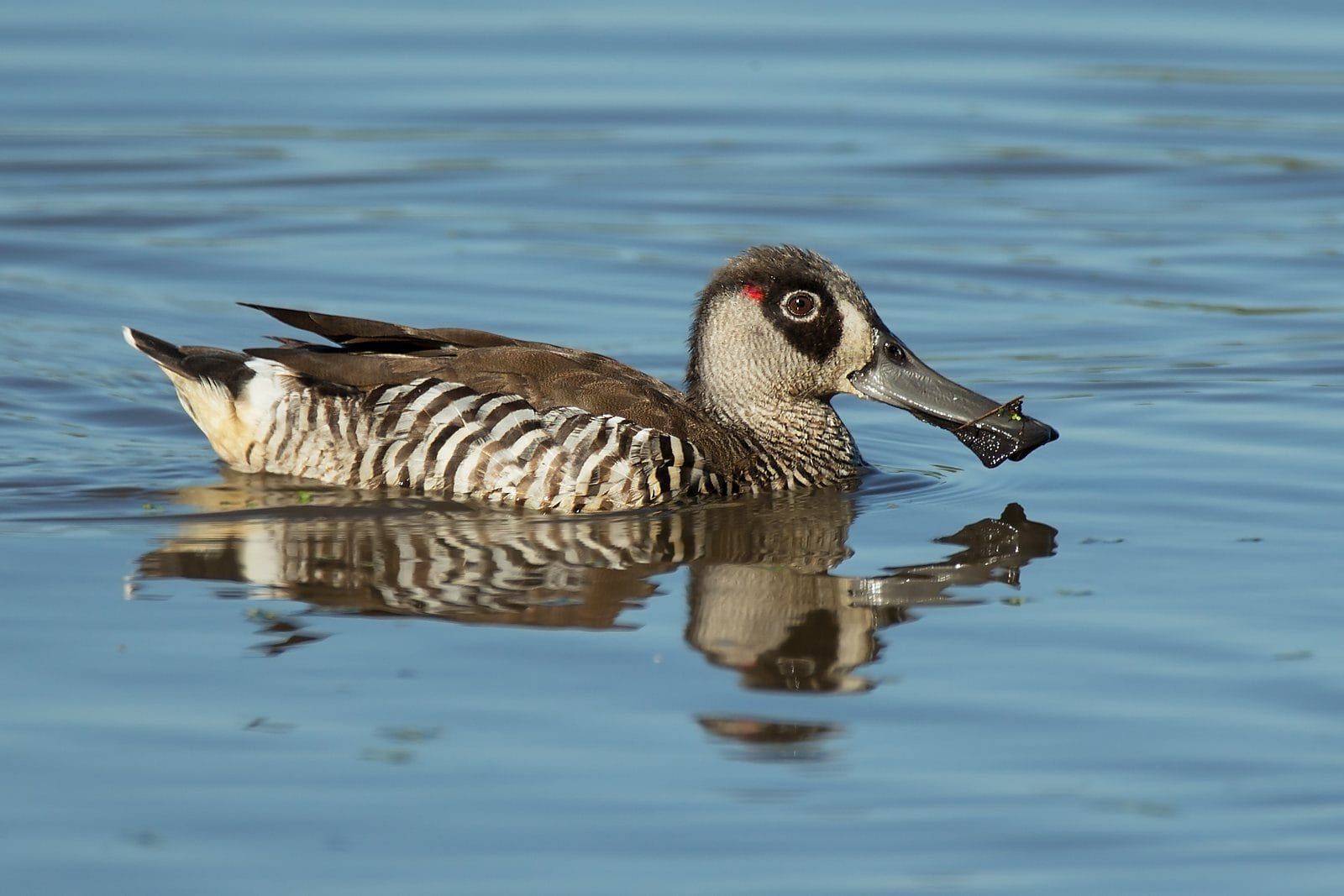
Somewhere out in inland Australia right now there is a small duck wearing zebra stripes, a leathery spoon of a bill with a soft flap at its tip, and a spot of pink behind each eye that gave it its name. The pink eared duck is one of our great nomads: it belongs to no single wetland, instead reading the weather across the whole continent and arriving, sometimes in flocks of thousands, wherever the water has just returned. Pairs feed by spinning together on the surface, whirling a little whirlpool that draws their microscopic food up between them, which is as delightful to watch as it sounds. When the inland dries, they slip away to the coast and wait, and when the rain comes back, so do they.
This year, the rain came back. The annual aerial survey of eastern Australia's waterbirds, run by the University of New South Wales for more than forty years, counted 375,419 birds late last year, up by nearly a third on the year before, and recorded a tenfold rise in breeding, with sixteen species raising young. The biggest gatherings were on desert lakes that spend most of their lives dry: Lakes Mumbleberry and Torquinie in South Australia and Lake Galilee in Queensland together held almost a quarter of every bird counted. Professor Richard Kingsford, who leads the survey, is plain that the long game needs many more wet years like this one, and that is exactly why a boom season matters: every full wetland this spring is a nursery. The pink eared ducks already know. They are out there now, spinning.
Our short take: survey figures from the Eastern Australian Waterbird Survey, led by Professor Richard Kingsford at the UNSW Centre for Ecosystem Science. Species detail from BirdLife Australia. Cover photograph: pink eared duck by JJ Harrison, CC BY-SA 4.0, via Wikimedia Commons.