
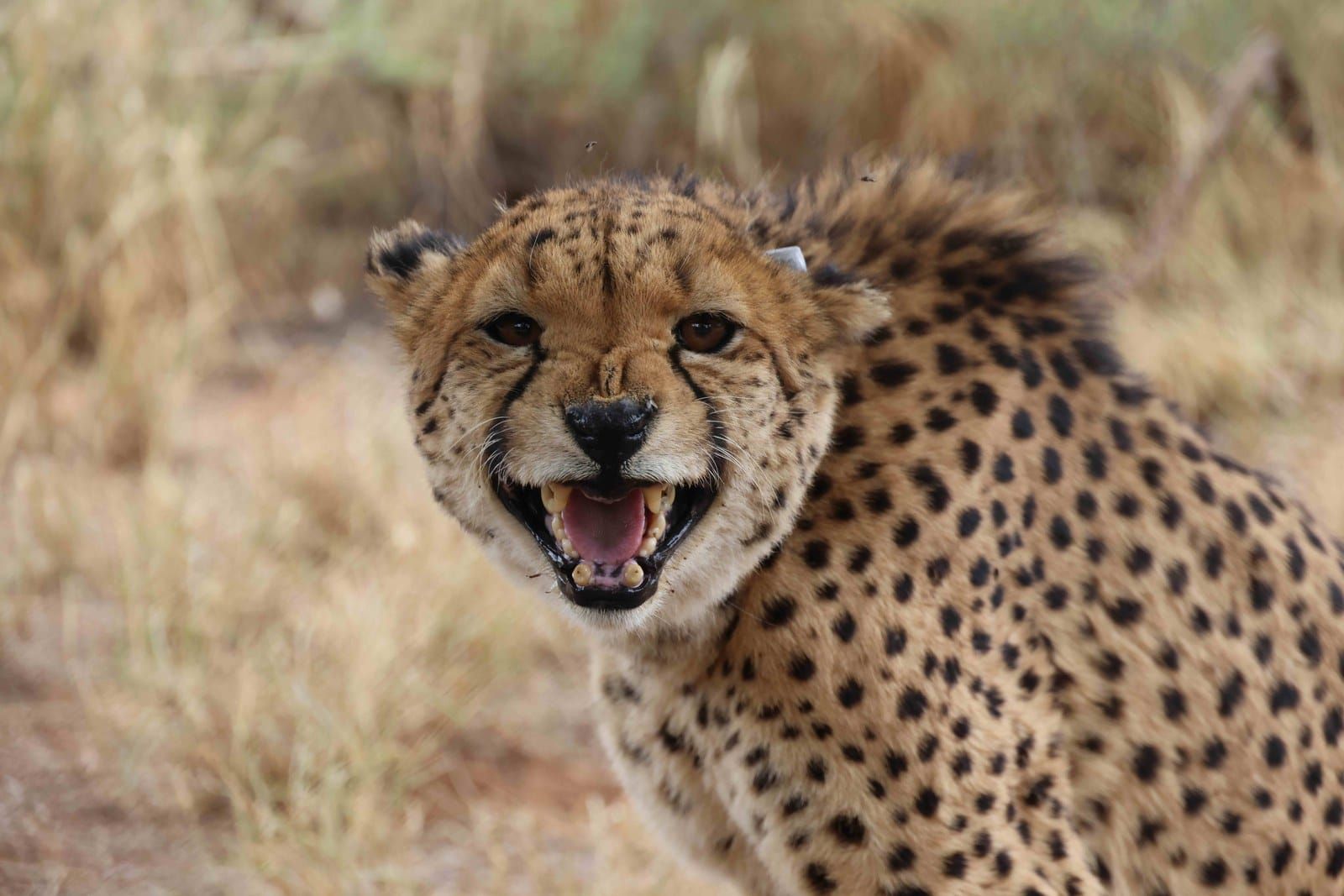
Somewhere in Namibia a cheetah is wearing a small tag on one ear, and since 3 May a satellite called Raven has been passing overhead to listen for it. Raven rode a Falcon 9 rocket out of Vandenberg in California that morning, the first satellite of Icarus 2.0, a European network being built by the Max Planck Institute of Animal Behavior and the German space company Talos so that researchers can hear from lightweight tags on animals wherever they roam. Each tag reports where its animal is and how it is moving, together with the conditions around it, and the receiver aboard Raven collects those messages on every pass. It is a small piece of hardware for a large idea: a cube ten centimetres on a side, weighing about a kilogram, shrunk by Talos engineers to fly on a shoebox sized satellite built by EnduroSat in Bulgaria.
Icarus has been listening from space before. From 2020 to 2022 its first receiver worked from the International Space Station, and that is where the idea of an Internet of Animals, wildlife reporting in from every continent, was proven. Icarus 2.0 gives the receivers satellites of their own. A first one flew in November 2025 as a passenger on a satellite belonging to the University of the Bundeswehr Munich. Raven is the first that Icarus owns and operates, two more launches are planned for 2026, and another two are scheduled for spring 2027, six receivers in all circling in low Earth orbit. Once they are up, a tagged animal can be heard from up to six times a day, close to real time for a bird crossing a sea or a cheetah crossing a plain. Martin Wikelski, director at the Max Planck Institute of Animal Behavior and leader of the Icarus project, says: "Icarus 2.0 opens up new possibilities for understanding animal behavior and environmental changes with a level of quality and continuity previously unattainable for research and nature conservation." Gregor Langer, chief executive of Talos, which he cofounded, adds: "With Raven, we are launching our own infrastructure for Icarus 2.0 into space for the first time."
What the network gives back is a moving picture of the living world: how migration routes are shifting, where wildlife is thriving, and how whole ecosystems answer a changing climate, seen through the animals themselves. Germany's space agency at DLR funds the work, and the National Geographic Society supports the mission and will open the tags to its worldwide network of Explorers, so researchers and conservation projects on every continent can hear from their animals too. Raven is one voice in orbit for now. By next spring, if the launches go to plan, it will be a chorus, and every one of those tiny tags on the ground will have a satellite ready to listen.
Sources and links
Our short take: the story is told in a Max Planck Society news release of 3 May 2026, with launch details from Spaceflight Now (Will Robinson-Smith) and the Icarus history page linked below. Photograph: Sergio Izquierdo / Max Planck Institute of Animal Behavior, used with the institute's permission.
- Icarus launches second system into orbit, Max Planck Society Release of 3 May 2026; every figure, date and quote in the story comes from here.
- Icarus, a history, Max Planck Institute of Animal Behavior Timeline of the International Space Station years and the move to small satellites.
- SpaceX launches South Korean Earth observation satellite, plus 44 more payloads, by Will Robinson-Smith, Spaceflight Now Independent record of the 3 May 2026 Falcon 9 rideshare from Vandenberg; does not name Raven itself.
- TALOS and EnduroSat to build Internet of Animals satellite constellation, EnduroSat Partner release of 12 January 2026 on the satellite build.