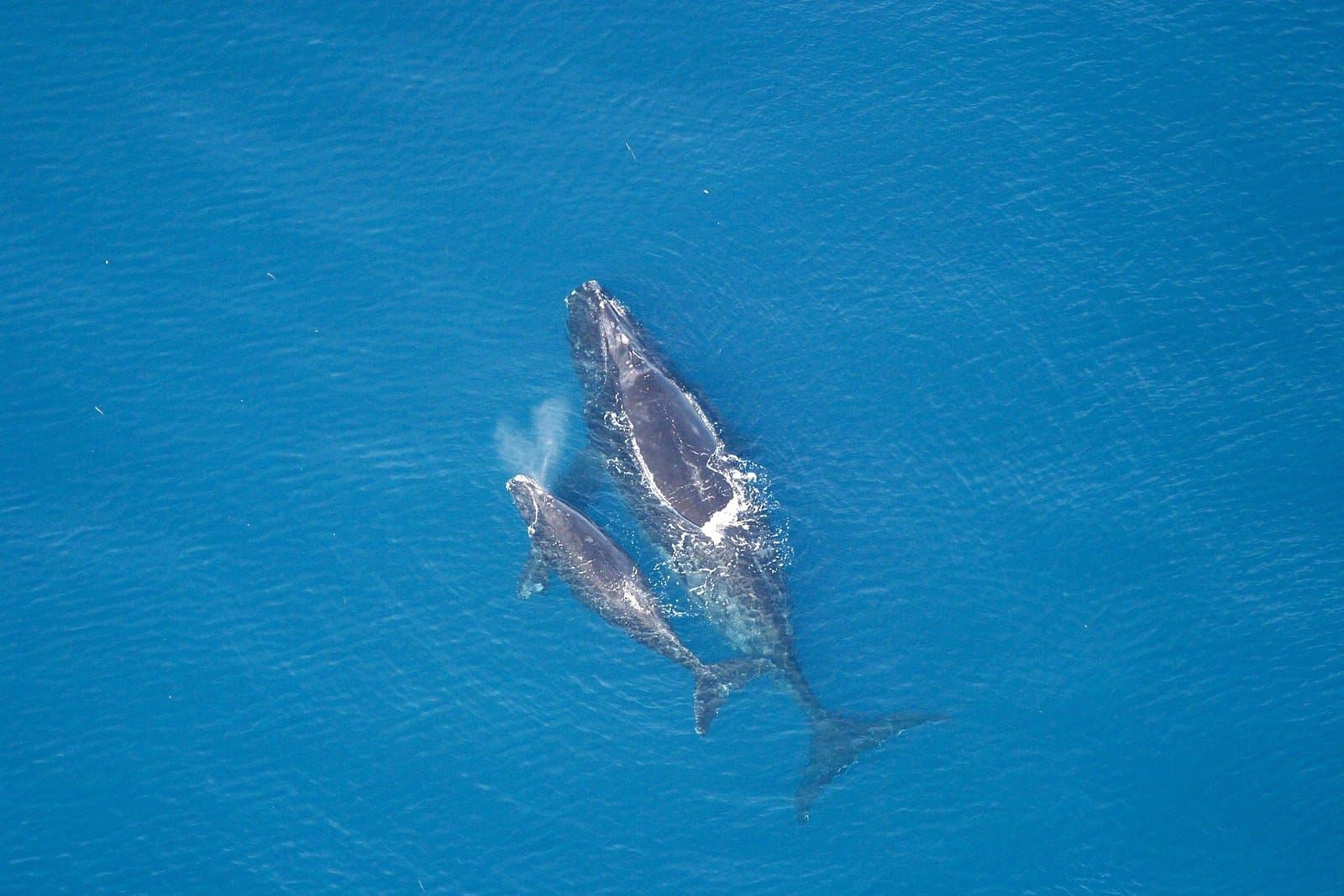
Kristinn Skulason has worked at Bay de Verde, on Newfoundland’s Conception Bay, for twenty eight years, and in all that time he had never seen a whale come inside the harbour. They pass outside the breakwater every year when the capelin are running, and that is where they stay. On 20 July he looked up from his desk and there was a North Atlantic right whale, in the harbour, outside the window. Brett Gilchrist, a director of national programs with Fisheries and Oceans Canada in Ottawa, was able to say exactly which whale it was, because these animals are known one by one and carry names. This one is called Goldfish. Gilchrist explained that right whales range from Iceland right down to the Gulf of Mexico, and that when they gather in Canadian water they are chasing copepods, the tiny crustaceans they live on, which is what draws them into the Bay of Fundy and the Gulf of St Lawrence.
Which is why, out in that Gulf, the shipping now moves differently. For the tenth year running a mandatory ten knot limit applies to every vessel thirteen metres and longer across more than sixty five thousand square kilometres, in force since 22 April this season. On top of that sit the dynamic slowdowns, which are the clever part: when a right whale is detected in one of the main shipping lanes, that lane slows too, for as long as she is there, and lifts again once she has moved on. The number that tells you whether a rule like that is real is the compliance number, and last season it came in above ninety nine per cent. That is captain after captain easing back the throttle in open water because there are whales about, nearly all of them never seeing one. Somewhere out there tonight a ship is doing ten knots when it could be doing twenty, for a whale it will never meet.
Our short take: the Bay de Verde sighting was reported by CBC News, July 2026. Vessel measures and compliance figures from Transport Canada and Fisheries and Oceans Canada, 2026 season. Photograph: North Atlantic right whales, NOAA Photo Library (public domain).