On 20 September the research ship Falkor (too) slipped out of Fortaleza, in northeast Brazil, and turned east along the Equator. On board were twenty five scientists from five countries, led by Professor José Angel Alvarez Perez of Univali, the University of the Itajaí Valley, with Professor Kerry Howell of Plymouth Marine Laboratory as co lead. Their destination was the Romanche Fracture Zone, a rift about 950 kilometres long that cuts through the Mid Atlantic Ridge halfway between the two continents. Nobody had ever looked at its floor, and earlier net sampling had found so little that almost nothing was thought to live there. With Perez were Univali oceanographers Lucas Gavazzoni and Flávia Masumoto, Mauricio Shimabukuro of the Federal University of Rio Grande, and three researchers from the University of the Azores.
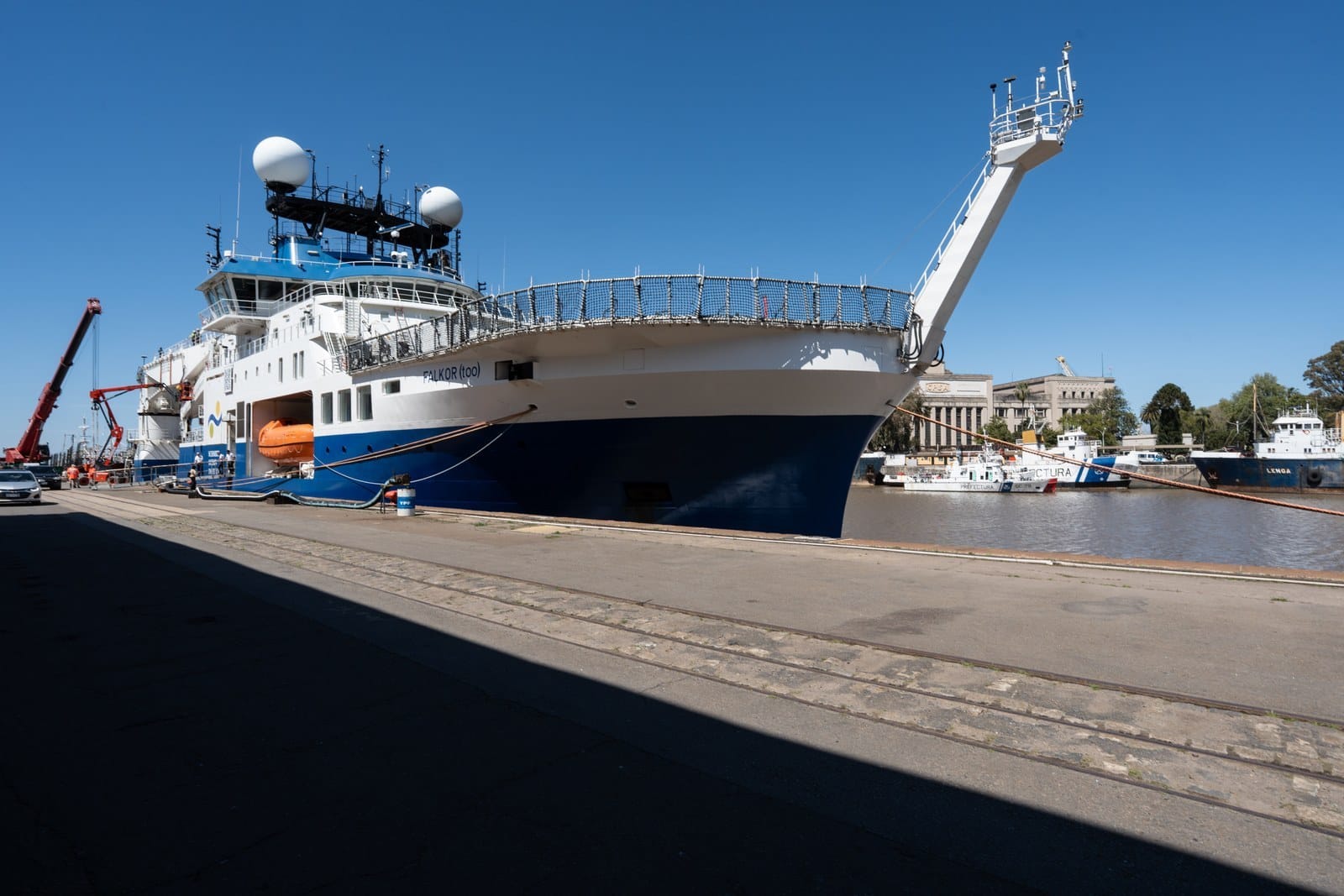
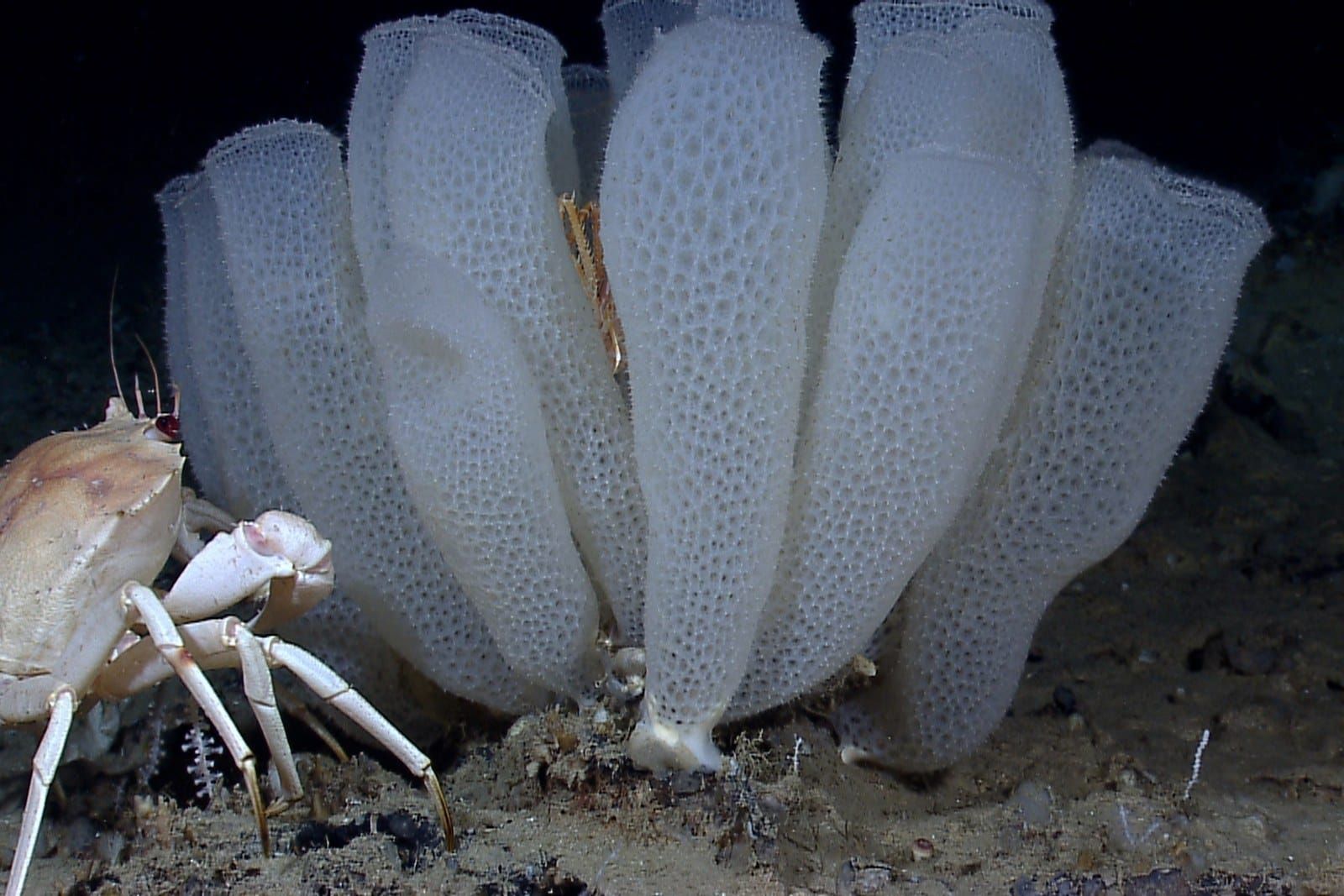
Forty days later the ship tied up in Tema, Ghana, with the answer. Schmidt Ocean Institute's robot SuBastian, lowered to about 4,500 metres, found cold water coral gardens on the fracture walls, and then a garden of sponges at about 4,200 metres that nobody had predicted. Several creatures brought up may be new to science, a possibility until the laboratory work is done. Every dive was streamed live in Portuguese and English, students in the Azores spoke with the team on board, and the dives can still be watched on Schmidt Ocean's YouTube channel. Romanche lies in the high seas, beyond any one country, and the team hopes these first pictures will show which parts deserve protection under the new United Nations high seas agreement. A place no one had seen turns out to be full of gardens.
Sources and links
An Earth to Sea News story, drawn from Univali (3 August 2026), Agência Brasil (18 September 2026), Agência Lusa via Observador (27 October 2026) and Schmidt Ocean Institute. Photographs: as credited in captions.
- Univali, Pesquisador da Univali vai liderar expedição marinha internacional (3 August 2026)
- Agência Brasil, Expedição científica brasileira investiga abismos do Atlântico (18 September 2026)
- Observador (Agência Lusa), Investigadores dos Açores na expedição internacional The Gap (27 October 2026)
- Schmidt Ocean Institute, 2026 expeditions
- Ocean Census, 2026 expedition awardees
- Schmidt Ocean Institute on YouTube, where the dives can still be watched