Every otter leaves a calling card, and this year South Korea's National Institute of Biological Resources went looking for them. Between January and April 2026 its teams collected 106 droppings from 27 sites along the Han River as it runs through Seoul, and read the DNA in each. Back came the answer: 27 individual Eurasian otters, 16 females and 11 males, up from 15 when the same survey was done in 2022. Twenty one live along the main channel and six in the tributaries, with five on Seongnae Stream, four around the Hangang Bridge and three each at Jamsil Bridge, Yangjae Stream and Jungnang Stream. Best of all, the genetics showed five parent and pup groups, which means the otters are not passing through. They are raising families in the capital.
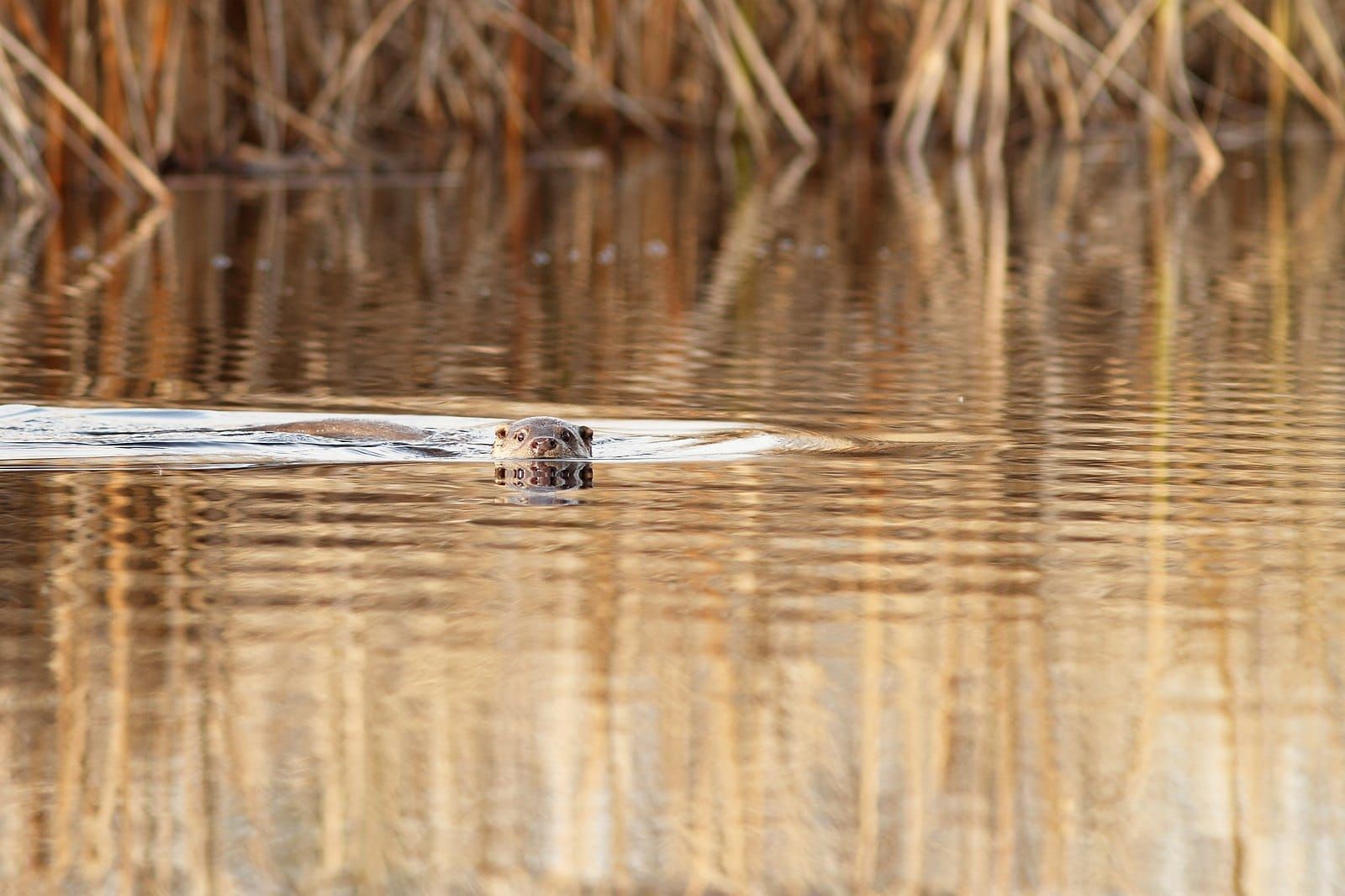
Otters need clean water, fish to catch, and quiet banks with places to hide, and for a long time Seoul's river offered mostly concrete. An otter found dead near the Olympic Bridge in 1986 was the last sign of them for three decades. About twenty years ago the city began taking out its hard embankments stretch by stretch and putting back soil, gravel, reed beds and native plants, work it aims to finish by 2028, and the otters have answered. Yoon Min-sik of The Korea Herald reports that the institute credits cleaner water, recovering fish and the restored banks, in that order. For anyone walking the Han River parks at dusk, the advice is simple: look for a wake with no boat behind it.
Sources and links
Our short take: the full story is by Yoon Min-sik for The Korea Herald (3 September 2026), reporting the survey by the National Institute of Biological Resources under the Ministry of Climate, Energy and Environment. Photograph: a Eurasian otter, Lutra lutra, swimming in Fertő-Hanság National Park, Hungary, by Bouke ten Cate, via Wikimedia Commons under CC BY 4.0 (a stand in for the Seoul animals).
- Otter population on the rise along Seoul's Han River, The Korea Herald Yoon Min-sik's report with the survey figures.
- National Institute of Biological Resources The institute behind the survey (Korean).