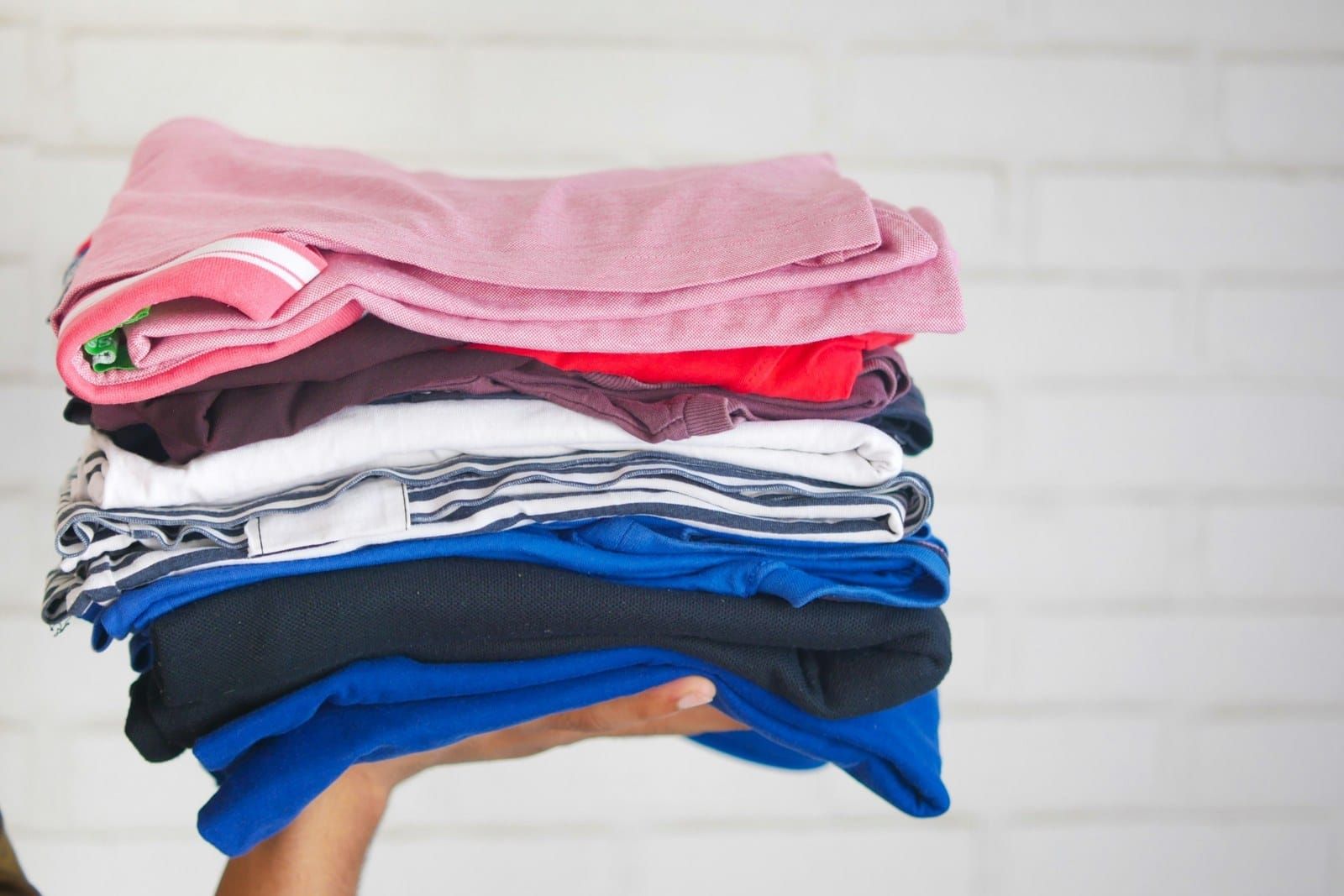
Think of your favourite leggings, a pair of stretch jeans or a swimsuit that fits just right. That give comes from elastane, also sold as spandex or Lycra, a fibre woven through many of the clothes we love to wear. Lander Van Belleghem, a PhD researcher in chemical engineering at KU Leuven in Belgium, is working on a way to take it back out. His research, described by the Falling Walls Foundation as selective elastane depolymerisation, breaks the stretchy fibre down on its own so the materials around it can be recovered and given a second life. On 6 November he pitched it, under the title Breaking the Wall of Textile Recycling, at the Falling Walls Lab global finale in Berlin, and took second place. He was one of 100 finalists, chosen from 91 Labs held across 66 countries and about 3,000 applications from 136 countries.

Lander reached Berlin through the Falling Walls Lab in Leuven, organised by KU Leuven in March. First place went to Davide Scandella of the University of Bern for a fast way to check tumour margins during surgery, and third to a researcher from Singapore's Agency for Science, Technology and Research. On 9 November Lander was back on the Curie Stage for the Emerging Talents session. His university is deep in this work: in the Recyclex project with VITO and Centexbel, running from 2025 to 2029, KU Leuven has developed splitting agents that separate elastane from polyester, plus a patented optical sorting platform that tells textiles apart by their elastane content. It is careful, early science, and his Falling Walls profile says his research bridges the gap between innovation and industrial scale. Closer to home, Melbourne's UPPAREL is already turning old textiles into new things. One day, that well loved pair of leggings could be next.
Sources and links
An Earth to Sea News story. Figures from the Falling Walls Foundation (Key Insights 2026, the Lander Van Belleghem profile and the Falling Walls Lab Leuven page, November 2026) and Centexbel's Recyclex project page. Photographs: as credited in captions.