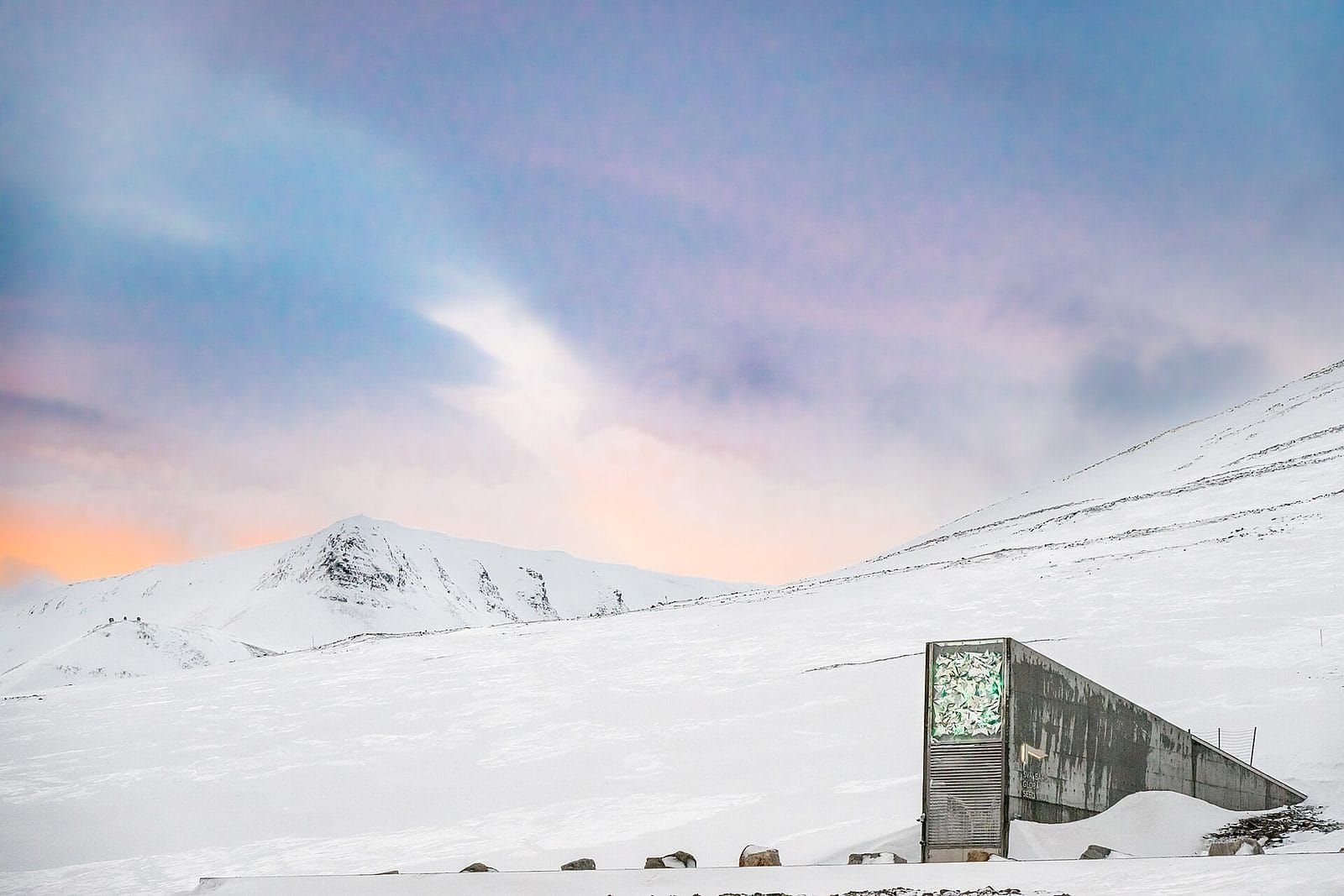
On the island of Spitsbergen, far up in the Norwegian Arctic and a long way from any farm, there is a doorway in the side of a mountain. Behind it, dug deep enough that the permafrost does most of the cooling by itself, sits the Svalbard Global Seed Vault. It is a backup copy of the world's food. Seed banks in every corner of the planet send duplicates of their collections here, and the arrangement is unusual and rather beautiful: the seeds never change hands. They remain the property of whoever sent them, they are never sold and never given away, and the vault exists purely so that if a collection is damaged or destroyed at home, the spare is waiting. It is a library that hopes never to lend a book.
On 17 June this year the door opened for the seventieth time since 2008, and the vault passed 1,401,285 samples. Thirty two boxes came in from eleven seed banks, 15,387 samples in all. Two of those countries were making their first ever deposit: Burkina Faso sent okra, maize and pearl millet, and Niger sent pearl millet, sorghum and cowpea. South Korea sent 6,000 samples across fifty species. The John Innes Centre in Britain sent 4,602, including heritage wheat, barley and oats. Chickpeas and lentils came from Morocco, rye and buckwheat from Poland, peppers and beans from the Netherlands, cucumber and tomato from Taiwan, cashew and lima bean from Brazil. Australia has its own version of this idea, and you can visit ours: the Australian PlantBank at Mount Annan in south west Sydney holds seed and living tissue from thousands of native species, and it is the leading place in the country for safeguarding threatened New South Wales plants.
Our short take: the June deposit and the running total are published by the Crop Trust, which coordinates the vault alongside the Norwegian Government and NordGen. Dr Stefan Schmitz is the Crop Trust's Executive Director. Australian PlantBank detail from the Botanic Gardens of Sydney. Photograph: Unsplash.