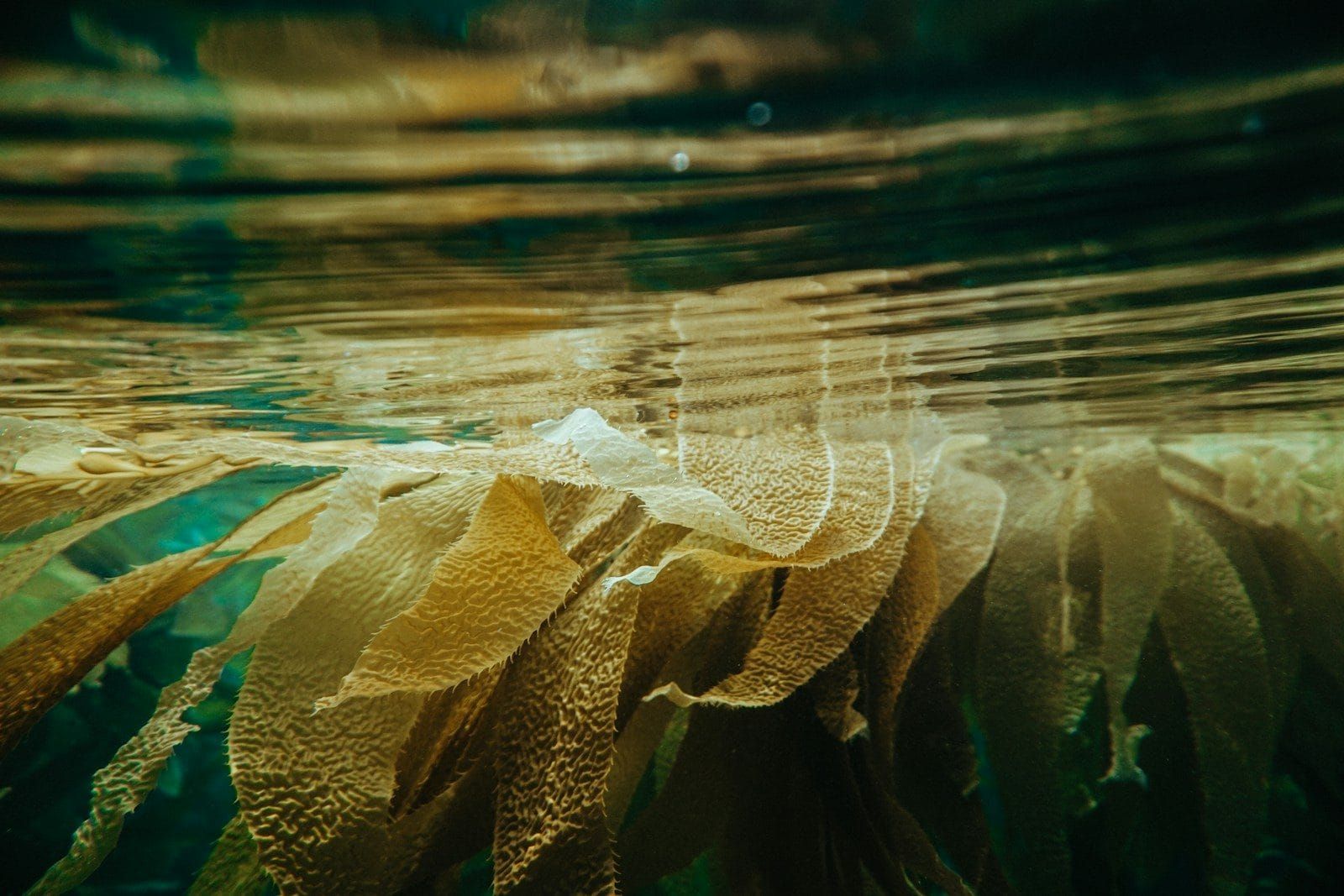
Giant kelp is the closest thing the ocean has to a forest canopy. It grows in cool water off Tasmania, tall enough to sway in ranks with light coming down through it in shafts, and everything from tiny invertebrates to big fish lives in among the fronds. Restoring it is not a job for machines. Somebody has to take each young plant down and fix it to the reef by hand, in cold water, in winter, because winter is when the outplanting season begins. So Eaglehawk Dive Centre runs a four week internship at Eaglehawk Neck for divers willing to do exactly that, and people come from all over the world to spend a month of their lives underwater in Tasmania in the cold, planting a forest.
What has grown alongside the kelp is a proper body of skill. Researchers at the Institute for Marine and Antarctic Studies at the University of Tasmania worked out the outplanting techniques that make restoration actually take, and by the middle of last year twelve scientists, twelve commercial dive fishers and fifty four recreational divers had been trained to reseed kelp onto bare reef. There is now a formal PADI specialty course in giant kelp forest restoration, built so an ordinary recreational diver can take part safely and usefully. A new method paper published this year describes a holdfast graft technique for reseeding at larger scale. The forest is being rebuilt one plant at a time by people who chose to be there, which is a rather good way for a forest to come back.
Our short take: details from Eaglehawk Dive Centre, the Institute for Marine and Antarctic Studies at the University of Tasmania and Environment Tasmania. Associate Professor Scott Ling leads the restoration research, and instructor Pauline Nuttens developed the diver training course. Photograph: Shane Stagner, Unsplash.