Celebrating all of our amazing fathers this Father's Day, with love from all of us at Earth to Sea News.
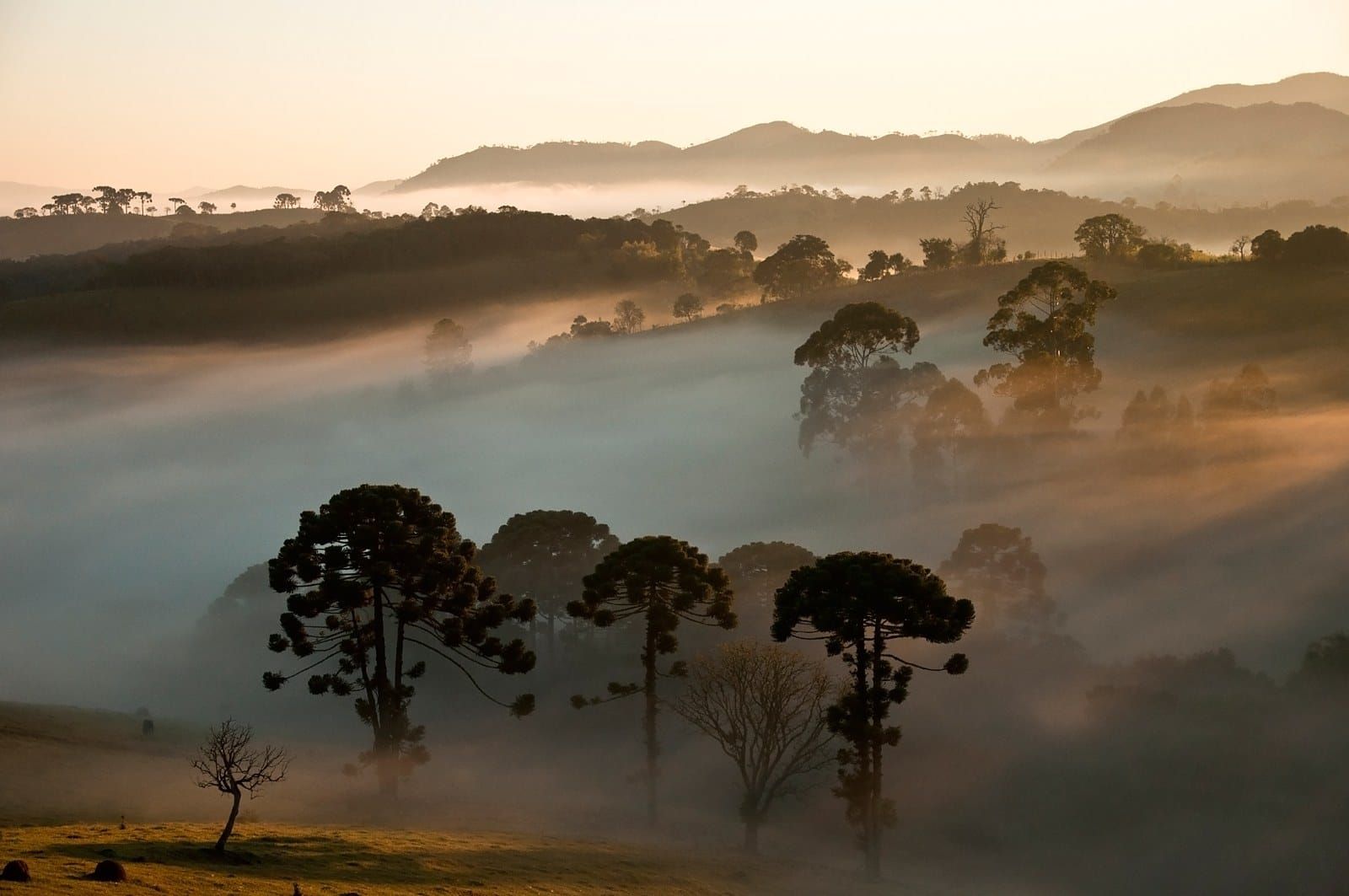
Brazilian pine, the araucária, is the tree that gives southern Brazil its skyline: tall trunks, flat crowns like open umbrellas, and every autumn a harvest of pinhão, the big edible seeds that feed twenty two kinds of animal and most of the kitchens in the region. For the Xokleng people of the Ibirama La Klãnõ Indigenous Territory in Santa Catarina, it is also sacred; their creation story places the tree at the origin of a protective animal, and as Carl Gakran puts it, you cannot tell the story of his people without speaking of it. Ten years ago Carl and his wife Isabel founded the Zág Institute to grow the tree, now listed as critically endangered, back across their land. Its nursery has raised more than one hundred and forty thousand seedlings in that time, and nearly one hundred thousand are now in the ground across more than a thousand hectares of the territory, replacing planted exotics with the forest that belongs there.
Everything about the method is patient. Seeds are gathered at sixty per cent, with the other forty left on the forest floor for the animals. Thirty or forty volunteers turn up regularly, rising to sixty at harvest and planting time. Following the elders' knowledge, Carl says, they speak to the seeds, explain what is happening, and hold the harvest rituals before a single one goes in. His daughter Zágtxo carries the tree's name. It is a story about a forest, but it is also a story about a language and a culture being planted back into the ground alongside it, one seedling at a time, by the people who have always known what the tree is for.
Our short take: the full story is by Mongabay (24 August 2026, edited by Shanna Hanbury). Photograph: Heris Luiz Cordeiro Rocha, CC BY-SA 3.0.