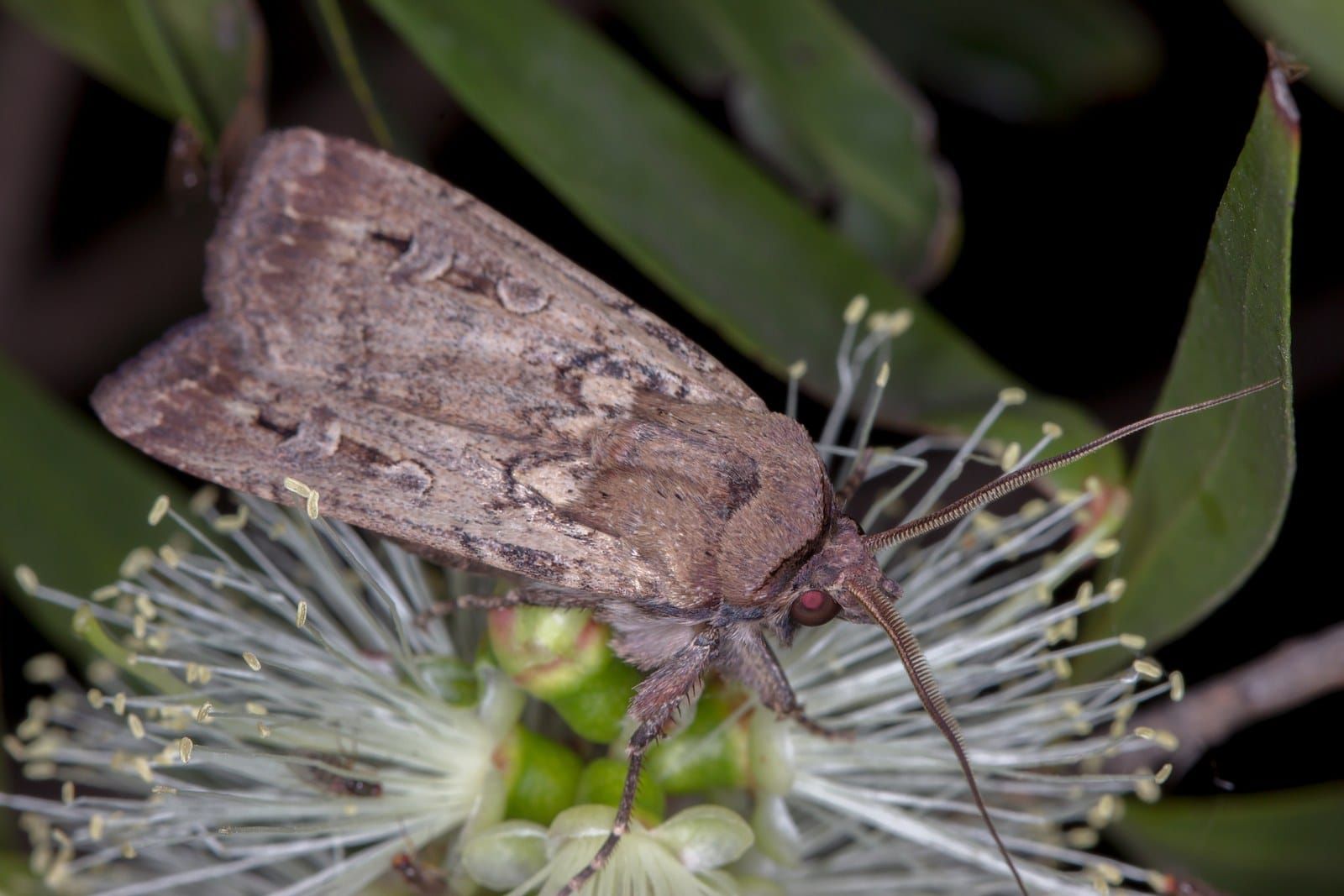
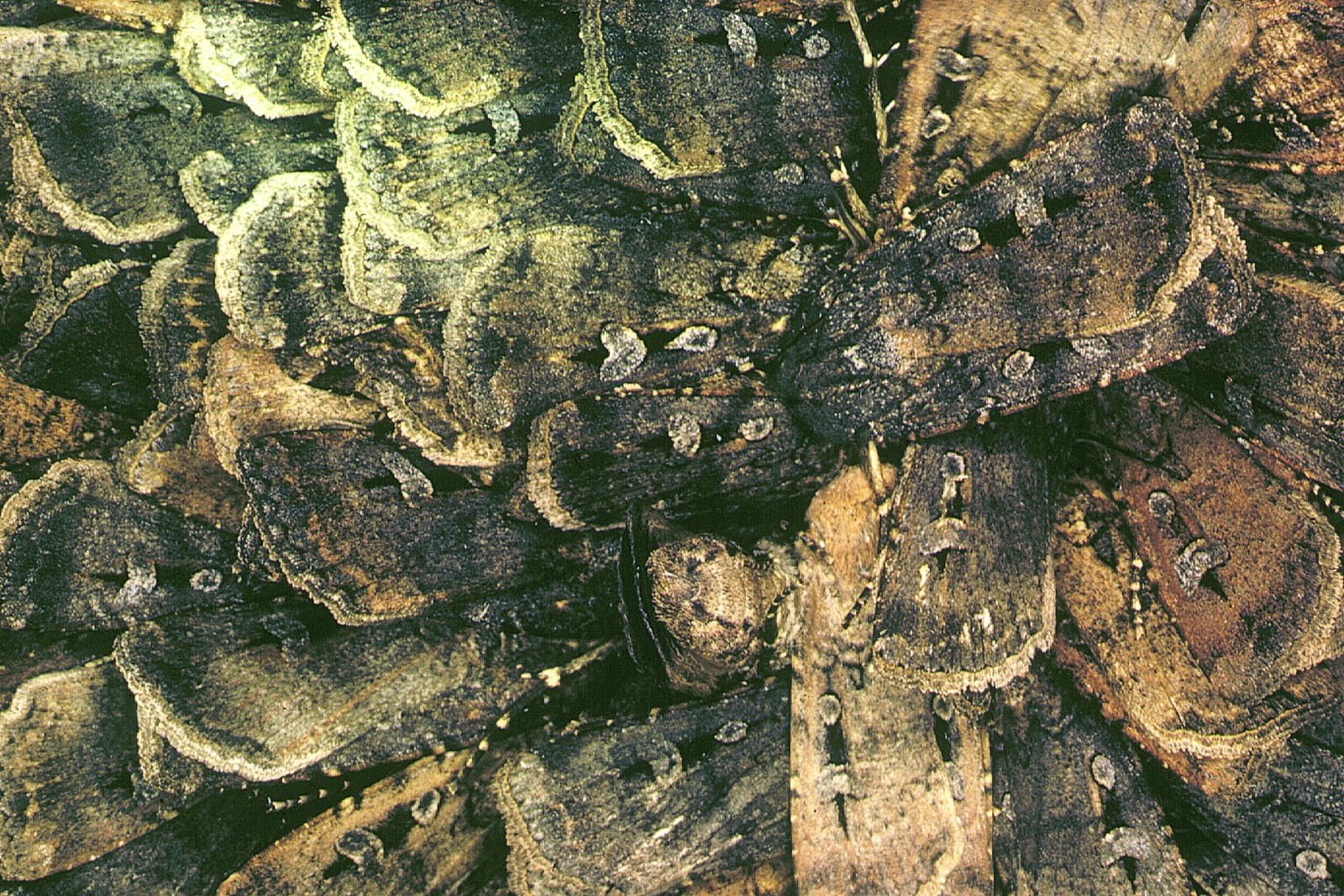
Every spring for longer than anyone has records, bogong moths have flown up to a thousand kilometres from the plains of Queensland, New South Wales and Victoria to spend summer in cool caves high in the Australian Alps, so many that in a good year four billion or more arrive and the cave walls look tiled. Then in 2017 they stopped coming. Drought on the breeding plains took an estimated 99.5 per cent of them in two years, and in 2021 the bogong went onto the international list of endangered species. Eleanor Drinkwater, an entomologist at Western Sydney University, says people who went into the caves then found barely any moths and came out in shock. Linnea Emneby, who runs the Bogong Watch project for Invertebrates Australia, says a decade of thin years changed what a whole generation thought a migration even looked like.
Read the full story: Endangered bogong moths swarming into homes across NSW, by Mikayla McGuirk-Scolaro, Eddie Williams and Declan Bowring, ABC News.
This year the moths came back. Two wet seasons on the plains, an early warm spell and strong north westerly winds have carried them in clouds down the coast and up to the mountains, and in the last days of September people logged 800 sightings on iNaturalist in three days, 200 of them in a single day. On the Bass Coast the citizen counts passed last year's total before the season was half done. "There have been happy tears in my office because this is what nature should be," said Marissa Parrott, a conservation biologist at Zoos Victoria, of swarms so thick they can block out the stars. Drinkwater, excited and still careful, describes the moths making "a beautiful tiling pattern" on the cave walls once more. Up on the mountain, the mountain pygmy possum, which fattens on bogongs after hibernation, is in for a good breeding year. Entomologist Caitlyn Forster wrote this month that a comeback like this is the moment to slow down and look at insects properly, because the ones we stop noticing are the ones we forget we had.
Sources and links
Our short take: the full story is by Mikayla McGuirk-Scolaro, Eddie Williams and Declan Bowring for ABC News (28 September 2026), with Marissa Parrott's words from AFP (2 October 2026), the Bass Coast counts from Zoos Victoria's Moth Tracker as reported by South Gippsland Sentinel Times, and Caitlyn Forster's piece for The Conversation (9 October 2026).
- Endangered bogong moths swarming into homes across NSW, ABC News The sightings, Drinkwater, Emneby.
- Return of bogong moth has Australia in a flutter, AFP via RTE Parrott's happy tears, the four billion, the 99.5 per cent.
- From bogong moths to Christmas beetles, how to slow down and spot more insects, by Caitlyn Forster, The Conversation Shifting baselines.
- Bogong moths swarm the Bass Coast in spring resurgence, South Gippsland Sentinel Times Moth Tracker counts.
- Our August story, A small brown moth and the possum that waits for it The migration and the possum.