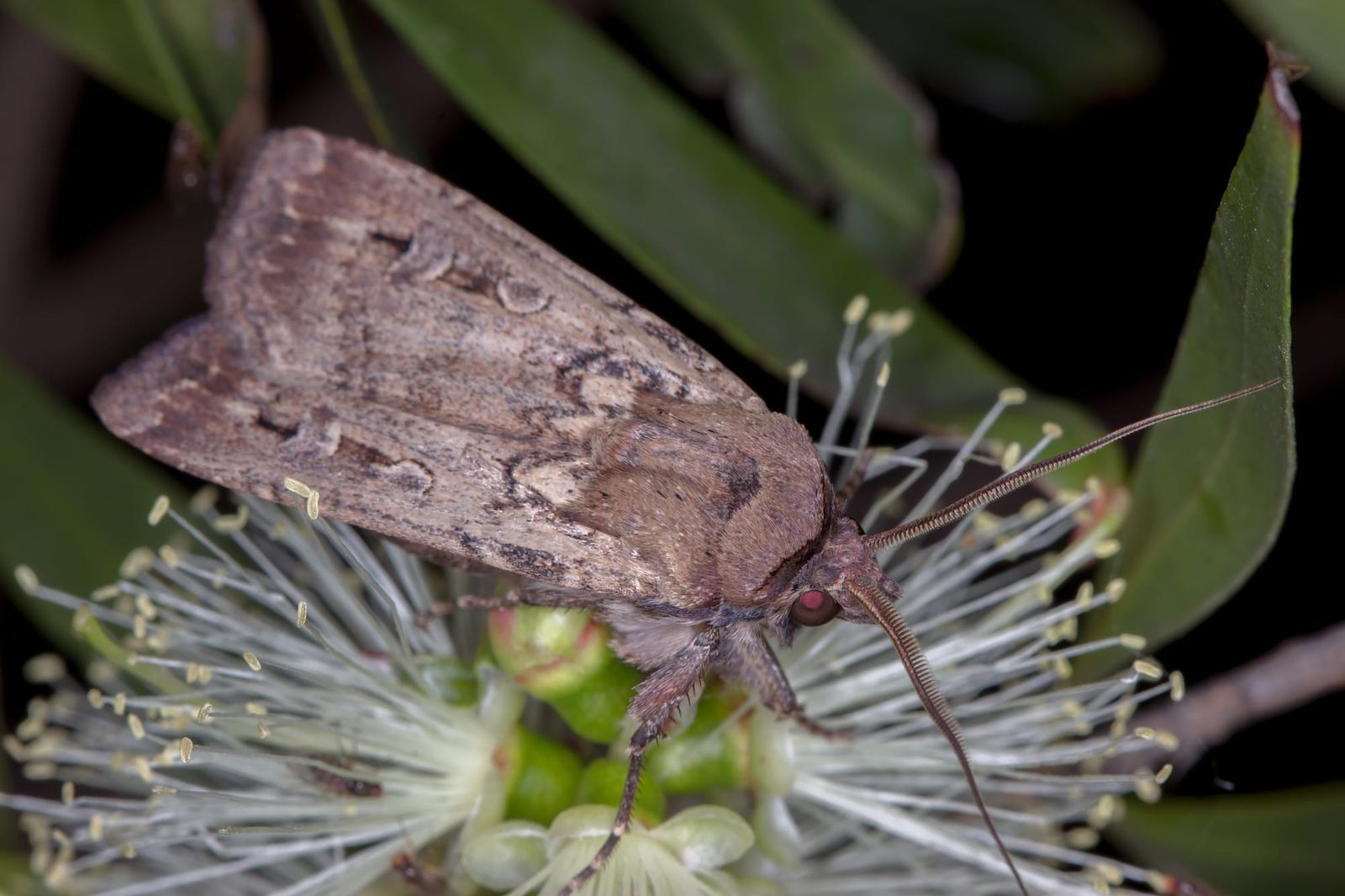
Every spring, as the nights warm across the inland plains of Queensland, New South Wales and Victoria, a small brown moth sets out on one of the longest insect journeys on Earth. The bogong flies by night, up to a thousand kilometres, to spend summer packed into cool caves and crevices high in the Australian Alps, and it finds its way there by the stars. A study published in Nature in 2025 showed the moths steer by the night sky itself, the first insect known to do so. This past summer an estimated four billion of them reached the mountains, the strongest arrival since the population fell away sharply in 2017, and the alpine country noticed. The mountain pygmy possum, a creature small enough to sit in a teacup, fattens itself on bogongs before winter because nothing else on the mountain is rich enough to see it through hibernation. When the moths come, the possums eat.
What nobody has ever known for certain is the route. So this year Associate Professor Kate Umbers of Western Sydney University led a team to Charlotte Pass to draw moths to light traps at dusk, fix a tiny numbered tag to each one and let it go the next day. More than ten thousand were tagged. Then, from March to May, volunteers across south eastern Australia hung specialised bug lanterns in their gardens and local parks, watched for a moth wearing a number, let it carry on and reported what they saw. "We have limited knowledge about where bogong moths go as they move through Australia on their epic migration," Umbers said, "which makes it very difficult to remove threats and ensure they continue to complete their travels and breed." The observations feed Bogong Watch, a network run by Invertebrates Australia that anyone can join with a phone, and a national Tag a thon is being planned for the coming migration season so that the public can tag moths themselves. The moths will be leaving soon. Look up on a warm night, and if one lands on the porch light, it may be on its way to feed a possum.
Questions you might have
Will I see bogong moths where I live?
If you are anywhere between southern Queensland and Victoria, quite possibly, on warm spring nights around an outside light. City lights draw them in on the journey, which is how Canberra came to know them so well.
What do I do if I find one wearing a tiny number?
Let it go on its way and report the number, the date and where you were to Bogong Watch, which is run by Invertebrates Australia. That single sighting is a dot on a map nobody has ever been able to draw.
Are they a pest?
In the inland the caterpillars feed on pasture and crops, and the adults are the richest food on the mountain for the pygmy possum and a whole alpine food web. Leaving a moth alone costs nothing and feeds something.
Our short take: the tagging expedition and the four billion estimate were reported by ABC News, 5 March 2026, and by Western Sydney University. Bogong Watch is run by Invertebrates Australia. The star navigation study appeared in Nature, 2025. Photograph: Andrew Allen, CC BY, via iNaturalist.