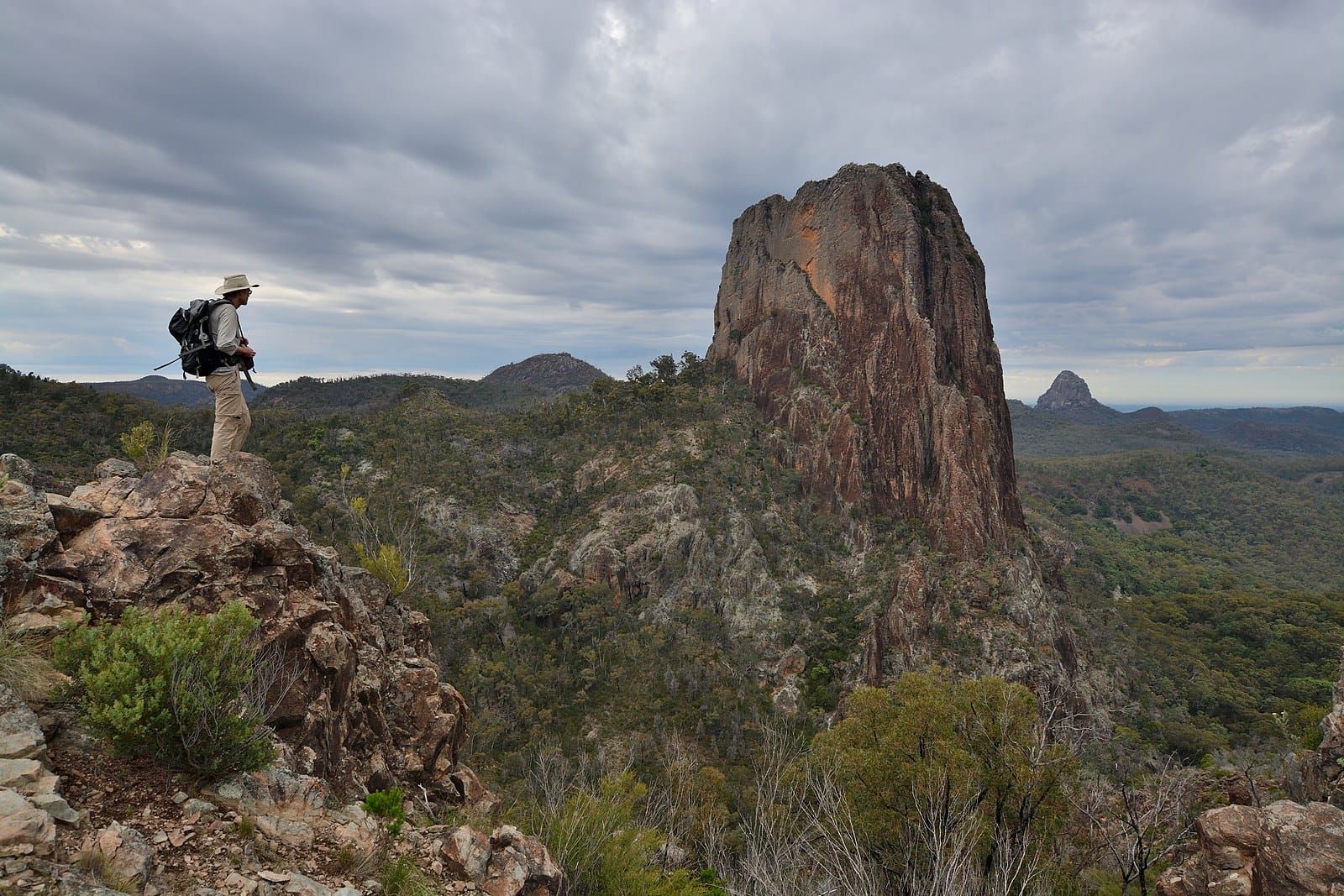
Coonabarabran sits at the foot of the Warrumbungle Range in central west New South Wales, better known for its dark skies and its telescopes, and a few streets from the main road, at 16 Chappell Avenue, a small museum called Crystal Kingdom tells the story of the ground itself. It was the first collection in Australia to show minerals and fossils from one local area only, and it holds more than five hundred of them. Two volcanoes made this country. Garrawilla, the older, spread lava and ash across the plains in the age of dinosaurs, and its cooling rock grew zeolites, crystals in pinks, oranges and whites that the museum describes as the rarest and most colourful in the world. Warrumbungle came later, a shield volcano active from about 17 to 13 million years ago, once a thousand metres high and fifty kilometres wide, whose worn cores are the spires and the Breadknife that walkers climb to today. Between them, in the cases, sit a fourteen million year old gumnut and fossils from 250 million years ago through to the giant marsupials.
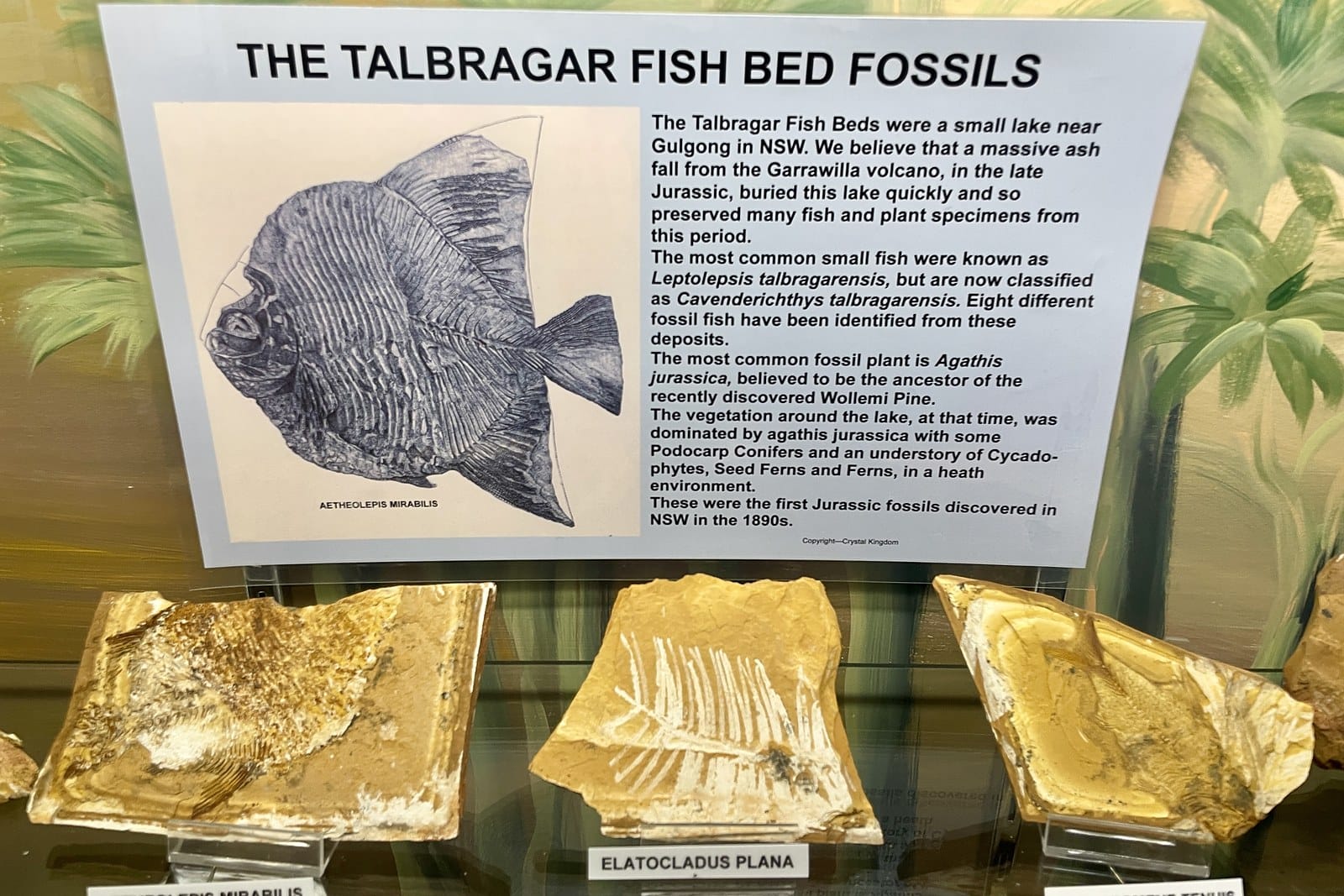
One case stops most visitors. It holds the Talbragar fish, small golden slabs from a lake bed about thirty kilometres north east of Gulgong that ash from Garrawilla buried so quickly, in the late Jurassic, that whole fish and leaves were sealed where they lay. Among them is Agathis jurassica, a conifer described by the palaeobotanist Mary White in 1981 whose leaves are almost identical to those of the Wollemi pine, the living fossil found in a rainforest gorge north west of Sydney in 1994. So the ancestor of Australia's most famous rediscovered tree lies in a glass case in Coonabarabran, beside the fish that swam past it. Entry is by donation, the museum opens every day from eight until five, and a shop out the front sells crystals and fossils from the district. Pair it with a night at Siding Spring under the darkest sky in the state, and a morning on the Grand High Tops, and the whole trip is the same story told three ways: the rock, the sky, and the ridge between them.
Sources and links
Our short take: museum details from the Museums and Galleries NSW listing and the museum's own site; the Talbragar fossils and Agathis jurassica from the Australian Museum's Talbragar site page and Mary White's 1981 revision of the Talbragar flora; the Warrumbungle volcano's age and size from the Warrumbungles entry on Wikipedia and the NSW National Parks page for the park. Photograph: the Talbragar fish bed case at Crystal Kingdom, by Oliver Strewe.
- Crystal Kingdom Mineral Museum, Museums and Galleries NSW Hours, address, the collection.
- Crystal Kingdom The museum's own site.
- Fossils in Talbragar, NSW, Australian Museum The fish bed and its plants.
- Revision of the Talbragar Fish Bed Flora, Mary White, 1981, Records of the Australian Museum Agathis jurassica described.
- Our story: dark skies story Siding Spring and the Warrumbungle Dark Sky Park.