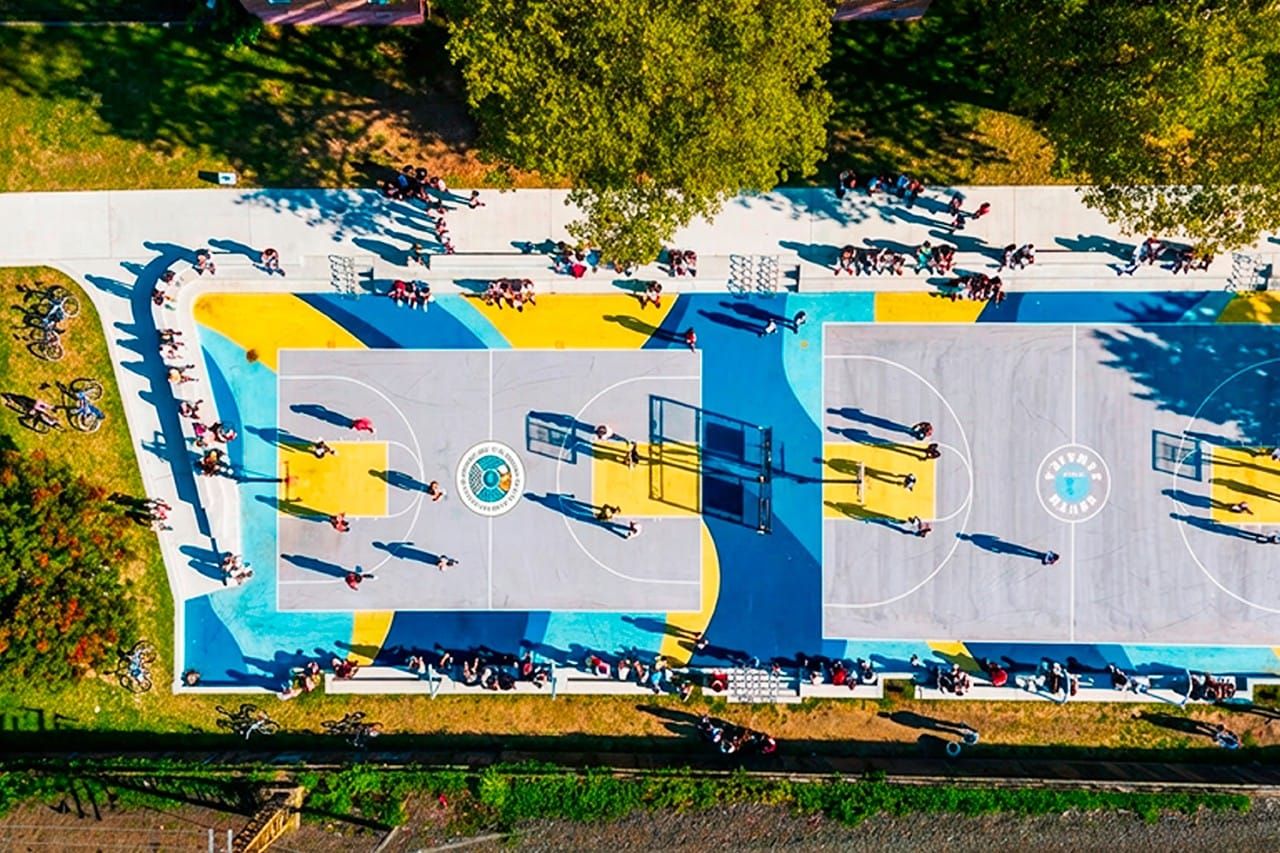
At the South Jamaica Houses in Queens, a pair of once tired basketball courts have been rebuilt as something the neighbourhood had never seen: water squares. On dry days they are simply beautiful courts, painted bright, full of games. In a flash flood they become the neighbourhood's guardian: each court is built as a gentle basin that can swallow up to 330,000 gallons of stormwater, about half an Olympic pool, holding it in underground pipes and planted rain gardens and letting it soak slowly away instead of into people's homes. The design comes from Brooklyn landscape architects Grain Collective, led by principal Runit Chhaya, working with the New York City Housing Authority in a part of Queens where flooding has long interrupted daily life. Manny Martinez, president of the South Jamaica Houses Resident Council, calls the courts a great addition, which is the quiet local way of saying the kids love them and the laundry rooms stay dry.
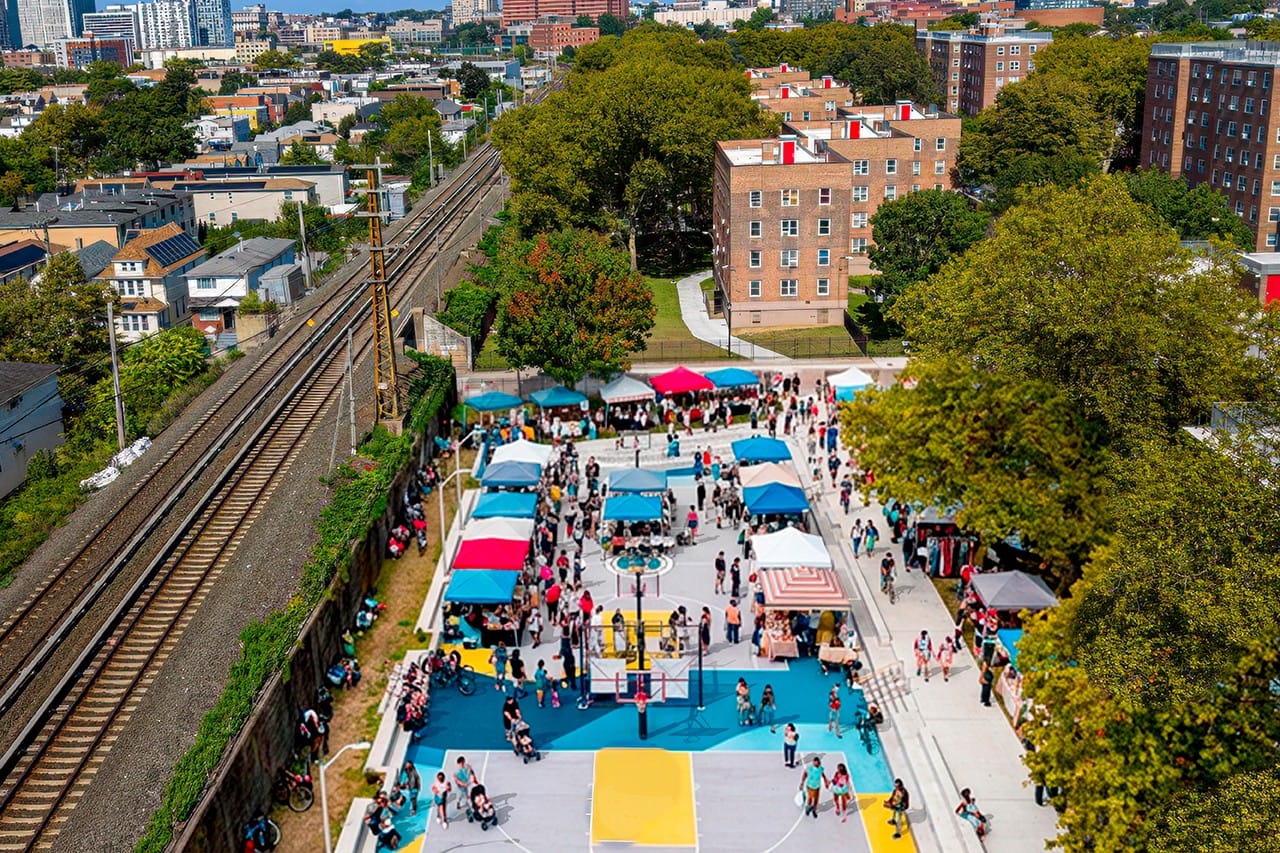
The courts are the first of a series of cloudburst sites planned across the city's public housing, championed by Siobhan Watson, who leads sustainability at the housing authority, and the idea has momentum: in July the city put another 43 million dollars into flood protection works. What we love is the philosophy hiding in plain sight. The old way of handling stormwater was to bury it in pipes nobody could see and hope. The new way builds the protection where everyone can play on it, so the best flood defence in Queens is also the best afternoon in the neighbourhood. Cities from Rotterdam to Copenhagen helped pioneer the water square idea; New York's version comes with a three point line.
Our short take: the full story is by Good Good Good, August 2026, with design detail from Dezeen. Names: Runit Chhaya, Grain Collective; Siobhan Watson, New York City Housing Authority; Manny Martinez, South Jamaica Houses Resident Council. Photographs: courtesy Grain Collective, whose principal Runit Chhaya sent them to us after we ran a stand in court.