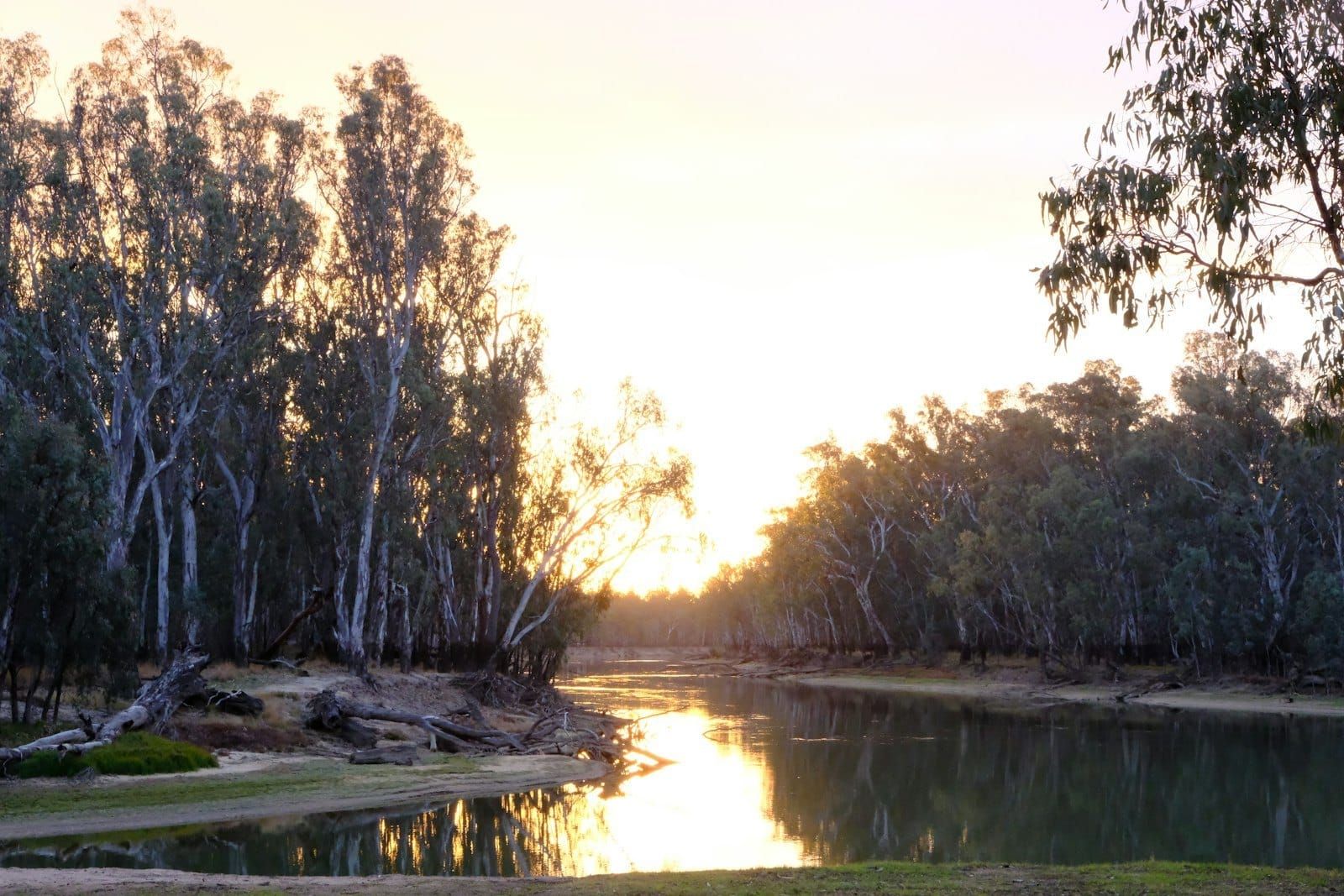
Where the Lachlan River gives up being a river and spreads across the plain in reed swamp, black box and river red gum forest, just before it reaches the Murrumbidgee in south west New South Wales, sits the Great Cumbung. In January the Nari Nari Tribal Council bought the two stations that hold it, Juanbung and Boyong, about 34,000 hectares, from The Nature Conservancy in an open bid, and in June the money behind the purchase was made public: a $15 million impact loan from Bank Australia, with the funds put up by the Clean Energy Finance Corporation, the federal government's green lender. Jamie Woods, chair of the council, said the commitment has great significance for the Nari Nari people and has been twenty five years in the making. In his words, the Great Cumbung, like its sister Gayini across the river, is not just land. It is Country. Gayini is the 88,000 hectare property the Nari Nari have owned since 2019, so the two together place close to 120,000 hectares of the Murrumbidgee floodplain in the care of its first people. More than 130 bird species use the wetland, around 11,500 waterbirds arrive each year, and among them are the Australasian bittern and the Australian painted snipe, two of the rarest birds in the country, with Murray cod in the channels and southern bell frogs calling from the reeds.
Bought by The Nature Conservancy in 2019 with an agricultural partner, the stations have been managed for nature and grazing together, and that is how the Nari Nari mean to keep them. Their plan is to remove the old barriers across the floodplain so water spreads the way it used to, to regenerate native wetland and woodland, to keep the native forest standing for good, and to run selected grazing so the land pays its own way. Sixteen thousand hectares are to be permanently protected under a conservation covenant, and the council has committed to seek Ramsar listing, the international mark for a wetland that matters to the world. Heechung Sung, Head of Natural Capital at the Clean Energy Finance Corporation, called wetlands nature's pulse, a foundational sign of how healthy the whole system is. Tim Von Ess, Head of Impact Lending at Bank Australia, called it an outstanding milestone for a council with a deep cultural connection to the landscape, and Lara Gallagher, Country Director of The Nature Conservancy Australia, described the Nari Nari as exceptional conservation land managers who share the Conservancy's long view. In plain terms, a bank and a public lender put their money behind a people buying back their own wetland, and the bittern booming in the reeds this spring is the return on it.
Sources and links
Our short take: the full stories are by Dechlan Brennan for the National Indigenous Times (12 June 2026) and Megan Strauss for Mongabay (12 June 2026), with the details from the Clean Energy Finance Corporation's announcement of 5 June 2026, Bank Australia and The Nature Conservancy Australia. Photograph: Walter Coppola, Unsplash.