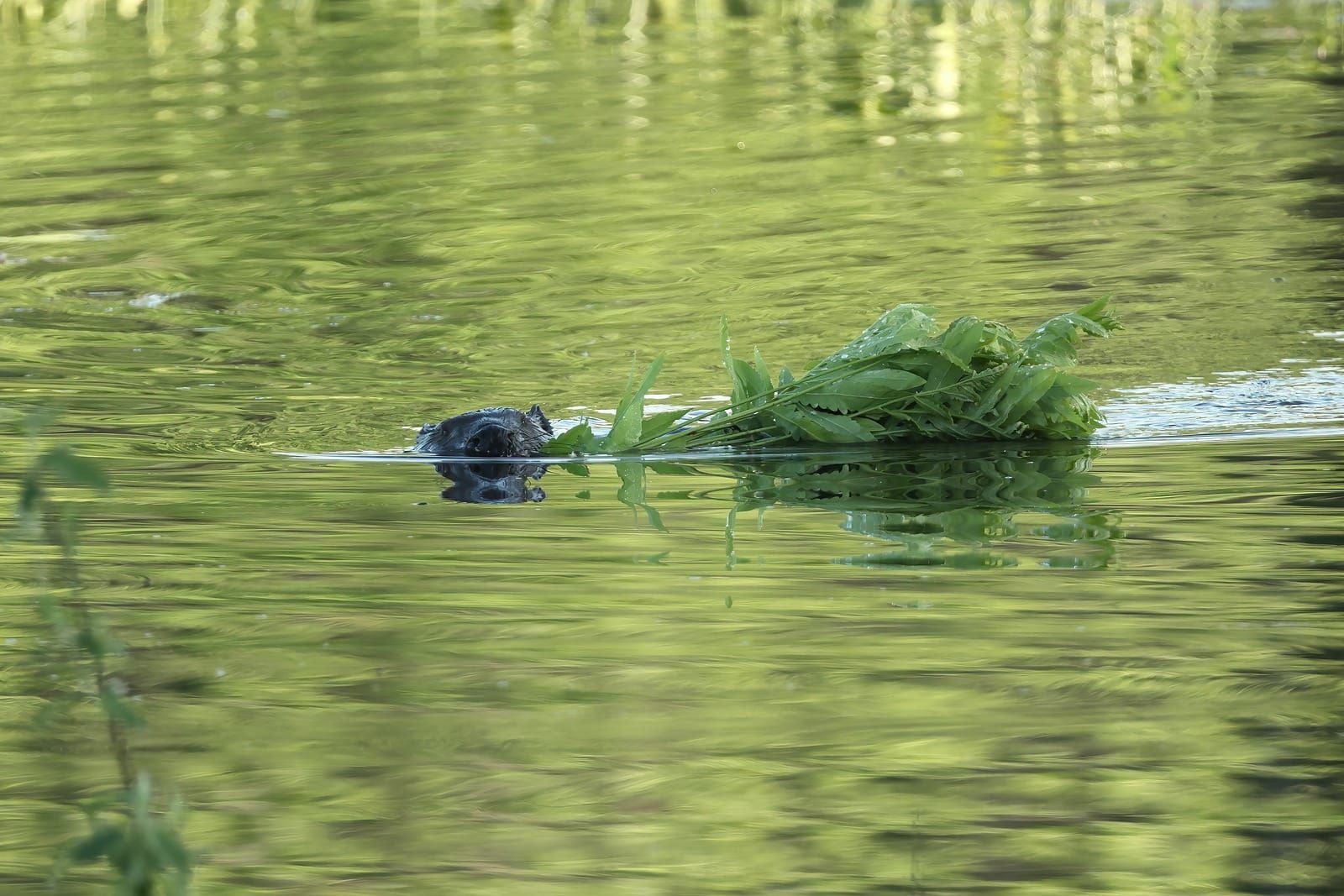
Helper sits in a canyon in Carbon County, Utah, a town of about 2,100 people named for the extra locomotives the railway once kept there to help trains up the grade. Through the middle of it runs the Price River, a tributary of the Colorado that, like most desert rivers, used to run thin and warm by late summer, hard on fish and no good for much else. In 2019 Emma Doden, then a master's student at Utah State University, and a team of researchers began what they called a translocation: beavers that had become a nuisance elsewhere, blocking culverts or flooding fields, were trapped, checked, held briefly, and released onto the Price and the nearby San Rafael River to see what they would build. Forty seven beavers were moved, tagged and followed. What they built was ponds. A beaver dam slows a river, spreads it sideways into wetland, holds water in the ground through the dry months and gives fish deep pools to wait out a drought.
Read the full story: Beavers brought to the desert to save a dying river, by Evan Porter, Upworthy.
Six years on, and alongside years of hard work clearing the river of old junk and easing the grazing on its banks, the results are in the water. On one stretch of the San Rafael, riverside habitat grew by 230 per cent and the flow became the most varied anywhere on the river, as Utah's public radio station KUER reported. On the Price, the river now runs year round through downtown Helper, the fish are thriving, and on a warm day the water is full of locals and visitors tubing, kayaking and fishing where there was once barely enough to wade in. "A decade ago, it was hard to imagine this scene," wrote Lenise Peterman, Helper's mayor, and Jordan Nielson in the Salt Lake Tribune early last year, crediting the beavers with having "helped save our Utah town." It is the oldest river engineering there is, done by an animal that works for free and asks only to be left alone, and a small town in the desert now builds its summer around it.
Sources and links
Our short take: the full story is by Evan Porter for Upworthy (27 September 2026), drawing on Lenise Peterman and Jordan Nielson's column in the Salt Lake Tribune (23 January 2025) and KUER's reporting (14 April 2025), with the research from Emma Doden's Utah State University team.
- Beavers brought to the desert to save a dying river, by Evan Porter, Upworthy The retelling and the sources.
- Salt Lake Tribune column by Lenise Peterman and Jordan Nielson, 23 January 2025 "helped save our Utah town".
- KUER, 14 April 2025 The 230 per cent.
- Beavers put to work saving two Utah rivers, Popular Science The 47 beavers and the research.