
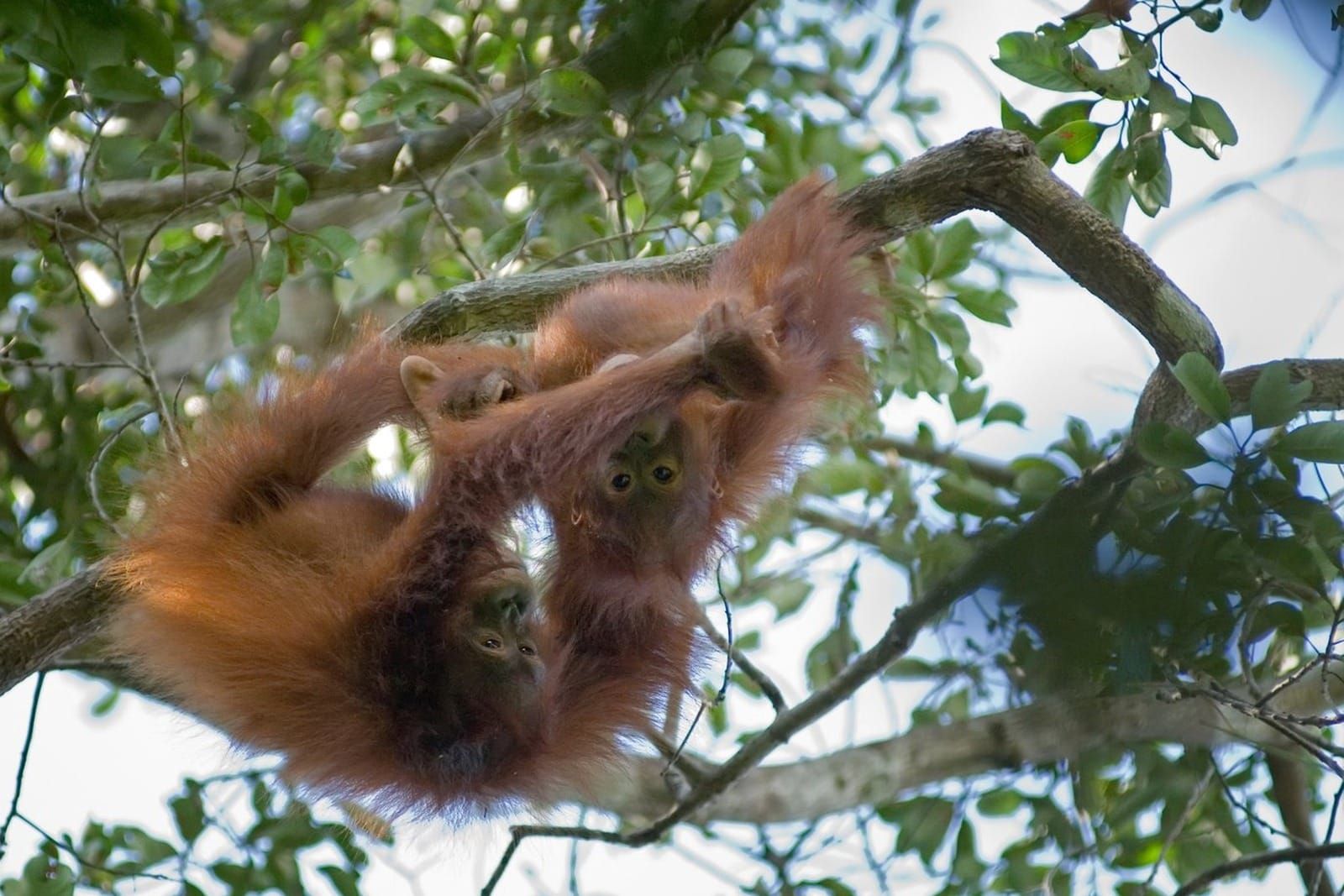
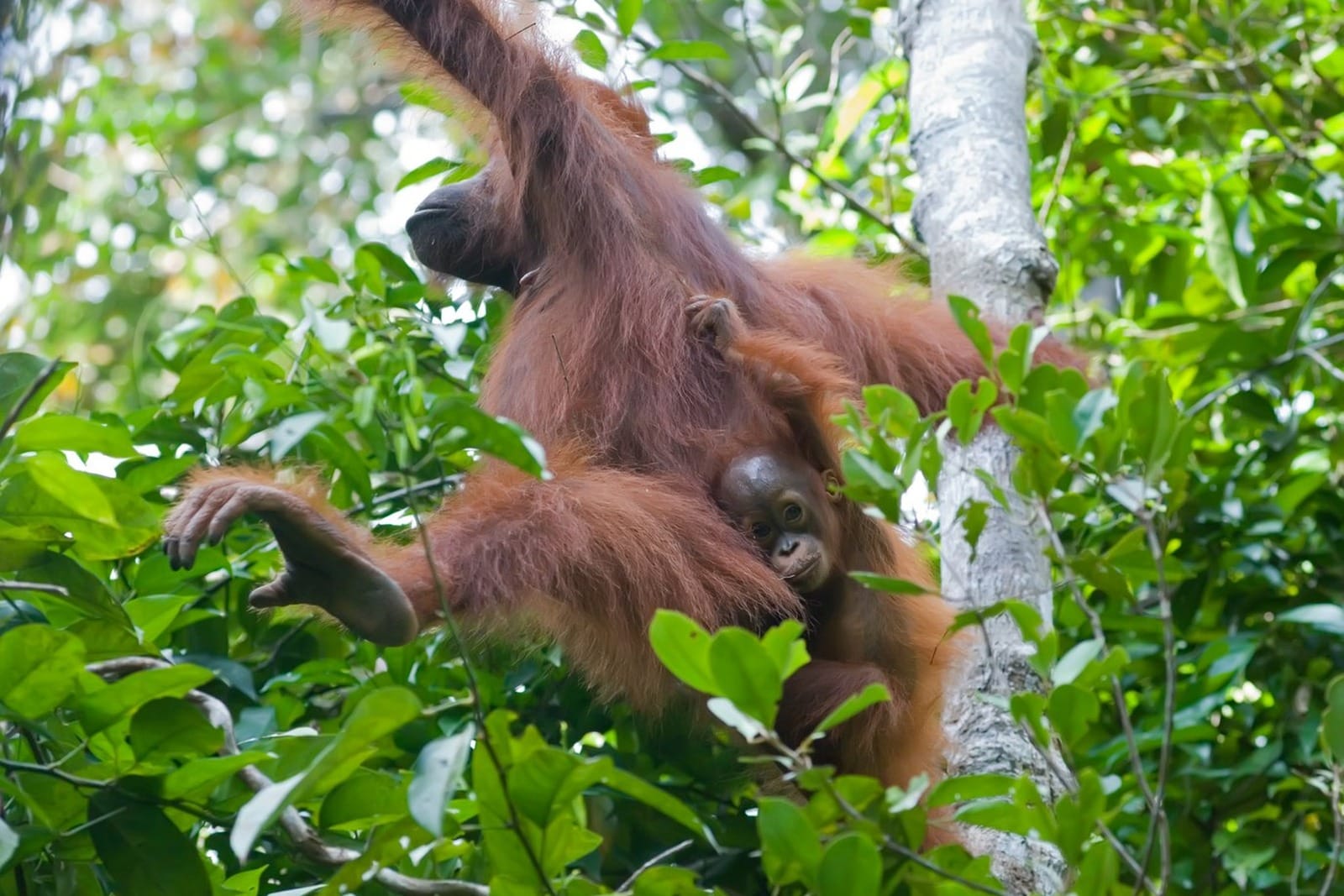
Orangutans are the loners of the great apes. Adults keep their distance from each other, and a mother and her infant can go days in the forest without meeting another of their kind, which leaves a young orangutan with a problem no chimpanzee or gorilla has: nobody to play with. A study published on 6 October in the Proceedings of the National Academy of Sciences shows the mothers solving it. Researchers at the Tuanan Research Station in Central Kalimantan, Borneo, followed habituated wild orangutans from morning to night for fifteen years, more than 32,000 hours of watching, recording where 14 mothers and their 31 young went, what they ate and whom they met. "We reveal a hidden cost of solitary living," said Maria van Noordwijk, the senior author, a fellow at the Max Planck Institute of Animal Behavior who led the fieldwork from the University of Zurich. "On top of providing food and safety for their young, orangutan mothers are tasked with supplying social resources too."
Read the full story: Orangutan mothers seek out playmates for their young, Max Planck Institute of Animal Behavior via Phys.org.
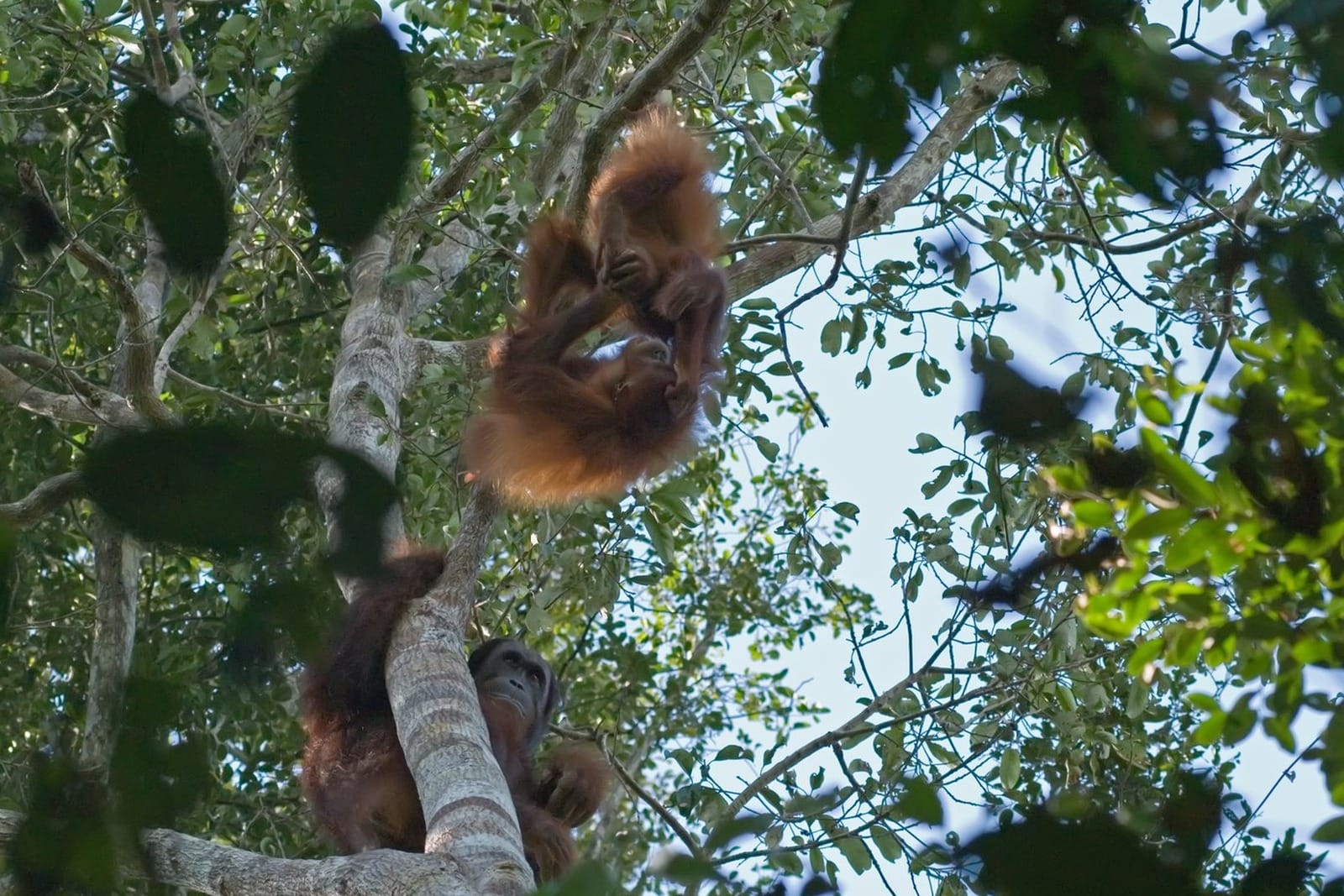
What the records show is a pattern that looks very like intent, though the researchers are careful to say the study cannot read minds. On the day before her infant played with another youngster, a mother would travel further than usual and head toward the centre of the other mother's range; the day after, she would steer back toward her own. On days spent near another orangutan the mothers walked more and fed less, and more so on the days the children actually played. Young of a similar age played together most, and the mothers shared parts of the forest more when their infants were close in age. The adults, meanwhile, kept their usual distance while the little ones wrestled and hung upside down. "Orangutan kids have a play button that only mum can switch off when she decides it's time to move on," van Noordwijk said. Play builds the strength and the social skills a young orangutan will need, and the young depend on their mothers for seven years or more, so the cost of a play date is a cost a mother carries for a long time. Universitas Nasional in Jakarta and Rutgers University were part of the work. It began in 2003, and it took a generation of orangutans to answer a question most parents could have guessed: somebody has to organise the play dates.
Sources and links
Our short take: from the Max Planck Institute of Animal Behavior's release on the study, carried by Phys.org (October 2026), with the study figures from the paper record (15 years, more than 32,000 hours, 31 young born to 14 mothers, Tuanan Research Station) as reported by Earth.com. Published in the Proceedings of the National Academy of Sciences.
- Orangutan mothers seek out playmates for their young, Phys.org The release.
- Maternal ranging strategies facilitate offspring social play at energetic cost in the most solitary ape, PNAS The paper (CHECK the direct address and the 6 October 2026 date on the PNAS page).
- Orangutan mothers seek out playmates for young, National Tribune The release as carried in Australia.
- Max Planck Institute of Animal Behavior The institute.
- Tuanan Orangutan Research Project The field station (CHECK the address resolves).
- Our story: cheetah story The last time the Institute wrote to us, in October.