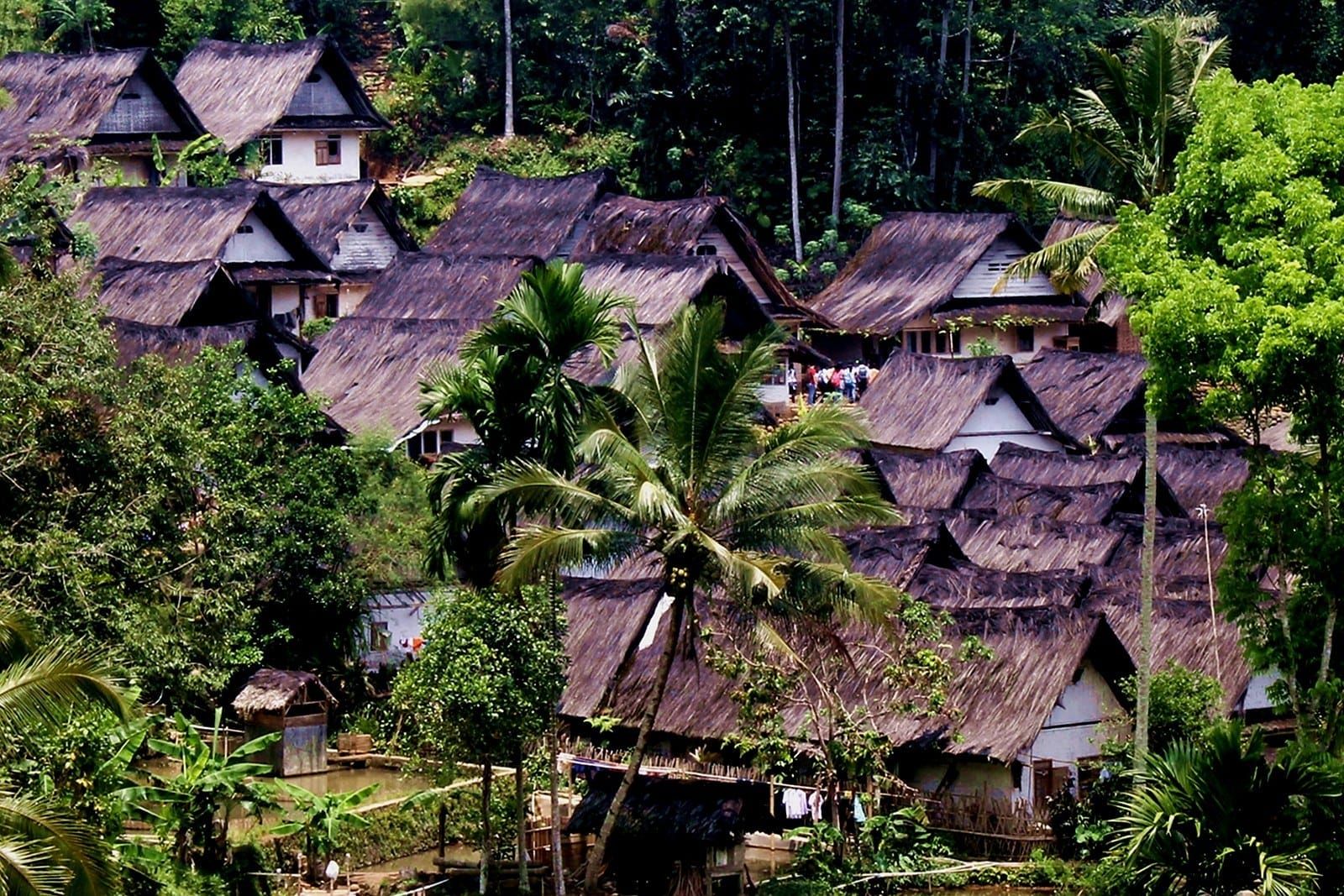
Go down about four hundred stone steps from the Garut to Tasikmalaya road in West Java and the noise falls away. At the bottom, on a slope above the Ciwulan River, sits Kampung Naga: one hundred and three houses on stilts, every roof thatched with palm fibre, every house set east to west with a door facing north and a door facing south so neighbours can see a fire and help. That number of houses is fixed and has been for generations. Beside the river stands a forest of about a hectare and a half that nobody enters, not even for a fallen branch, because the village says its life depends on the forest staying whole. Rice is grown to feed everyone for a full year and pounded by hand in a shared hut. When the government offered a power line for night lighting, the village said no. When it offered an escalator for the steps, the customary leader, Ucu Suherman, said no again: "We are not a commercial tourist site," he told Mongabay Indonesia, and asked what money is worth if the customs are damaged.
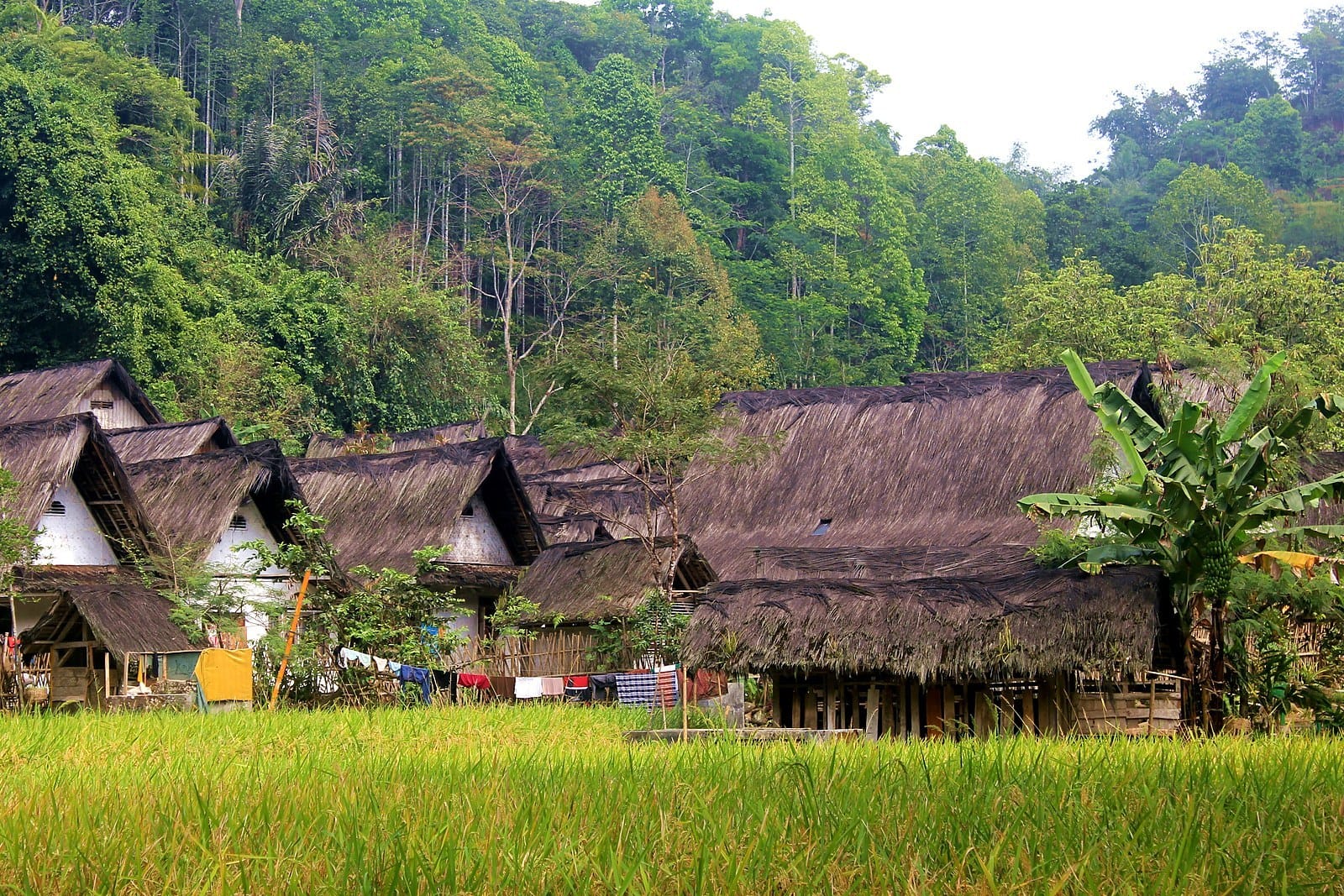
Then came this year. On 4 May, West Java's governor visited and talked with the village elder, and together they agreed something unusual for a place that greets so many visitors: Kampung Naga closed to all guests from 1 June to 31 August 2026. Asep Zaini A of the Tasikmalaya culture office called it "a strategic step for the recovery of the ecosystem", and village youth leader Rendy Armadi a shared commitment to the customary area. Local reports say that when the gate opens again, guests will be asked to come and greet the village before their visit and will not carry in outside food; the roadside car park has been moved back. We could not confirm the reopening date, and the government's plan includes an information centre and trained guides, so this is a village choosing how it is visited rather than shutting the world out. It still seems to us a fine thing: a community that has kept its forest, its river and its hundred and three houses by knowing exactly what to refuse, and this year refused, for a season, even us.
Sources and links
Our short take: from Donny Iqbal's reporting for Mongabay Indonesia (21 July 2020 and 28 October 2021) and Tiara Disa Pratiwi's report in Jabar Ekspres (2 June 2026), with the closure also reported by Media Indonesia, Radar Tasik and Harapan Rakyat (June 2026). Photographs: as credited in captions.
- Mongabay Indonesia, Kampung Naga, oase tradisi di tengah derap kehidupan modern The 103 houses, the stone steps, the doors, the sacred forest, the rice, the 1950s fire and rebuilding. In Indonesian.
- Mongabay Indonesia, Ucu Suherman, gerbang kearifan lokal Kampung Naga The refusals of electricity and the escalator, the forbidden forest, the quotes. In Indonesian.
- Jabar Ekspres, Kampung Naga steril dari wisatawan selama tiga bulan The closure dates, the governor's 4 May visit, the culture office quote. In Indonesian.
- Media Indonesia, Kampung Naga direvitalisasi Rendy Armadi's words, the visitor rules reported. In Indonesian.