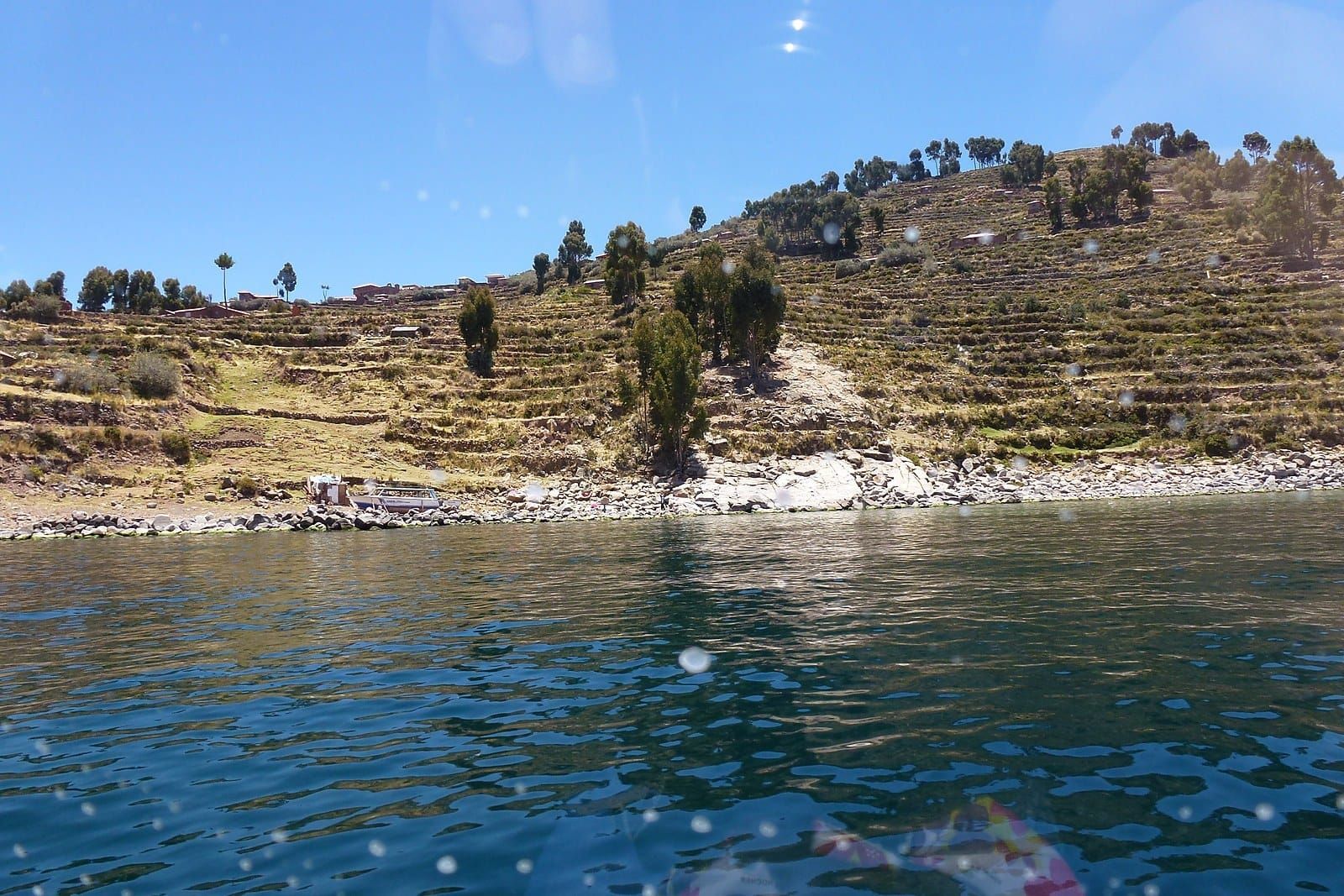
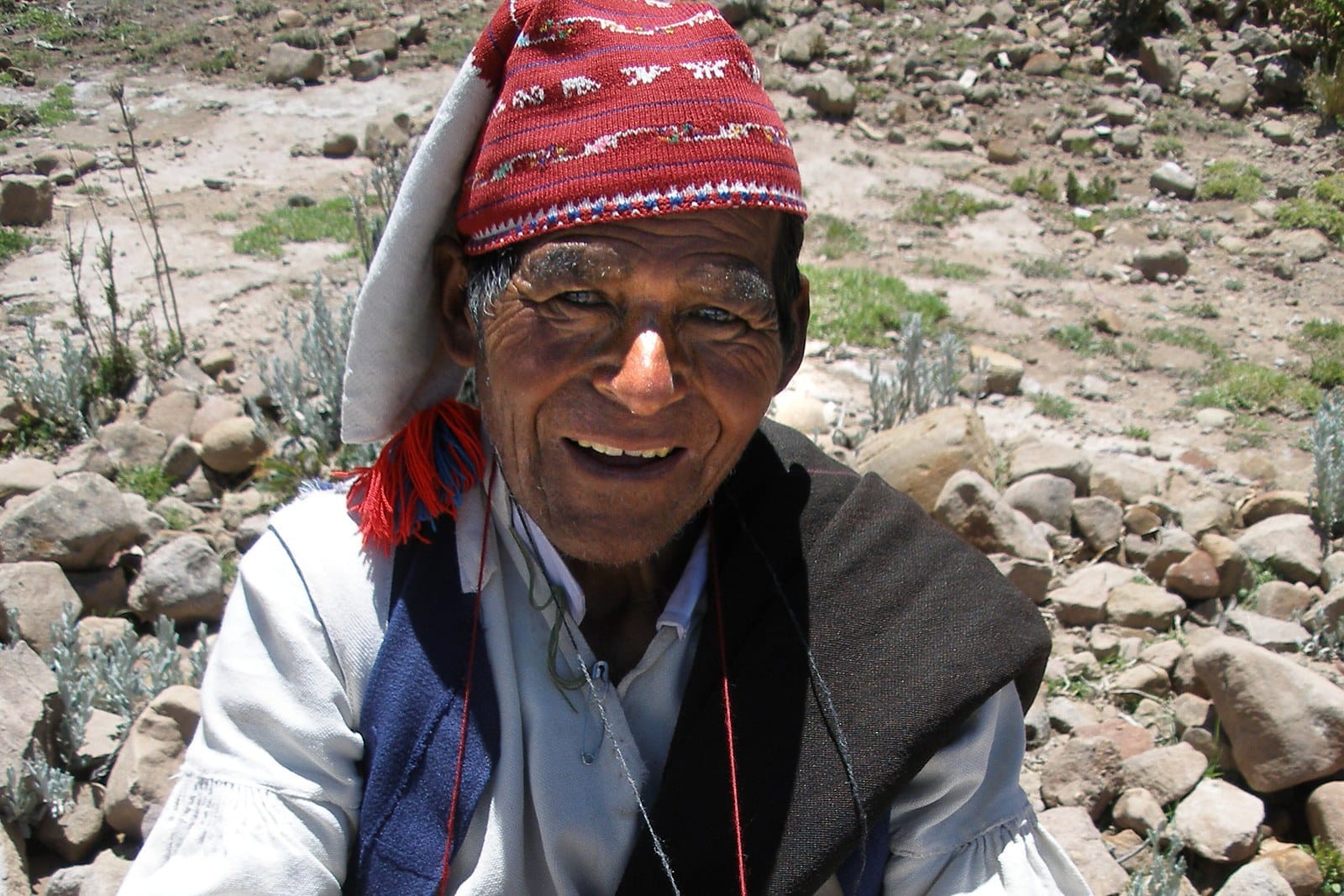
Picture a boat leaving Puno across the blue of Lake Titicaca and, forty five kilometres out, an island rising to just over four thousand metres: potato terraces, stone paths, no cars, and a village at three thousand nine hundred and fifty metres where everyone you meet is wearing something made on the island. This is Taquile, home to about two thousand two hundred Quechua speaking Taquileños, and until the 1950s it was more or less on its own. Three things hold it together. An Inca code of three lines, ama sua, ama llulla, ama qhilla: do not steal, do not lie, do not be idle. Land divided into six sectors that take turns growing and resting. And cloth. Here the men knit, and they start as small boys, making the chullo, a hat with earflaps whose colours say who the wearer is; the women spin and dye the wool with plants and minerals and weave the wide calendar belt that marks the year's farming and festivals. UNESCO proclaimed Taquile and its textile art a masterpiece of the world's intangible heritage in 2005, and the island runs its own school to pass the craft on.
What makes Taquile unusual among lovely islands is who runs the visit. Tourism arrived in the 1970s and for a while the day trips belonged to operators from the mainland. The islanders took it back, founding their own agency, Munay Taquile, so that boats, homestays, guides and lunches are organised by the community and the income stays on the island. About forty thousand people now visit each year. There are real pressures, and UNESCO names them: a growing population means more goods come from the mainland, and souvenir demand has changed what some of the cloth is made of. The island chose solar panels for its power and keeps a radio station. If you go, go with the community's own agency, stay a night in a family home, and buy the knitting from the hands that made it. That is the whole point of Taquile, an island that decided long ago to keep its own counsel and its own work.
Sources and links
Our short take: from UNESCO's listing of Taquile and its textile art and the island's own record as summarised on Wikipedia, with Elayne Zorn's Weaving a Future (University of Iowa Press, 2004) as the standard study. Reputations checked: no private stay is named; the island's community agency is the recommended door. Photographs: as credited in captions.
- UNESCO, Taquile and its textile art The craft, the chullo and the calendar belt, the school, the 2005 proclamation and 2008 inscription, the pressures named.
- Wikipedia, Taquile Island Distance, altitude, population, the six sectors, the code, Munay Taquile, visitor numbers, solar power. For readers to go further; we have used it for figures only where UNESCO is silent.
- Elayne Zorn, Weaving a Future: Tourism, Cloth and Culture on an Andean Island The book on how Taquile took its tourism back.