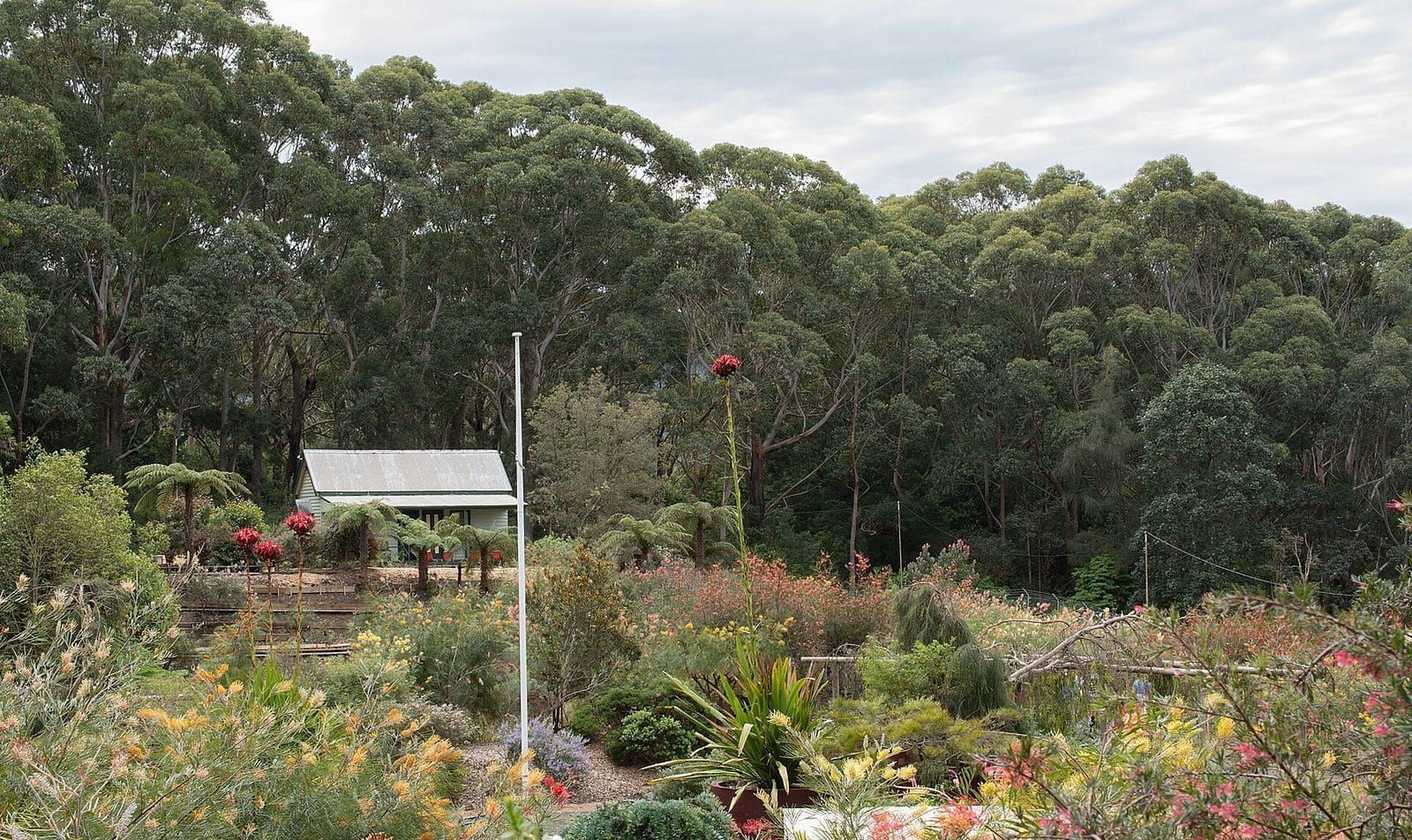
The reason a garden full of natives can still be quiet is that native is a very big word. A plant that thrives in Perth may sulk in Bendigo, and a hybrid bred for big showy flowers can be useless to the birds that evolved alongside the local version. What you actually want is the plant that grew in your particular patch before the houses arrived. There is now a free tool for this. Which Plant Where lets you search by postcode across more than 2,800 species, with over 6,000 photographs, and tells you not only what suits your area now but what will still suit it in 2030, 2050 and 2070. It came out of a five year research program led by Macquarie University and Western Sydney University with Hort Innovation, and Macquarie runs it today. Signing up is free and unlocks the climate maps and a palette builder. It is aimed at nurseries and landscapers rather than householders, which is worth knowing, but nothing stops you using it.
Then there is the warmer half. In much of Victoria, and in Darwin, on the Sunshine Coast and in Tasmania, a program called Gardens for Wildlife will send two trained volunteers to your actual garden for about an hour. They walk around it with you, and afterwards you get a written report on what to plant and what to change to make the place better for local wildlife, plus a voucher for free indigenous plants from a local nursery, ten or twenty depending on the council. In Victoria and Darwin it is free; in Tasmania it costs thirty dollars once. BirdLife Australia also runs a free online course called Habitat Gardening for Birds, about four hours at your own pace, and their advice is the plainest summary of the whole idea: plants that grow naturally in your area are suited to local conditions and will give local birds the right food and shelter, unlike hybrids or plants from other parts of Australia. Ask your council for its indigenous planting guide. Most of them have one, and it is free too.
Our short take: Which Plant Where is owned and managed by Macquarie University, developed with Western Sydney University and Hort Innovation; Distinguished Professor Michelle Leishman led the research program. Program details from Gardens for Wildlife Victoria, the Tasmanian Land Conservancy, the City of Darwin and Barung Landcare, and course and planting advice from BirdLife Australia. Photograph: Unsplash.