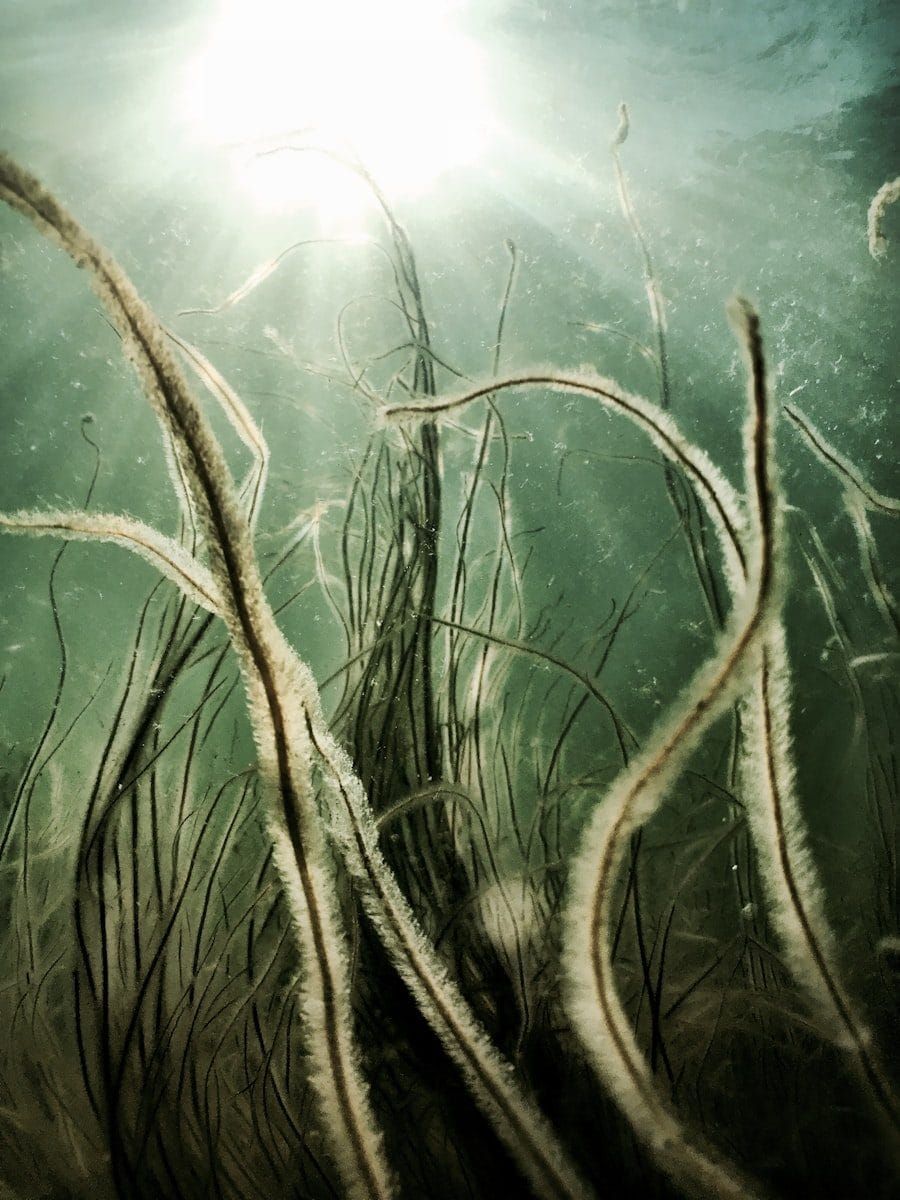
Seagrass meadows are the quiet workhorses of the sea. Around 35,000 square kilometres of them grow along the Great Barrier Reef, holding carbon, cleaning the water and feeding the animals people travel a long way to see, turtles and dugongs among them. Replanting a meadow that has been lost is slow, uncomfortable work: divers push seeds into the seabed by hand, often in water so murky they can barely see their own gloves. At that pace a team manages roughly five hectares in a year. So a group of Australian engineers and marine scientists built something to help, an uncrewed underwater vehicle called Mako fitted with small robotic drills that press each seed into the seabed at exactly the depth it needs.
Over five days at Gladstone the machine was put into the real thing rather than a test tank, and it worked. Mako held its line in low visibility and fast moving water, planted Nanozostera muelleri seeds at the proper depth, and proved a modular design that lets the same vehicle be refitted to harvest seed, plant it, or come back later to check how the meadow is doing. The results were announced in February. The ambition behind it is the part worth sitting with: the team is aiming for five hectares a day, which is what a year of hand planting achieves, and a machine that can also collect its own seed and monitor its own work would cut both the time and the cost of restoring a meadow enormously. The divers are not being replaced. They are being handed a much bigger shovel.
Our short take: the trial is reported by the Great Barrier Reef Foundation, which led the project with Ulysses Ecosystems Engineering and the Coastal Marine Ecosystem Research Centre at Central Queensland University. Emma Jackson directs the research centre, Callum O'Brien co founded Ulysses, and Will Hamill is the Foundation's Director of Islands and Coasts. Photograph: Unsplash.