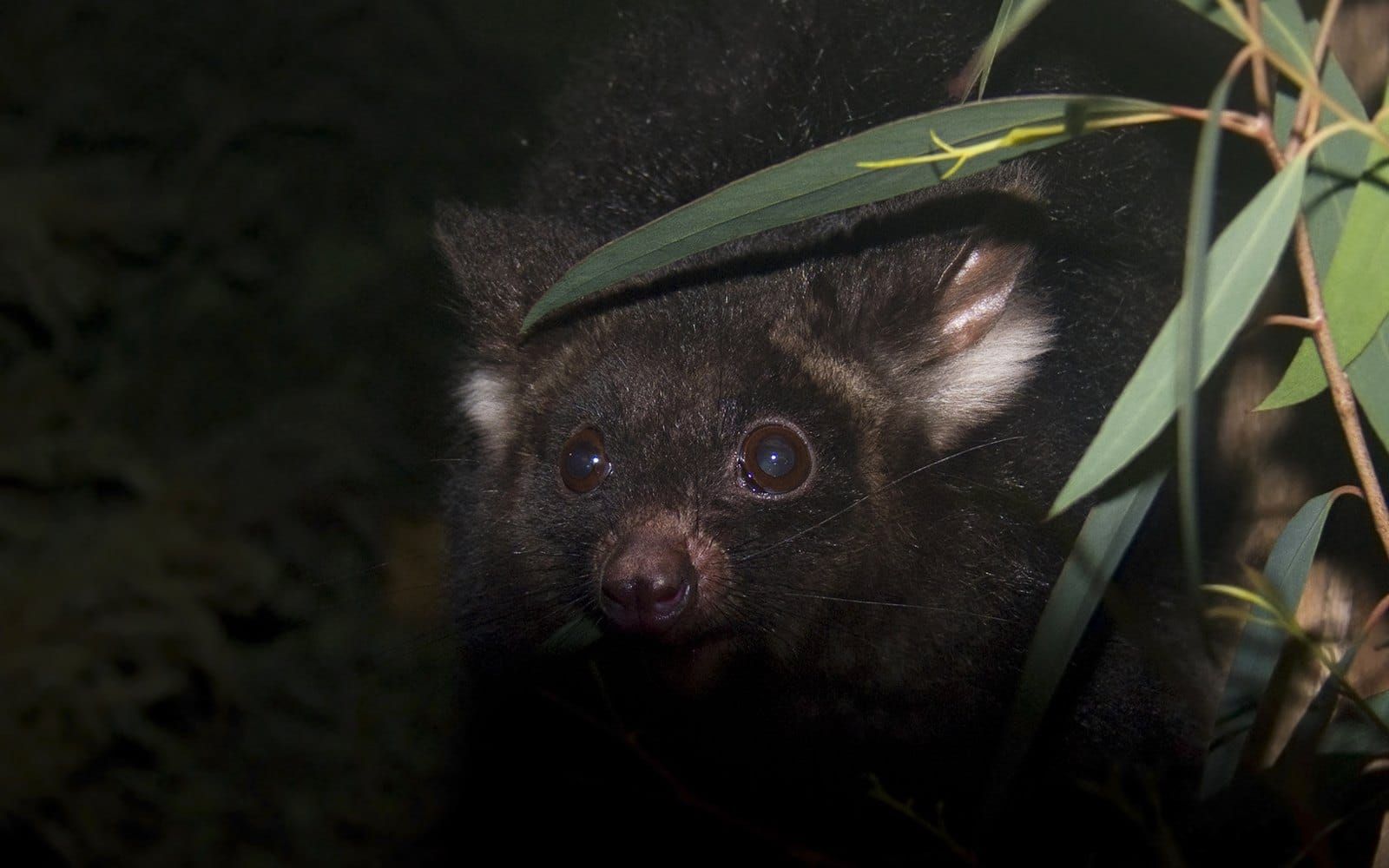
Greater gliders are the biggest gliding possums in the world, fluffy as a soft toy, and they sleep by day inside hollows that only form in trees a century or more old. In Tallaganda, the tall forest south east of Canberra that sits inside the community's proposed Great Southern Forest, the fires of 2019 and 2020 took many of those old trees. So in the autumn of 2022 a team from the Australian National University hung 120 nest boxes of their own design, each one insulated, sealed and painted to reflect heat, so that it stays warmer in winter and cooler in summer than the plain wooden boxes that had failed gliders before. Dr Kita Ashman of WWF Australia calls it the Goldilocks box. Cameras watched 26 of them, and gliders turned up at 16, across twelve of the thirteen sites. Mothers raised young inside two of the boxes, one joey filmed for 31 days out of 47. Dr Ana Gracanin, the ANU research fellow who did much of the watching, recorded a glider inspecting a box six hours after it went up, and says that on average it took about a month for the gliders to move in. Published in PLOS One in December, the study is careful about what it can claim: the boxes are being used as homes, and whether the population itself is growing is a question for the years ahead. Dr Kara Youngentob, who leads the project, puts the idea simply. A forest without hollows is like a bed and breakfast without the bed, and the job is to bring the beds back.
Then the story left the forest and went into the sheds. At Hall Men's Shed on the edge of Canberra, at Yass Valley Men's Shed and at Woodchix in Sydney, retirees and volunteers have now built 166 of the insulated boxes for the next round, funded by WWF Australia with the technology company HP. Doug Anstess, the foreman at Hall, says none of them had heard of a greater glider before the first box, and once they had looked one up they decided they had better do a good job. Peter Davidson, president at Yass, says the shed feels it is contributing to something worthwhile, and Gill Enterkin, who founded Woodchix, was won over by a single photograph of a glider family in the bottom of a box, looking up. Those boxes are bound for the forests of Victoria's Central Highlands. In July the same ANU team measured 41 real glides for the first time, an average launch from 22 metres and a glide of 19, roughly a metre forward for every metre down, which gives road engineers a plain benchmark for the poles and canopy bridges that let gliders cross a gap. Carved hollows tried in nearby Monga have been used less, and the scientists say so. But in Tallaganda the boxes are full, the joeys are climbing out of them, and somewhere in a shed this week a retired bloke is cutting the timber for the next one.
Sources and links
Our short take: from the WWF Australia story of 16 February 2026 on the nest box builders, the study by Ridley, Youngentob, Gracanin, Lindenmayer and colleagues in PLOS One (3 December 2025), and the Australian National University news of 15 July 2026 on the gliding study in Australian Mammalogy. Photograph: Donald Hobern, CC BY-SA 3.0.