For me it is a Norfolk Island pine at the end of a street I knew as a child, taller than every roof around it, the first thing I looked for on the way home to my grandparents. Trees mean so much to people. It could be the swing that hangs there for the family to play under the shade, swinging with joy and running out to find the special bonding moments that will be looked back on and shared with the family. It could be the cubby house the parents tirelessly built, making sure of a safe place to hang out with friends, have tea parties, talk shop with your mates, laugh and share fun stories. It could also be the way home: a tree stretching towards the clouds, the one that stands out in the winding streets when you are a child, the one that leads you home from an adventure. Way before we had our phones to help us find our way, what were the landmarks you chose for a safe passage home?
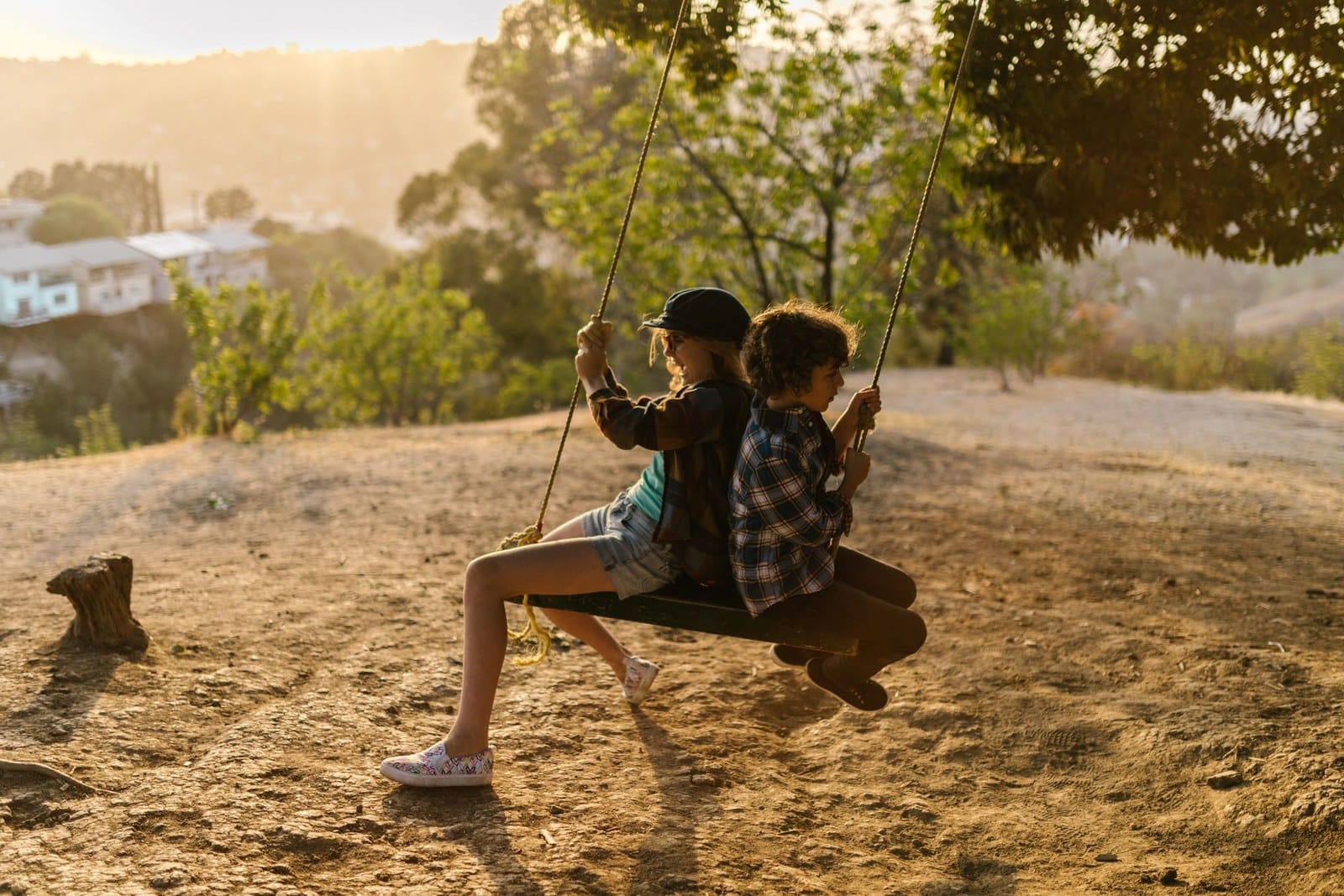
Trees give great hugs and comfort, a chance to rest and stare up at the sky, the soft breeze swaying, the remarkable heights that guide us home, the special picnics with loved ones under the branches. And when you go back to revisit these special trees, maybe you see their own families blossoming around them, and wildlife jumping and skipping through the branches. I say thank you for the gifts you so generously give me.
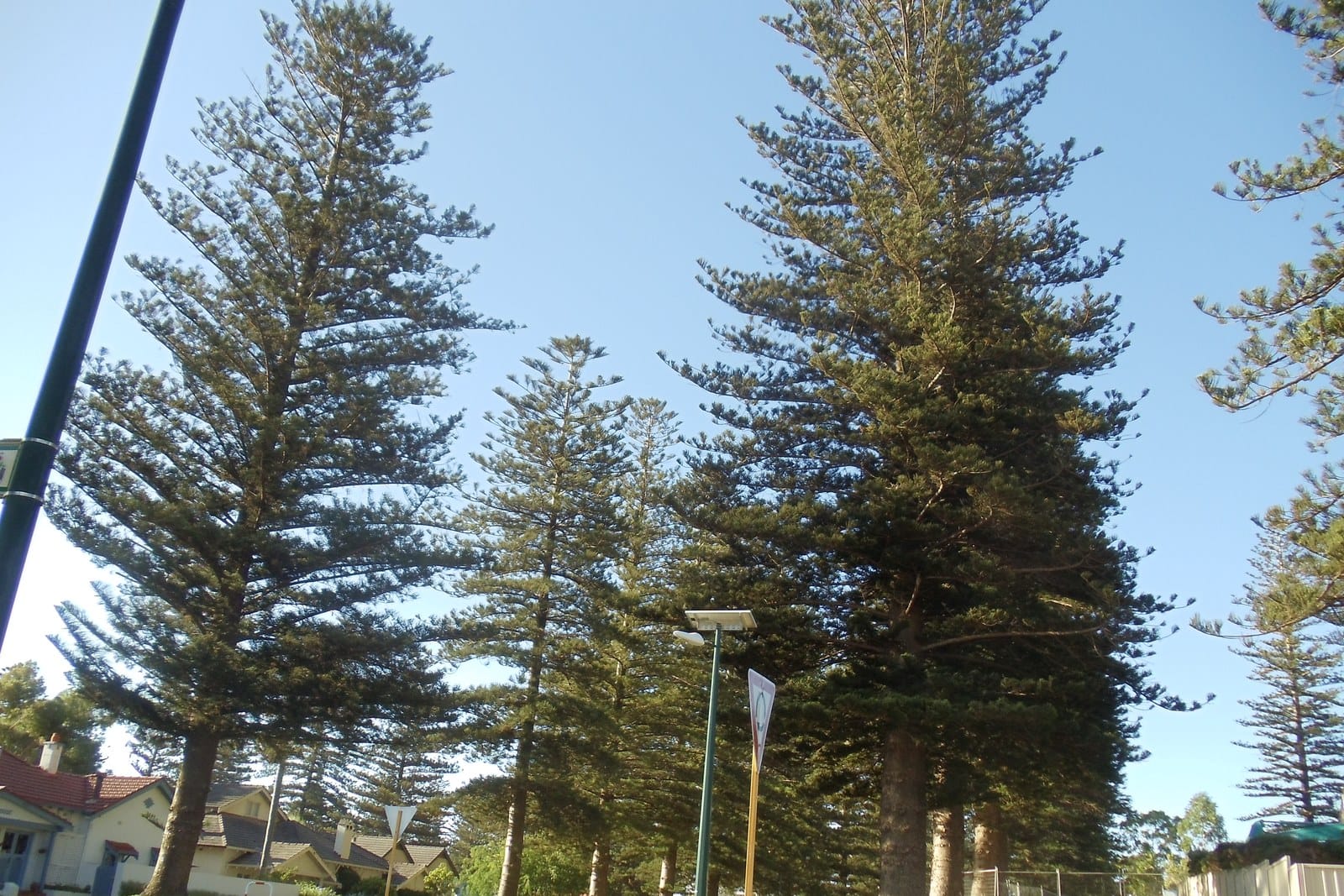
I am not alone in this, and this year some towns said it out loud. In May, Warrnambool's councillors kept four hundred year old Norfolk Island pines on the foreshore after more residents wrote in about them than on almost any question in years, and one councillor changed her mind after standing among them. In July, Fremantle kept two mature pines at Douro Road because the community said plainly that it wanted them. Along the Glenelg foreshore, Holdfast Bay looks after more than a thousand Norfolk Island pines, planted nineteen young ones this year and has forty four more planned for Wigley Reserve. And at Cronulla Park a young Norfolk pine has gone in beside a family of hundred year olds, one of more than 120 new trees for the suburb. Somewhere near you there is a tree that someone chose to keep. Which one is yours?
Good to know, a picnic under the pines
- Glenelg, Adelaide: the foreshore and North Esplanade, more than a thousand Norfolk Island pines looked after by the City of Holdfast Bay.
- Manly, Sydney: the beachfront pines along the ocean front and the Corso, planted from the 1850s with Henry Gilbert Smith, the man who dreamed Manly up as a seaside resort.
- Cottesloe, Perth: the pines along Marine Parade and Broome Street, with the town's own Forrest Street pine and its plaque.
- Cronulla Park, Sydney: the hundred year old pines and the young one planted beside them this year.
- Warrnambool, Victoria: the four hundred year old pines at Shipwreck Bay on the foreshore, the ones the town kept in May.
- Norfolk Island: the tree at home, in Norfolk Island National Park and along the island's roads, a two and a half hour flight from Sydney or Brisbane.
Good to know, the giant
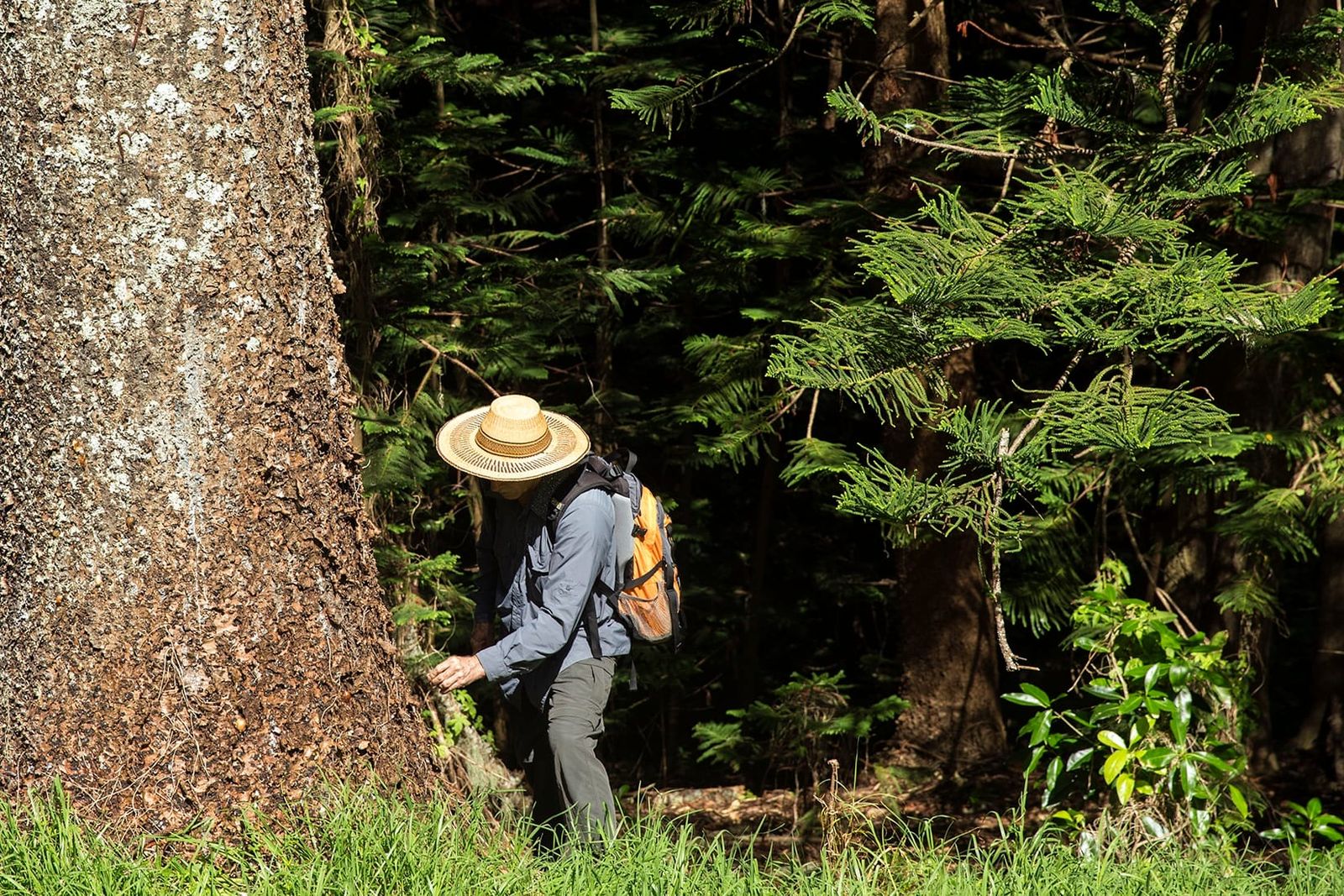
- Norfolk Island pine, Araucaria heterophylla. It grows wild in one place on Earth, Norfolk Island, and nowhere else.
- A conifer, but not a true pine: it belongs with the ancient araucarias, cousins of the bunya and the hoop pine.
- In the wild it reaches fifty to sixty five metres. Its branches come in tiers of five, so from above each tier is a near perfect pentagon, and it keeps that shape in an onshore gale.
- Captain Cook saw the forests in 1774 and thought of ships' masts; by 1788 the timber had proved too soft for the job and the trees were left to stand.
- Cones take about eighteen months to ripen and break apart on the tree to drop winged, edible seeds.
- It loves salt and wind, which is why it lines so many Australian beachfronts and why it was planted along our streets from the 1800s on.
- At home on Norfolk Island it is listed as Vulnerable, and the best natural stands are inside Norfolk Island National Park.
Sources and links
An Earth to Sea News original. Words: Nicole McMahon. Town details from The Standard (Warrnambool, 5 May 2026), the City of Fremantle (July 2026), the City of Holdfast Bay and Murray Trembath for the St George and Sutherland Shire Leader (6 May 2026). Tree facts from Wikipedia's Araucaria heterophylla entry and the IUCN Red List. Picnic places from each council's own pages; Manly's 1850s planting with Henry Gilbert Smith from the Dictionary of Sydney and the Australian National Maritime Museum (the wartime removal story could not be verified and is left out).
- Warrnambool council's 100 year old pines saved from chop, by Katrina Lovell, The Standard The four pines, the 5 to 2 vote, Cr Arnott's change of heart.
- Norfolk Island Pines remain a key part of Holdfast Bay's future, City of Holdfast Bay 1,033 pines, 19 planted this year, 44 planned for 2028.
- Cronulla Park: new Norfolk pine joins 100 year old tree family, by Murray Trembath, The Leader (6 May 2026) The planting and the 120 trees.
- City of Fremantle keeps the Douro Road pines Freo View's report of the City's decision, 8 July 2026.