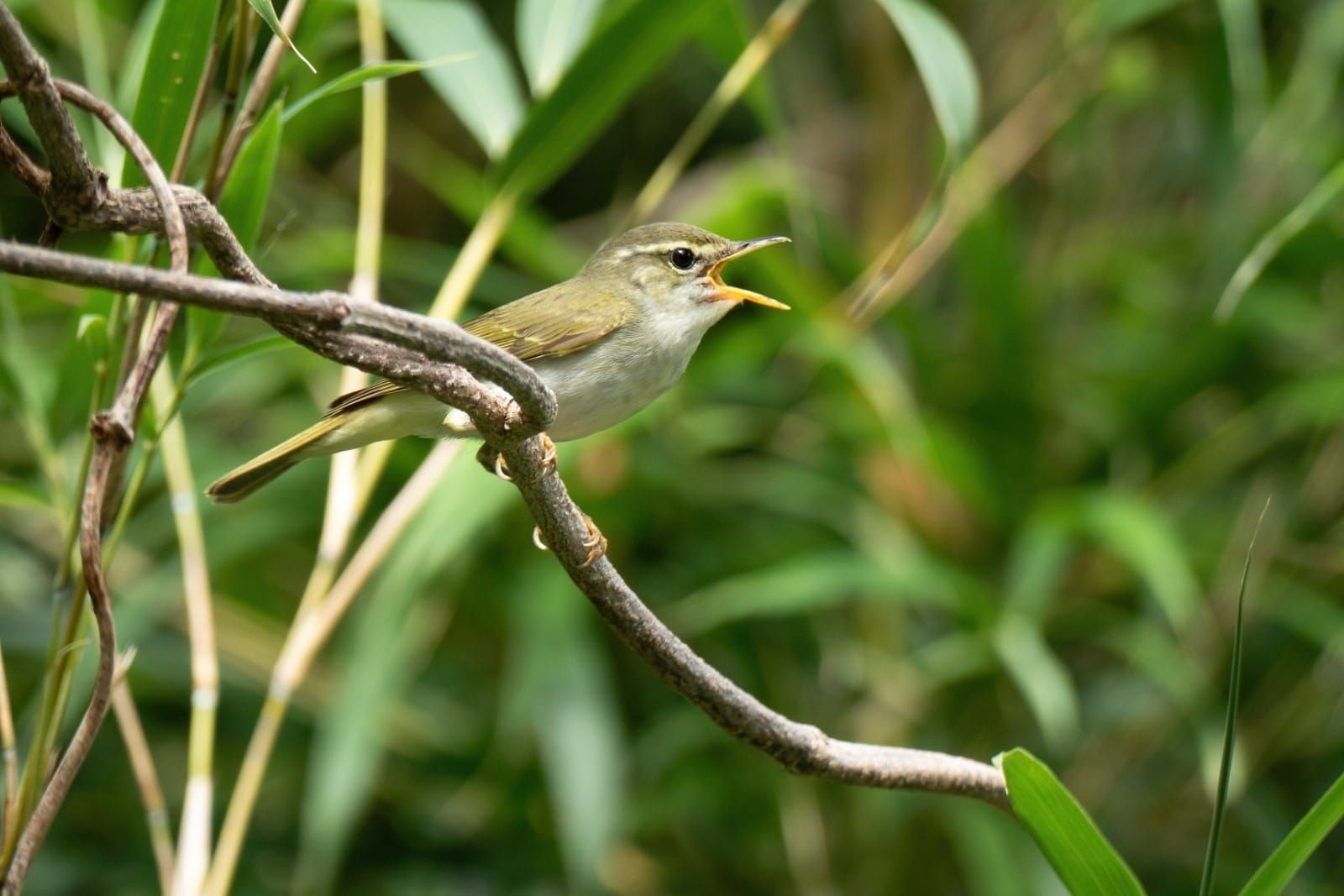
Japan has more than 640 kinds of birds and knows them well, so a new one is an event. Ijima's leaf warbler, a small olive green songbird twelve centimetres long, was thought to breed in two places a thousand kilometres apart: the Izu Islands south of Tokyo, and the Tokara Islands far to the south west, a chain of twelve small islands in Kagoshima that together cover barely 100 square kilometres and are reached by a ferry that runs twice a week. Ten years ago a DNA study hinted the two populations were not quite the same. Now a team from Uppsala University and the University of Gothenburg in Sweden, with Japan's Yamashina Institute for Ornithology and the Forest Research and Management Organization, has read the birds' whole genomes and listened closely to their songs, and both say the same thing: the Tokara birds are a species of their own. In PNAS Nexus earlier this year they named it the Tokara leaf warbler, Phylloscopus tokaraensis, and confirmed it breeding on Nakanoshima, the chain's largest island, where fewer than two hundred people live below an active volcano.
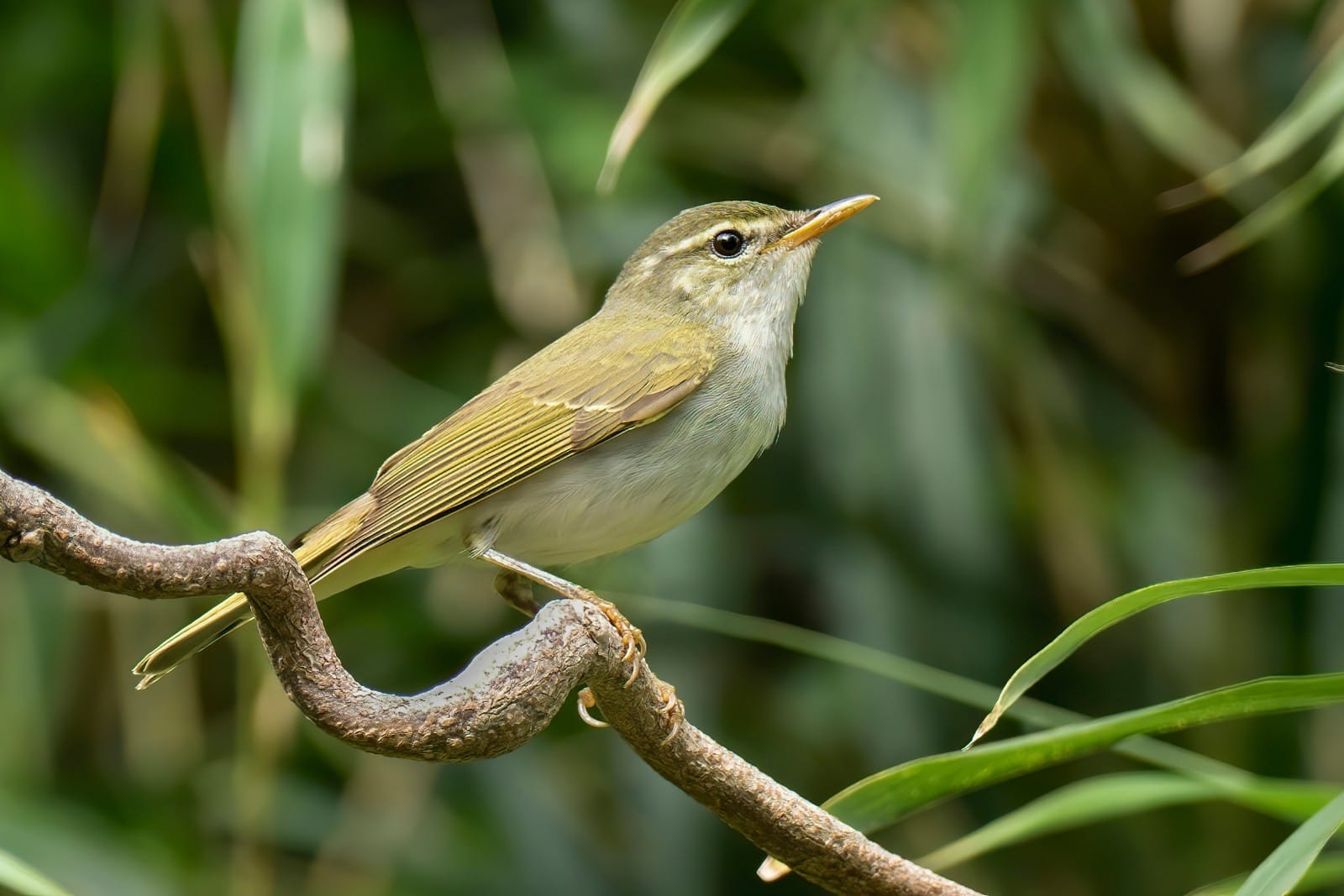
Per Alstrom of Uppsala, who led the work, said the find "shows how important it is to use genetic methods to reveal hidden biodiversity." Takema Saitoh of the Yamashina Institute put the other side of it: "Its range is confined to a very limited area on a global scale." Both warblers spend the winter in South East Asia and come home to their islands to nest, and Ijima's is already listed as vulnerable, so the Tokara bird will now get an assessment of its own. That is the quiet good in a discovery like this. A bird that was lumped in with another for a century now has a name, a home range and people responsible for it, and the forests of a tiny island chain that most of Japan has never visited have become a place worth looking after for a reason nobody knew until this year.

Sources and links
Our short take: the full story is from Uppsala University's announcement (8 April 2026) and The Yomiuri Shimbun (23 March 2026), with further detail from Naina Rao for Mongabay (13 April 2026).
- New rare bird species discovered in Japan, Uppsala University The announcement, the paper, Alstrom's quote.
- New bird species confirmed in Japan for 1st time in 45 years, The Yomiuri Shimbun via Asia News Network Nakanoshima, the Japanese team, the 12 cm, the winter range.
- A new bird species has been discovered in Japan after 45 years, by Naina Rao, Mongabay Saitoh's quotes.
- Discovering and protecting cryptic biodiversity, PNAS Nexus The paper.