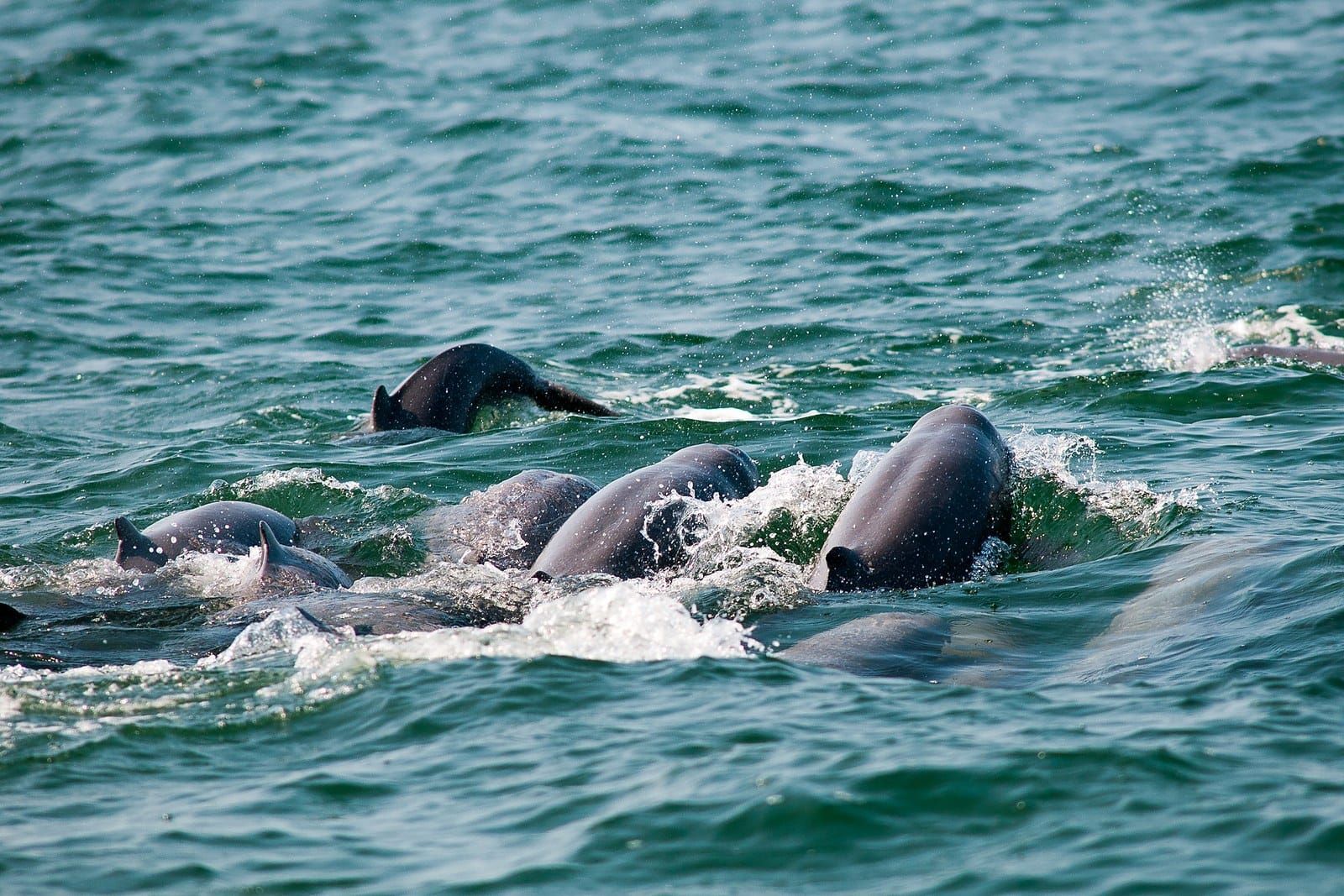
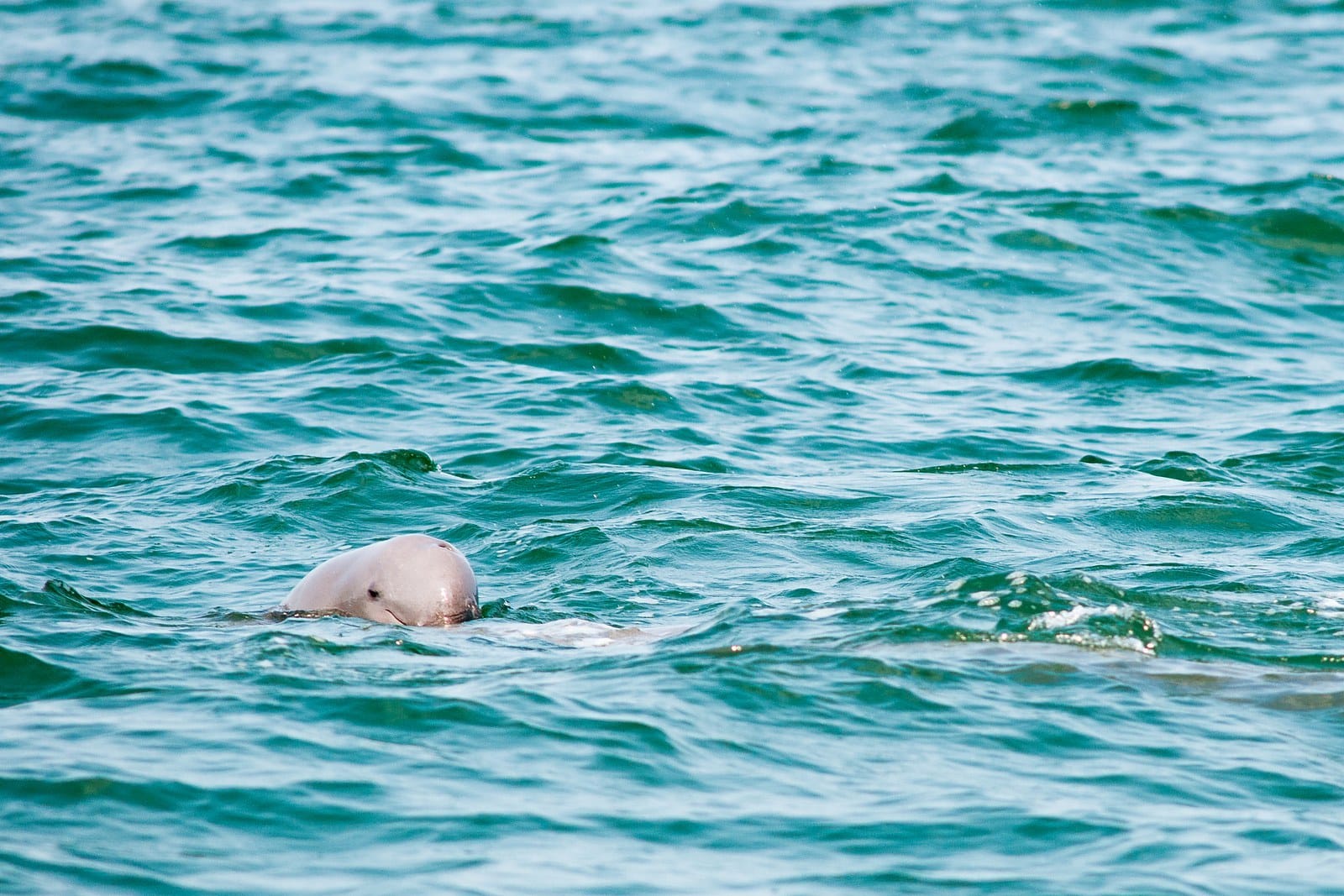
Kampi pool is a stretch of the Mekong in Kratie province about sixty metres deep, one of three deep pools where Cambodia's river dolphins live, and on the afternoon of 27 April a film crew from the agriculture ministry saw something small and grey surface beside six adults. Researchers from the Fisheries Administration, the Kratie fisheries office and WWF went out to check: a calf about three days old, healthy, keeping close. It was the sixth Irrawaddy dolphin born in Cambodia this year, five at Kratie and one upstream at Stung Treng, and it lifted the count to one hundred and eighteen. Look at the recent years and you can see the turn. In 2022 there were six births and eleven deaths. In 2025, eight births and none. Through the first four months of this year, six and none again, so by the time the little one at Kampi arrived, no dolphin had been lost for sixteen months. "Public participation is the lifeline of Mekong dolphins," the ministry said, and thanked the river guards, the local authorities and the villages along the water.
Those guards are the quiet part of the story. Since 2012 the fisheries department has employed seventy two of them along a protected stretch of a hundred and eighty kilometres through Kratie and Stung Treng where gillnets are not allowed; they patrol for days at a time, often in their own boats, for a few dollars a day. Last year the government declared the dolphins' habitat state land. People like Veang Tino and Kem Sophat, patrollers at Kampi, and Heang Koeurn, who has taken visitors out to see the dolphins from the same bank for eleven years, are the ones who know each animal. The honest frame is that the river is a hard place, with more than a hundred and sixty dams on the Mekong and its tributaries, and the dolphins here number about half what they did in the late 1990s. That is exactly why six calves and sixteen months without a loss is worth saying out loud. A dolphin born at Kampi today has a better chance than any born there in a generation, and the people who made that true are paid in a day rate and a sighting.
Sources and links
Our short take: the full stories are by Chhorn Norn for The Phnom Penh Post (29 April 2026) and Eung Sea for Mongabay (September 2026). Photographs: as credited in captions.
- The Phnom Penh Post via Asia News Network, Latest dolphin calf sighting in Cambodia's Kratie brings population to 118 The 27 April calf, the pod of six, the sixth birth, the year by year table, the ministry's words.
- Mongabay, Mekong's Irrawaddy dolphins find cautious hope amid a river in crisis Kampi pool, the three pools, the 180 km protected stretch, the 72 river guards and their pay, the state land decision, the dams, the people named.
- WWF Cambodia, Mekong dolphins The conservation programme with the Fisheries Administration.