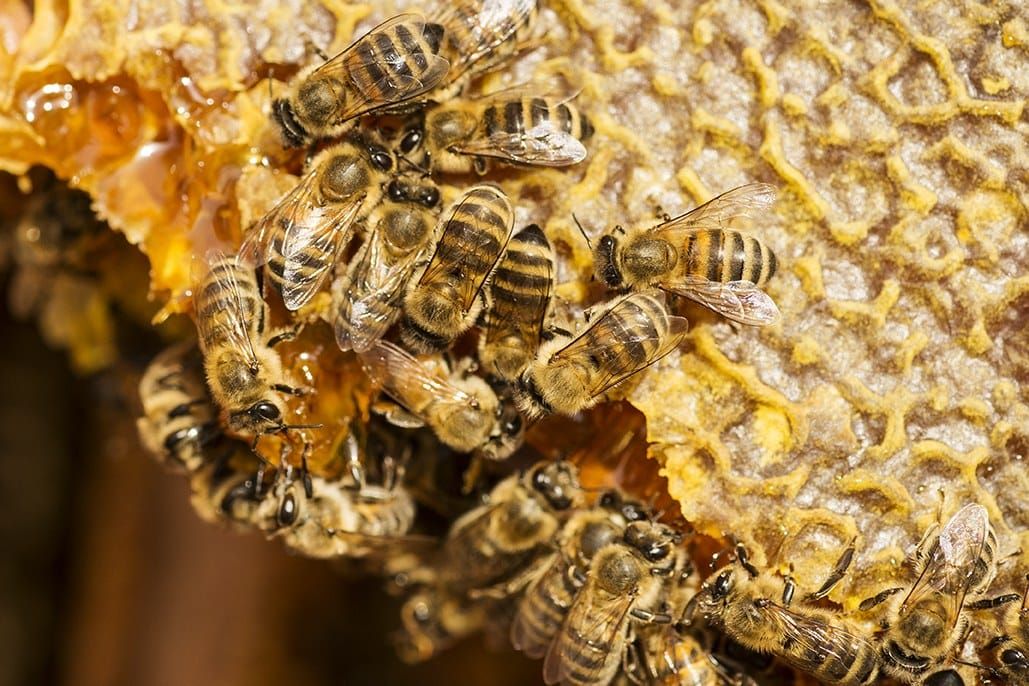
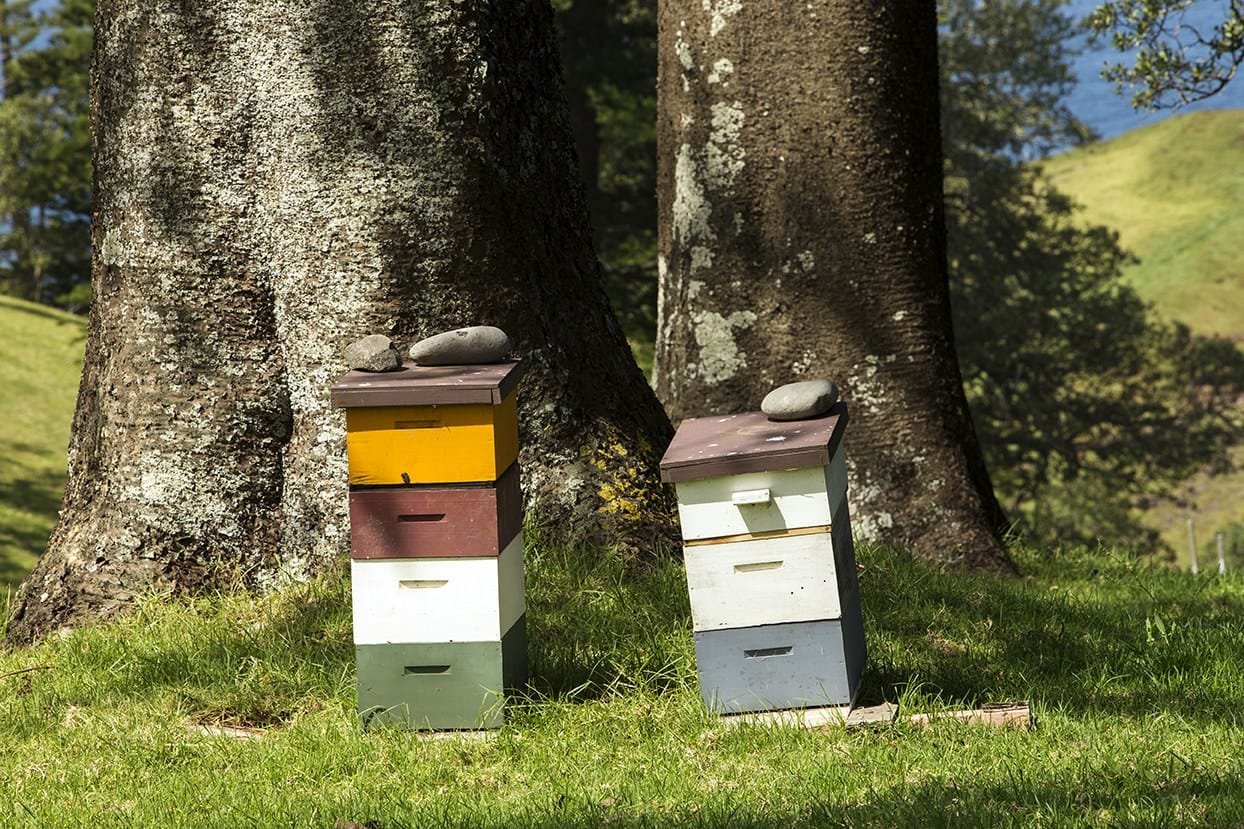
Picture two painted hives under the Norfolk pines, the Pacific flat and blue behind them, and a beekeeper lifting a lid with cattle grazing at his back. On most of the mainland a lid comes up with a question now: are the mites in there yet? On Norfolk Island it does not. In December 2021 and April 2022 Dr John Roberts of CSIRO opened 67 colonies, about half of the island's managed hives, plus six wild ones, testing them for 16 pests and diseases. He found no varroa mite, no tropilaelaps mite, no small hive beetle, no tracheal mite, no foulbrood of either kind and no chalkbrood. His report put it in one line: "No other honey bee population in the world has fewer pests and pathogens." Island bees do carry a common gut parasite and a harmless virus group found in bees everywhere, so the honest phrase is free of the major pests and diseases. Varroa reached mainland Australia at Newcastle in June 2022, eradication was called off in September 2023 and the national transition program closed in February 2026. Norfolk's roughly 120 managed hives are now the last big varroa free population in Australia.
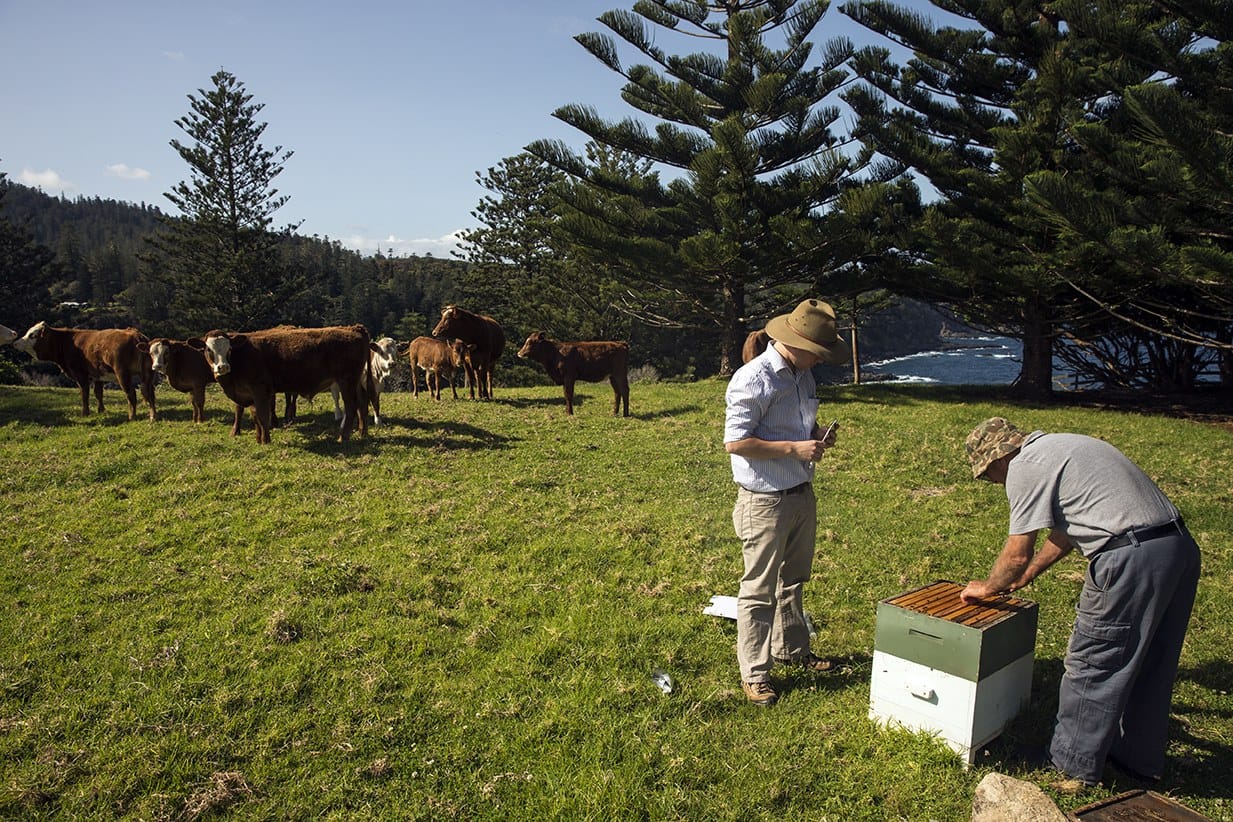
How they did it is the lovely part, because it is mostly patience. No queen bee has been brought onto the island since 1992; new colonies come from catching wild swarms in the pines. Imports of bees have been limited since the Apiaries Act of 1935, used hives, tools and even bee suits and boots stay on the mainland, and under the federal biosecurity rules a traveller may carry no more than 750 grams of commercially packed honey, never to be fed to a bee. Since 1 January 2020 five sentinel hives near the airstrip, the piers and Government House have been opened on the first of every month by volunteer apiarists, with the results sent to Plant Health Australia, and since October 2023 any hive on the island can be registered with Norfolk Island Regional Council for free. Two commercial beekeepers and about a dozen hobbyists keep the whole thing going. One of the two apiarists who set the sentinel hives out, Merv Buffett, died last year, and this story is partly his. Beekeepers have asked for years for Norfolk to be declared a bee sanctuary and are still waiting. Meanwhile the island keeps doing the simplest thing in biosecurity, which is to leave the door shut. Our native bees story in August was about the other kind. These are the European honey bees the rest of us depend on, and the healthiest of them live out in the Pacific, under the pines, with the sea behind.
Sources and links
Our short take: from the CSIRO report Norfolk Island bee pest survey 2021-2022 by Dr John Roberts, Senior Research Scientist, CSIRO Health and Biosecurity (October 2022, released by the Department of Infrastructure, Transport, Regional Development, Communications, Sport and the Arts), the Administrator of Norfolk Island's sentinel hive release (May 2020), Norfolk Island Regional Council's honey bees page and the Norfolk Island Flora and Fauna Society's Bee security note by Geoff Edwards (9 March 2021). Photographs: Oliver Strewe, in hand.
- CSIRO, Norfolk Island bee pest survey 2021-2022 The 67 colonies, 16 pests and diseases, the "fewer pests and pathogens" line, no queen imports since 1992, about 120 hives.
- Department summary of the bee survey Key findings and the three recommendations (note: its visit dates differ from the report; trust the report).
- Norfolk Island Sentinel Bee Hive Program, Administrator's release, May 2020 Five hive sites, checked on the first of the month since 1 January 2020, Plant Health Australia, Merv Buffett and Clare McPherson.
- Norfolk Island Regional Council, Honey Bees Apiaries Act 1935, free hive registration, the Roberts line on the council's own page.
- Norfolk Island Flora and Fauna Society, Bee security The 750 gram honey rule, the ban on used gear including clothing and shoes, the sanctuary request and the Commonwealth's answer.
- NSW Department of Primary Industries, varroa mite Newcastle June 2022, the end of the national program on 6 February 2026.
- Earth to Sea News, native bees (11 August) Our August story on Australia's native bees, the other kind.