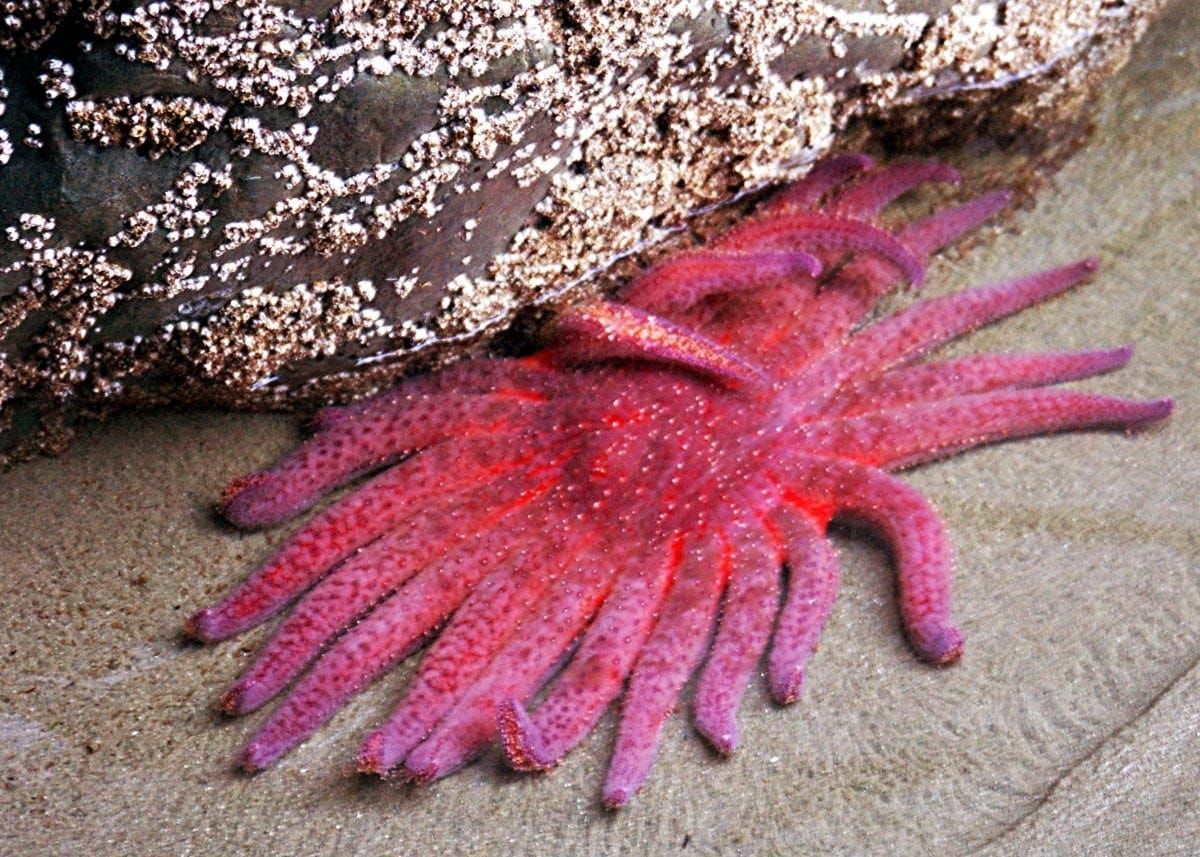
Picture a diver kneeling on bare rock off Monterey, California, one hand resting beside a sea star the width of a dinner plate, watching it feel its way across the seafloor on thousands of tiny tube feet. Every half hour another diver takes over the watch, and after two hours at most the star goes back into its carrier and home to the lab. Eighteen of these chaperoned walkabouts happened this year, and they matter because sunflower sea stars have not roamed Monterey Bay since 2018. Once they were everywhere on the west coast of North America, giants with twenty or more arms that could grow a metre across and ate purple urchins by the dozen. Then sea star wasting disease arrived in 2013 and took more than 90 per cent of them, the urchins multiplied with nothing left to eat them, and about 95 per cent of northern California's kelp forests went with them. Only in August 2025 did scientists at the Hakai Institute and the University of British Columbia, led by Dr Alyssa Gehman, name the cause in Nature Ecology and Evolution: a bacterium called Vibrio pectenicida. By then the Sunflower Star Laboratory in Moss Landing had already spent years learning to raise the animals, from a spawning at Birch Aquarium at Scripps in 2024.
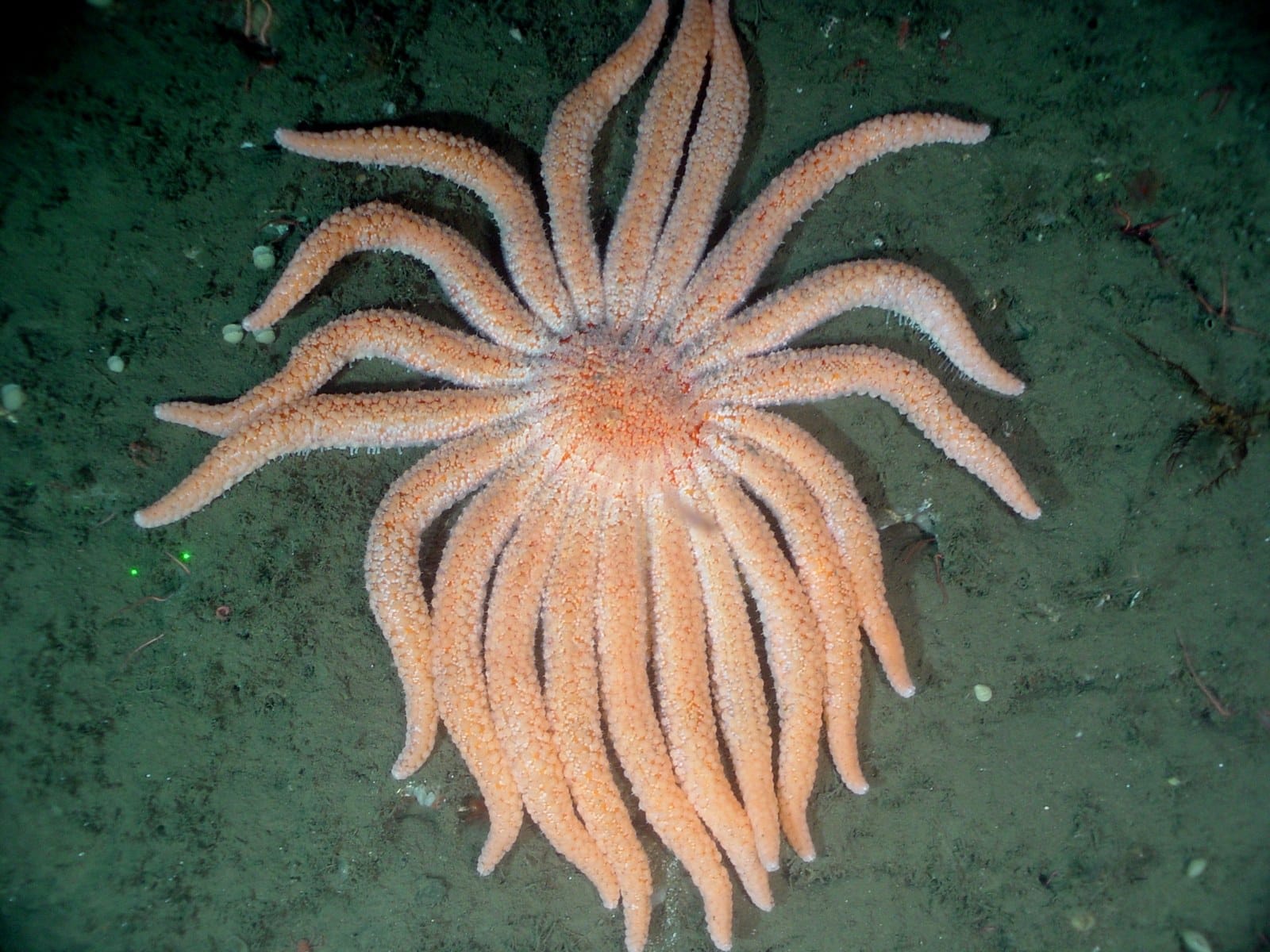
This month the lab published the results of its first season in the sea. Sixteen of those young stars spent a month in cages in an urchin barren in the bay, with permits from the California Department of Fish and Wildlife and the Monterey Bay National Marine Sanctuary. Fourteen came through it, and on average they gained more than half their body mass eating urchins. Better still, the urchins noticed. Within about a metre of the cages, 99 per cent of the adult urchins crawled away once they smelt the stars, and that fear halo lasted for weeks after the cages came out. Dan Abbott of the Reef Check Foundation, who watched the stars vanish from this coast, calls the results real hope. Honesty asks for the rest of the picture too. Sixteen is a tiny number, every release so far has been temporary, and two of the caged stars showed signs of wasting and were lifted out before they died; one tested positive for the same Vibrio, so the pathogen is still in the water. No kelp has grown back yet. But the lab plans to move to permanent releases in the coming years, and if a First Nation can grow a kelp forest off Tofino with sea otters doing the urchin work, a bay full of sea stars might do the same for California.
Sources and links
Our short take: from the Sunflower Star Laboratory's release (5 October 2026, posted by the lab, no personal byline) and the University of British Columbia release on the cause (4 August 2025). Photographs: as credited in captions.
- Sunflower Star Laboratory, restoration research results The 16 caged stars, 14 of 16, the 99 per cent urchin flight, the 18 walkabouts, the permits, the Vibrio detection.
- University of British Columbia, "Disease detectives" find the cause of sea star wasting Vibrio pectenicida, Dr Alyssa Gehman and Melanie Prentice, more than 90 per cent of sunflower stars lost since 2013.
- NOAA Fisheries, scientists breed sunflower sea stars to revive California's kelp (18 December 2025) The breeding programme behind the stars, the 2024 Birch Aquarium spawning.
- our Clayoquot kelp story Under the water off Tofino, a First Nation is growing a forest (10 October 2026).