Between the tip of Cape York and Papua New Guinea sit close to three hundred islands, seventeen of them lived on. The region's own name for itself is Zenadth Kes. Three languages are spoken across it, and the Australian Institute of Aboriginal and Torres Strait Islander Studies records them as Kalaw Lagaw Ya in the west and centre, Meriam Mir in the east, which is the only Papuan language spoken on Australian territory, and Yumplatok, the creole most widely shared. Two of the islands are set up for visitors and need no arrangement beyond a ticket. Waiben, also called Thursday Island, and Ngurupai, also called Horn Island, are reached by flying Cairns to Horn Island and taking the short ferry across, or by Peddell's ferry from Seisia at the top of Cape York. Queensland's own tourism bodies promote both. On Waiben the Torres Strait Regional Authority runs Gab Titui, which it describes as a contemporary art gallery and a keeping place for cultural artefacts, with two galleries inside. Up the hill is Green Hill Fort, built in the 1890s, garrisoned until 1926, never fired in conflict, its tunnels now holding a museum. On Ngurupai, Vanessa Seekee, who came north as a teacher in 1994 and was awarded an OAM in 2005 for her work with the Strait's wartime veterans, runs the Torres Strait Heritage Museum with Liberty Seekee. Island Stars, led by Joey Laifoo, perform dance and song. Kazu Pearls on Friday Island lets you walk a floating jetty above the pearl beds.
For every other island, you ask first. The Torres Strait Island Regional Council states that all visitors are required to submit a visitor registration form before arriving, and to sign in at the local Council office once there. You complete a community entry form, the Council passes it to the elected Councillor for that community, and that Councillor may approve it, ask for more, or decline. The Regional Authority's published guidance is that all islands are considered private domains and are not open to general traffic, and that islands engaged in tourism welcome visitors at various times of the year, so it is always best to check with the local Council office. Allow a few days. Meanwhile the region does a great deal of looking after itself, and says so in its own words. The Regional Authority supports sixty ranger roles across fourteen communities on thirteen islands, a program that started in 2009 with one group on Mabuiag and now runs thirteen; about a third of the rangers are women, and their work covers seagrass monitoring, marine debris, cultural site protection and recording traditional ecological knowledge. In April this year more than seventy Elders, rangers, community leaders and researchers met on Waiben for the first Zenadth Kes Land and Sea Symposium, hosted by the Regional Authority with the Gur A Baradharaw Kod Sea and Land Council and the Island Regional Council, and agreed sixteen values to guide the region's care, among them coral reefs, seagrass meadows and traditional ecological knowledge. Chairperson George Nona said both the traditional and western worlds have much to learn from each other.
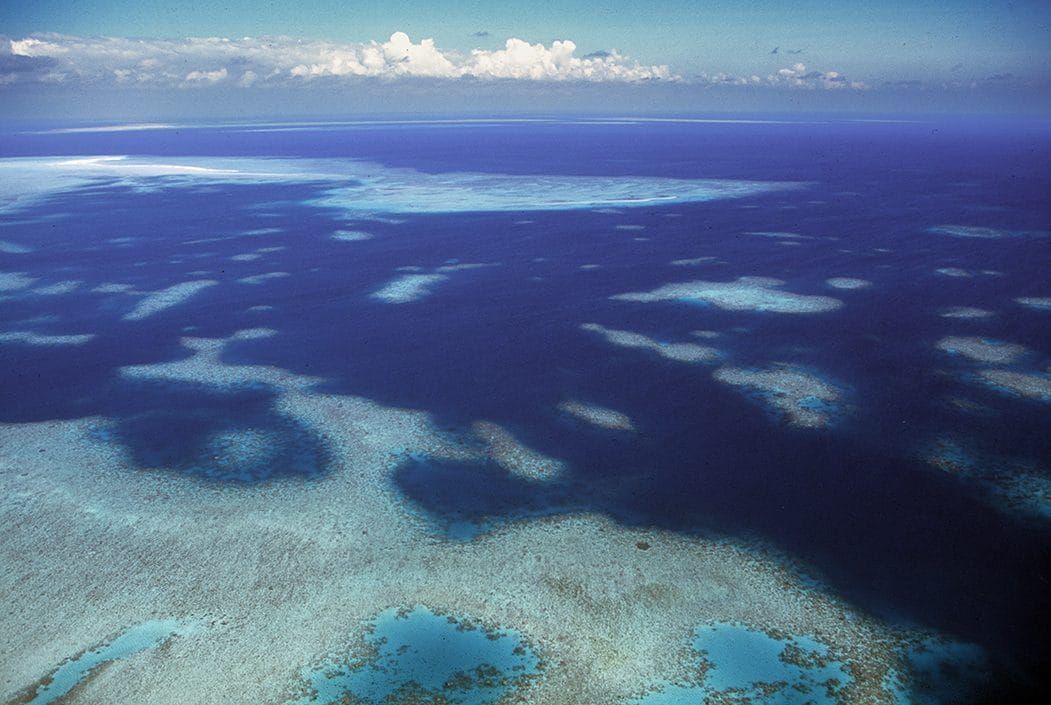
Our short take: every detail here is drawn from what the region publishes about itself. Visitor entry requirements from the Torres Strait Island Regional Council. Island counts, ranger figures, symposium detail and the quotation from Chairperson George Nona from the Torres Strait Regional Authority. Language detail from AIATSIS. Access and travel detail from Torres Shire Council and Tourism Tropical North Queensland. Vanessa Seekee OAM and Liberty Seekee run the Torres Strait Heritage Museum; Joey Laifoo leads Island Stars. Spellings of island and language names vary between communities and sources, and we have followed the Regional Authority throughout. Photograph: Oliver Strewe, gifted to Earth to Sea News.