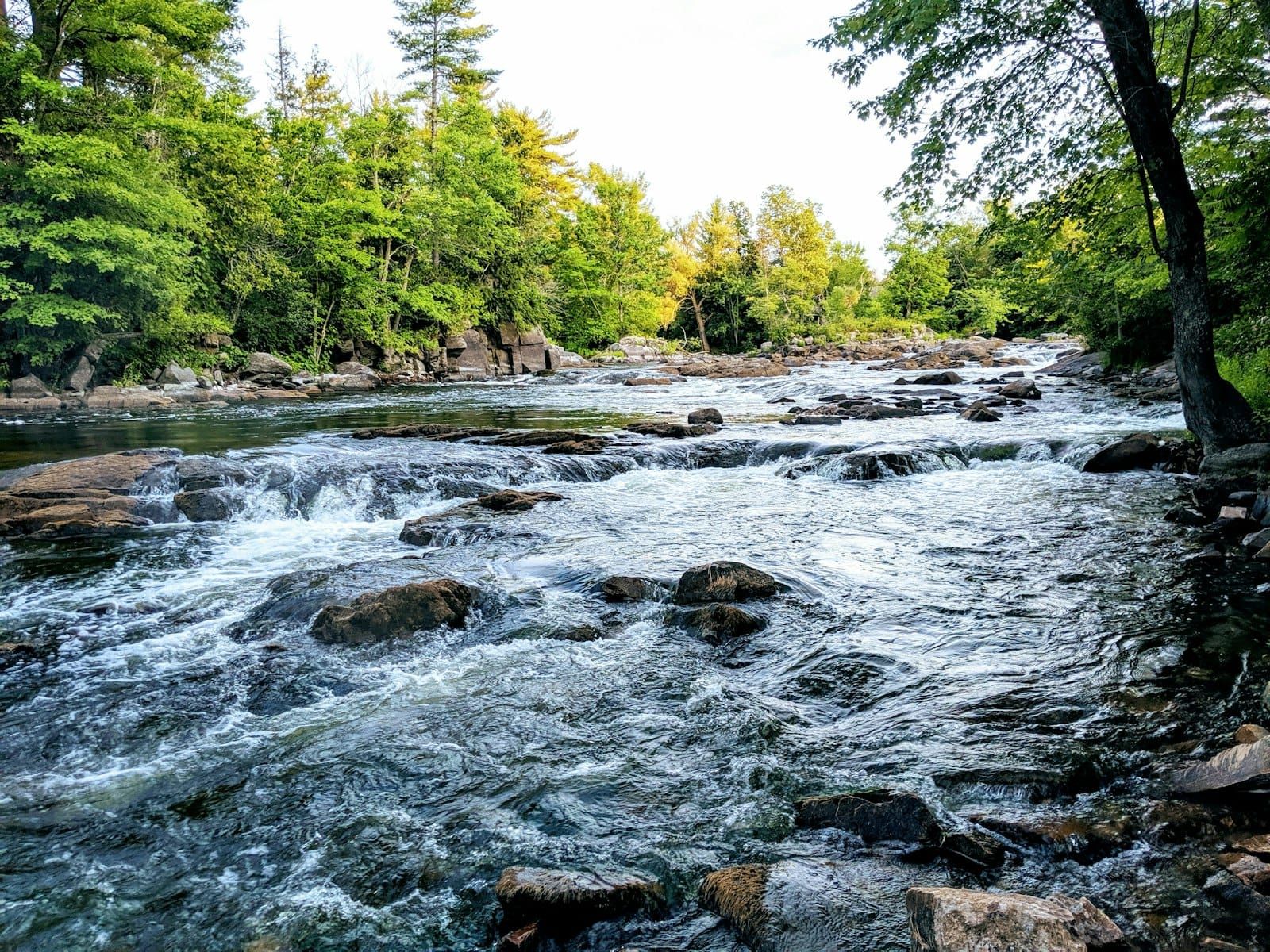
The river runs through Traverse City in northern Michigan, and for 126 years it was cut into pieces. Between 2012 and 2018 three dams came out, in the largest comprehensive dam removal effort in Michigan's history, and about 160 miles of river and tributaries were joined back together. The results turned up quickly. In one monitored thousand foot stretch below Brown Bridge Road, brook trout went from an estimated six fish in 2010 to 184 in 2019, once the water ran cool again. The Grand Traverse Band of Ottawa and Chippewa Indians were the local sponsor for the removals, bringing more than three million dollars to the work, and since September 2024 they have been releasing young lake sturgeon, nmé, back into the river, working towards 750 spawning adults by 2044. The river's older name is back in everyday use too, written by the partners as the Boardman/Ottaway. Brett Fessell, restoration section leader for the Band's natural resources department, put the reason for all of it simply: “From a tribal perspective, the connection within watersheds is important functionally and symbolically.”
The last structure is the interesting one. Called FishPass, it replaces the old Union Street Dam with a weir across the river and, beside it, a sorting channel 400 feet long. Fish swimming up from Lake Michigan are guided into that channel, looked over, and either sent on upstream or turned back, so the fish that belong in the upper river can finally get home while the ones that do not stay below. It is the first barrier built anywhere to sort and selectively pass fish rather than simply stop everything, and the team is candid that for roughly its first decade the sorting will be done by hand, coordinated with the fishery agencies, with automation as the long term goal. It is not switched on yet either: in stream work is due to finish in October 2026 and the whole site in 2027. It has, however, already been tested in a way nobody planned. In April 2026 the river crested near a 500 year flood, and the new weirs held. “The new dam performed excellently,” said Jason Plum of AECOM. “The new infrastructure made a dramatic difference.”
Our short take: drawn from the Great Lakes Fishery Commission's own project updates and its river restoration report A River Reborn, with reporting by NOAA Fisheries, Northern Express, The Ticker and 9&10 News. Read more: FishPass, Great Lakes Fishery Commission. Photograph: Unsplash.