
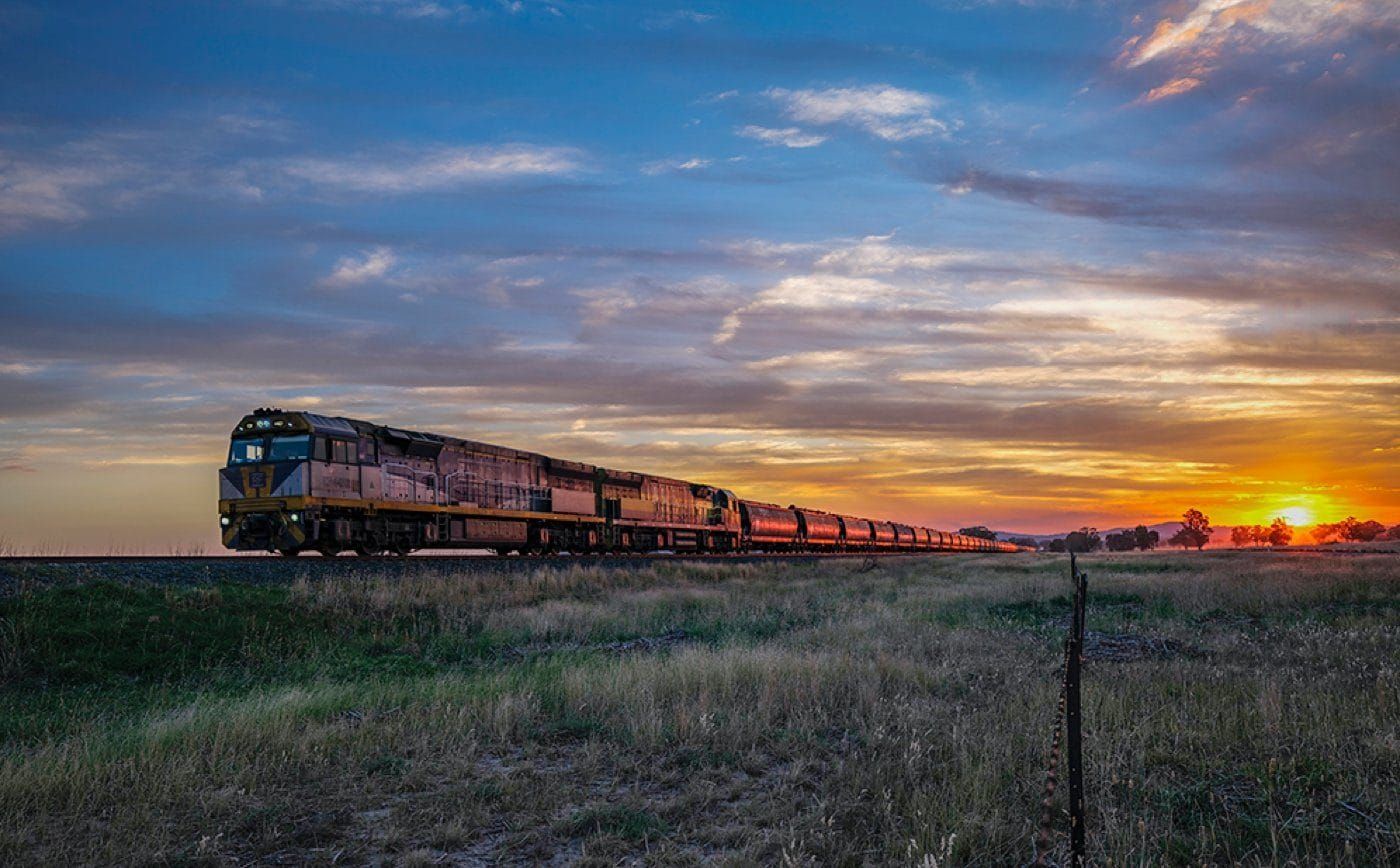
Across the wheat country of north west New South Wales, trains like this one slide past the silos at dusk, loaded to the brim and bound for the Port of Newcastle, where Australian grain sets off to feed the world. It looks like a quiet scene, and that is exactly the point. A standard grain train hauls around 3,000 tonnes of wheat, the work of roughly seventy B double trucks, and the longest trains carry the load of more than a hundred. Every service like this one means quieter highways, safer country roads, and far less diesel burned between the paddock and the sea.
The sums behind the sunset are the good news. Moving a tonne of freight by rail produces about sixteen times less carbon than moving it by road, which makes the humble grain train one of the simplest climate tools Australia already owns. No new invention required, just more use of the steel wheels we have, and the country is investing in exactly that, with new inland freight lines built for trains up to 1.8 kilometres long. And this story carries one more quiet first: the photograph above is a gift to this masthead, the first of many views from the field we hope to share.
An Earth to Sea News original. Figures from Inland Rail and rail freight reporting in The Conversation. More from Inland Rail. Photograph: Oliver Strewe, gifted to Earth to Sea News.