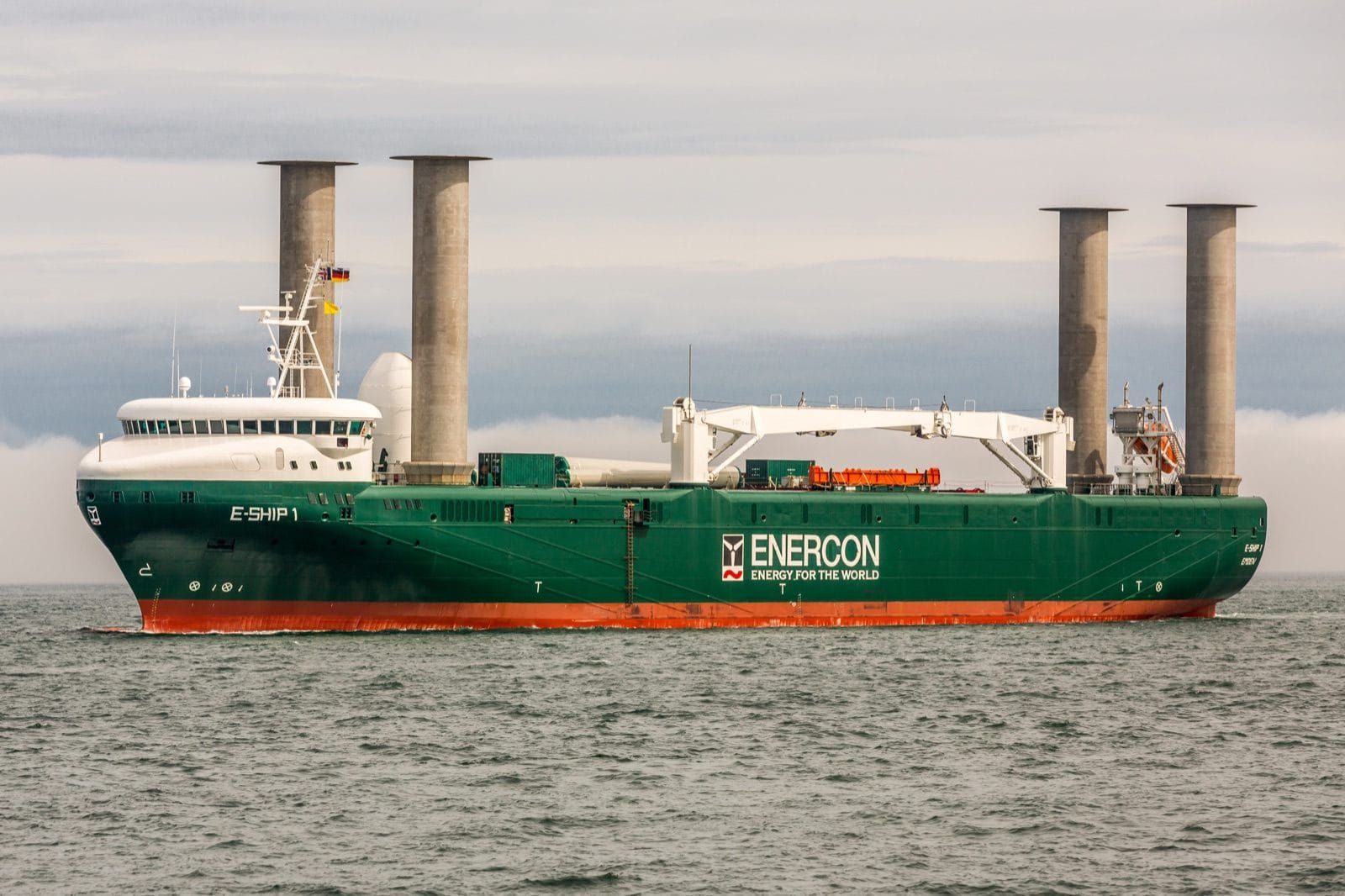
The Afros looks like an ordinary bulk carrier with four tall cylinders standing on her deck, until the cylinders begin to spin. They are rotor sails, a wonderfully simple idea: when wind flows past a spinning column it produces thrust, the same physics that curves a tennis ball, and the ship gets a push that the engines no longer have to provide. The Afros has sailed with hers since January 2018, one hundred and fifty four voyages, and when surveyors from Lloyd's Register examined her in dry dock this April they found all four sails sound, still available for duty more than ninety five per cent of the time after eight years at sea.
The savings so far: one thousand three hundred and forty tonnes of fuel never burned, and nearly five thousand tonnes of carbon dioxide never made, from four sails of the smallest early size. The rotor sails fitted to ships today are more than twice the diameter and twice the height, each one good for around one and a third tonnes of fuel every operating day. Shipping carries most of what the world buys, which is exactly why this matters: the oldest engine on Earth, the wind, is quietly signing back on to the fleet.
Our short take: the dry dock findings and voyage figures are from Anemoi Marine Technologies, surveyed by Lloyd's Register, with reporting by Ocean News and Technology. Photograph: E Ship 1, an early rotor sail ship, by Alan Jamieson, CC BY 2.0, via Wikimedia Commons.