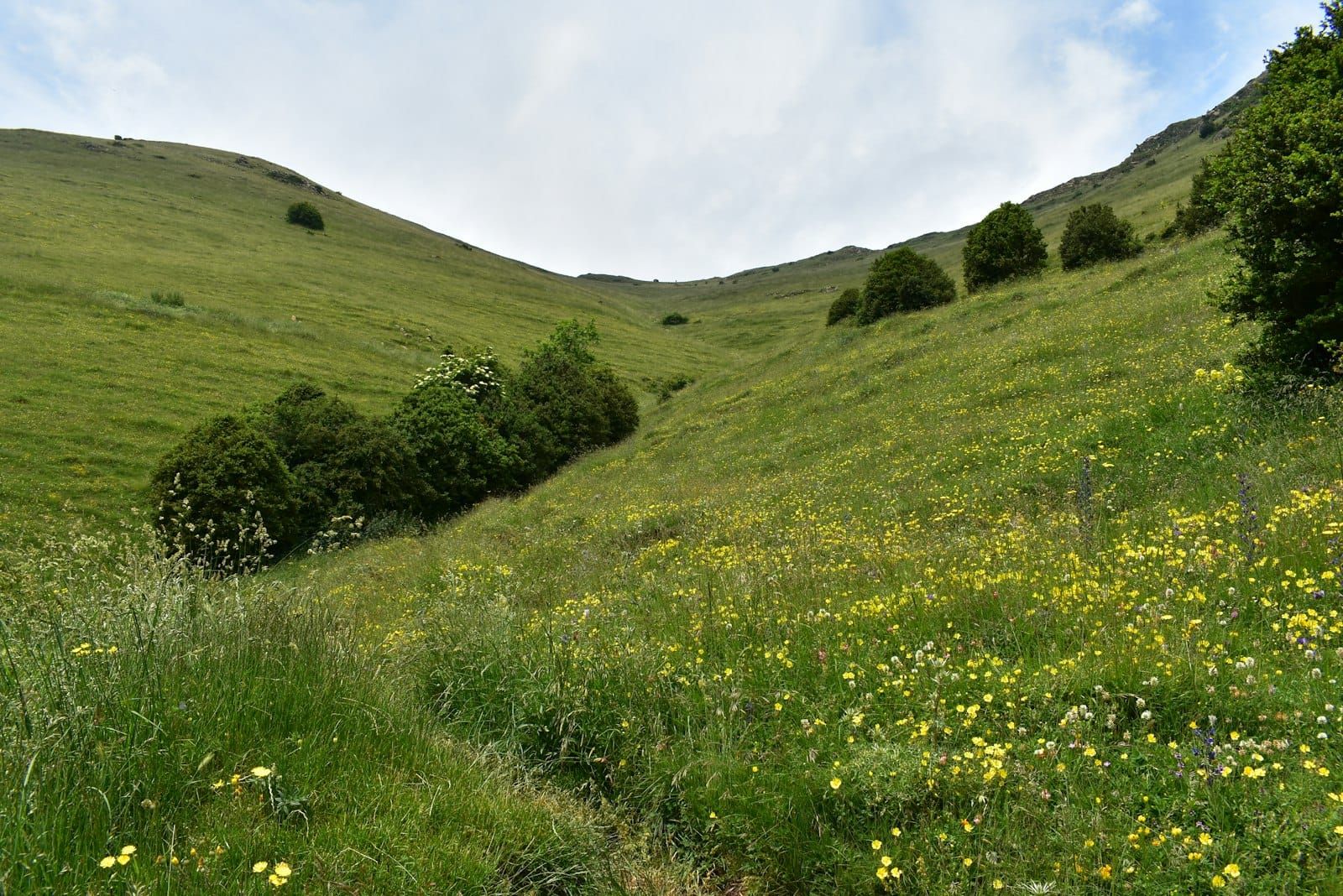
Glandwr Forest sits near Llandovery in Carmarthenshire, on ground that used to be sheep pasture. Since 2021 more than 25,000 native trees have gone in across 72 plots, and 6,400 of them wear an individual barcode and get measured every single year. That measuring is done in large part by ordinary people. As many as 290 volunteers turn up for an annual event called the Big Tree Measure, walking the hillside with tape measures, recording how each sapling is getting on. The trial is run by a science charity called The Carbon Community, co founded by Charles Nicholls, with the research led from Imperial College London alongside Royal Botanic Gardens Kew, the University of Sheffield, ETH Zürich, Edinburgh and Swansea.
Four years of that volunteer data has now produced a peer reviewed paper, and one result stands out. The broadleaf plots dusted with crushed basalt, a byproduct from a nearby quarry, were storing 27 per cent more carbon by 2024 than the untreated plots, an extra 787 kilograms of carbon per hectare. Two honest notes belong beside that number. It is carbon held in the trees themselves, in trunks and branches and leaves, not in the soil, and the belowground results are still being worked through. It also showed up in the broadleaves and not in the conifers. A second treatment, adding soil microbes, appeared to lift young broadleaf growth by around 13 per cent, but the variation from tree to tree was wide enough that the researchers could not separate it from chance, and the early surge faded after a strong first year. That one is promising rather than proven. Dr Bonnie Waring, the ecosystem ecologist at Imperial College London who led the study, said that relatively simple interventions drawn from nature “can improve tree establishment and increase the carbon uptake of new woodlands during their earliest years.” What she keeps returning to is who did the work: “What makes this study scientifically striking is not only the potential for carbon removal, but also its unprecedented scale, and the high level of citizen science involvement.”
Our short take: the study is by Bonnie Waring and colleagues, published in Communications Sustainability, with reporting by Jamie Hailstone for Forbes, Debbie Luxon for the Cambrian News, Andy Corbley for Good News Network and Nation.Cymru. Photograph: Unsplash.
Read the research: Microbiome manipulation and enhanced weathering influence tree growth in reforestation, Communications Sustainability, June 2026, the Imperial College London release, and The Carbon Community.